What Is AI Interior Design for Renters in 2026?
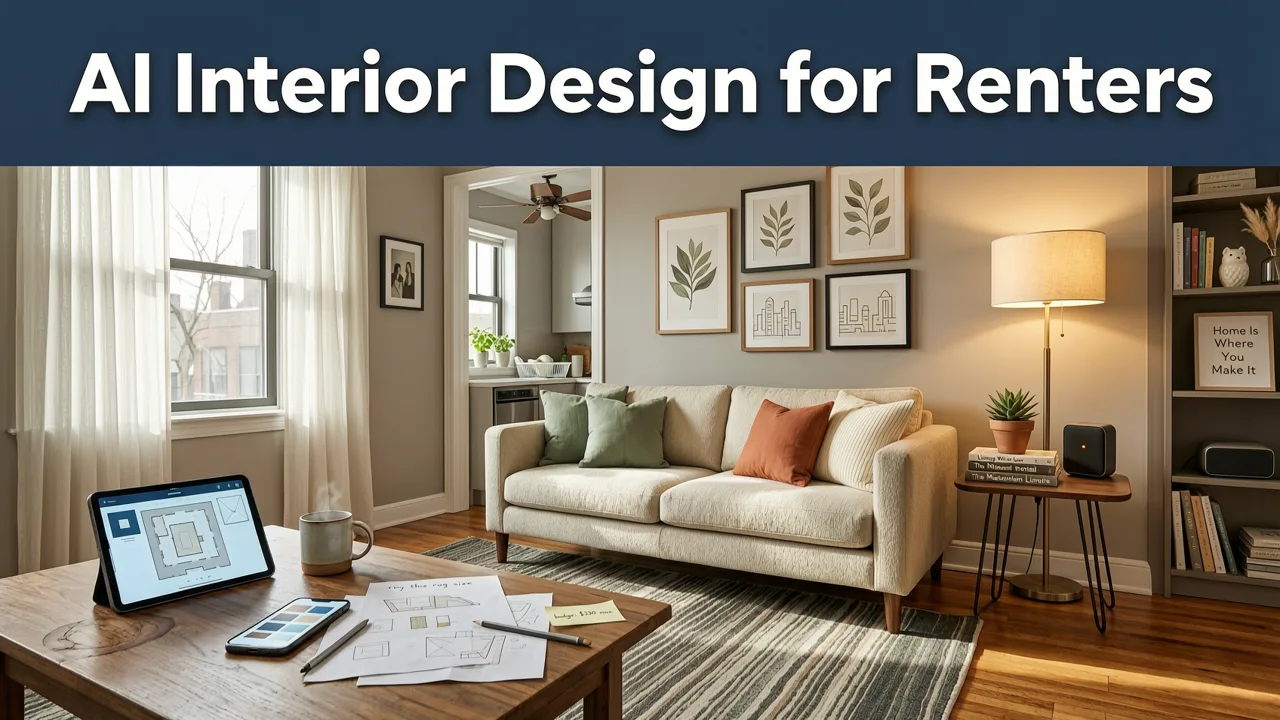
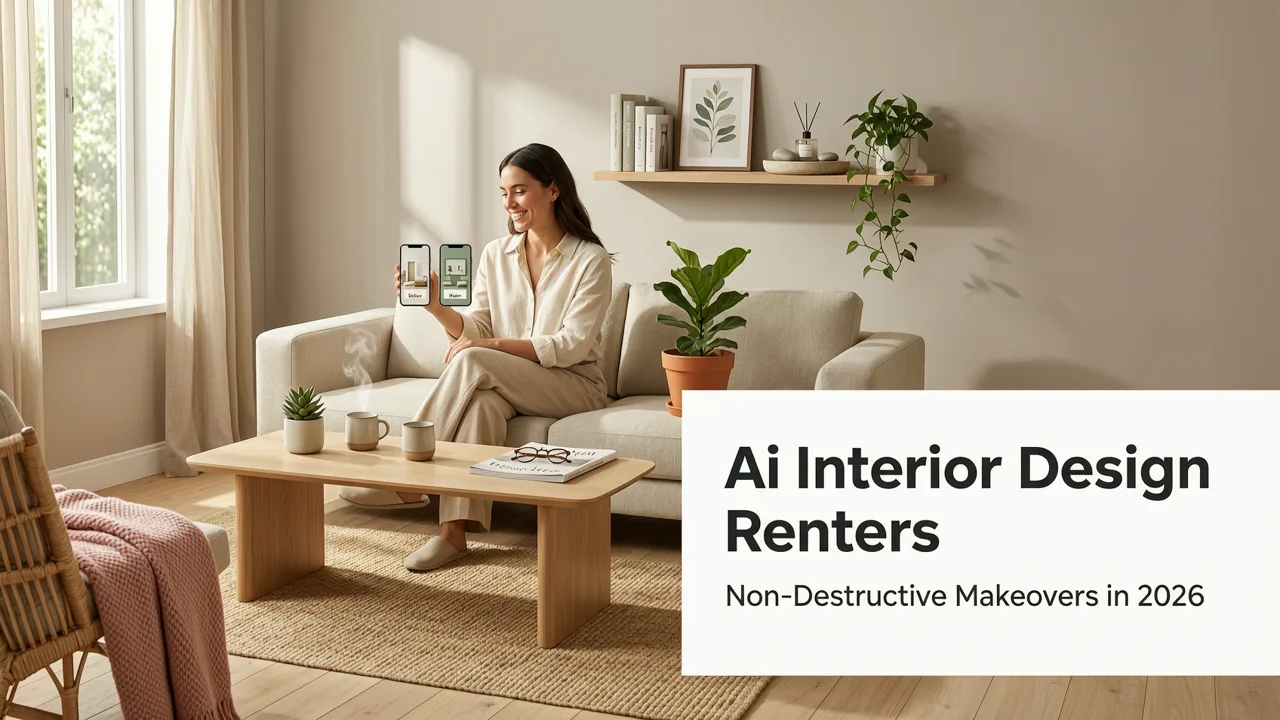
If you are navigating the limitations of a strict lease agreement, ai interior design for renters offers a breakthrough solution. This technology allows tenants to visualize non-destructive, lease-friendly room makeovers instantly by uploading a simple photo and selecting a preferred aesthetic. In 2026, renters no longer have to guess how peel-and-stick wallpaper or temporary decor will look; AI provides photorealistic, true-to-room previews in seconds, ensuring every design choice aligns with both personal style and landlord rules.
Historically, interior design software was built for homeowners planning permanent, structural renovations. The modern iteration of AI home visualization has shifted to accommodate the massive rental market. By focusing on temporary decor solutions and renter-friendly upgrades, these tools help tenants maximize their living spaces without risking their security deposits. The result is a democratized design experience where virtual room staging is accessible to anyone with a smartphone and a creative vision.
Why Renters Need Non-Destructive Visualizations
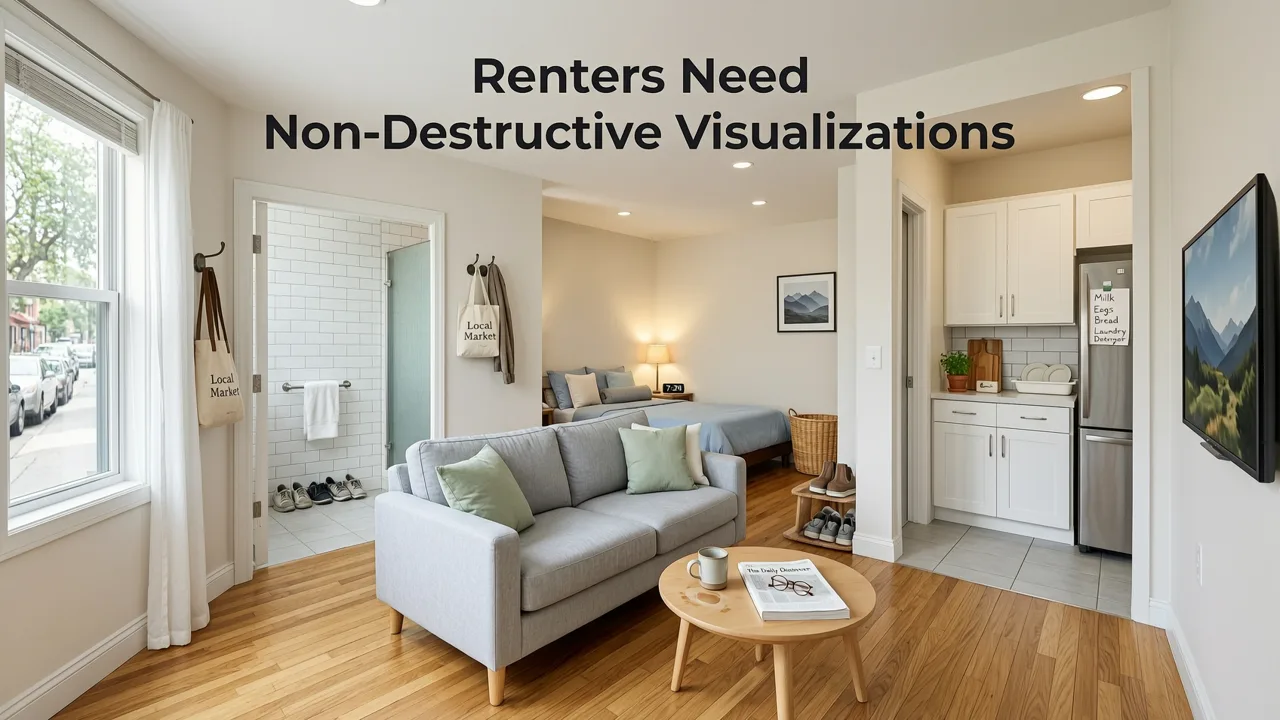
The primary challenge of decorating a rental property is the inherent lack of permanence. Tenants must balance their desire for a personalized sanctuary with the strict clauses of their lease agreements. AI visualization bridges this gap by providing a risk-free planning environment.
Trying NINE AI Interior Design Generators to Redesign my Living Room!
by Cozy DIY Home
Overcoming the "No Permanent Changes" Lease Clause
Most standard leases explicitly forbid painting walls, changing fixed lighting, or altering cabinetry. When using AI design tools, users can input these constraints directly. The software can be prompted to ignore permanent fixtures and instead generate concepts utilizing lease-friendly design principles. This means the AI will suggest large-scale area rugs to define spaces, freestanding bookcases to act as room dividers, and removable textile treatments, rather than built-in shelving or hardwired sconces.
Budget-Friendly Experimentation Without the Risk
Furniture and decor represent a significant financial investment. Purchasing a sectional sofa or a set of dining chairs only to discover they clash with the existing rental flooring or overwhelm the room is a costly mistake. AI-powered visualization eliminates this guesswork. By rendering photorealistic previews, tenants can verify scale, proportion, and color harmony before spending a single dollar. This level of rental property styling ensures that every purchase is intentional and perfectly suited to the temporary space.
How AI Interior Design for Renters Actually Works
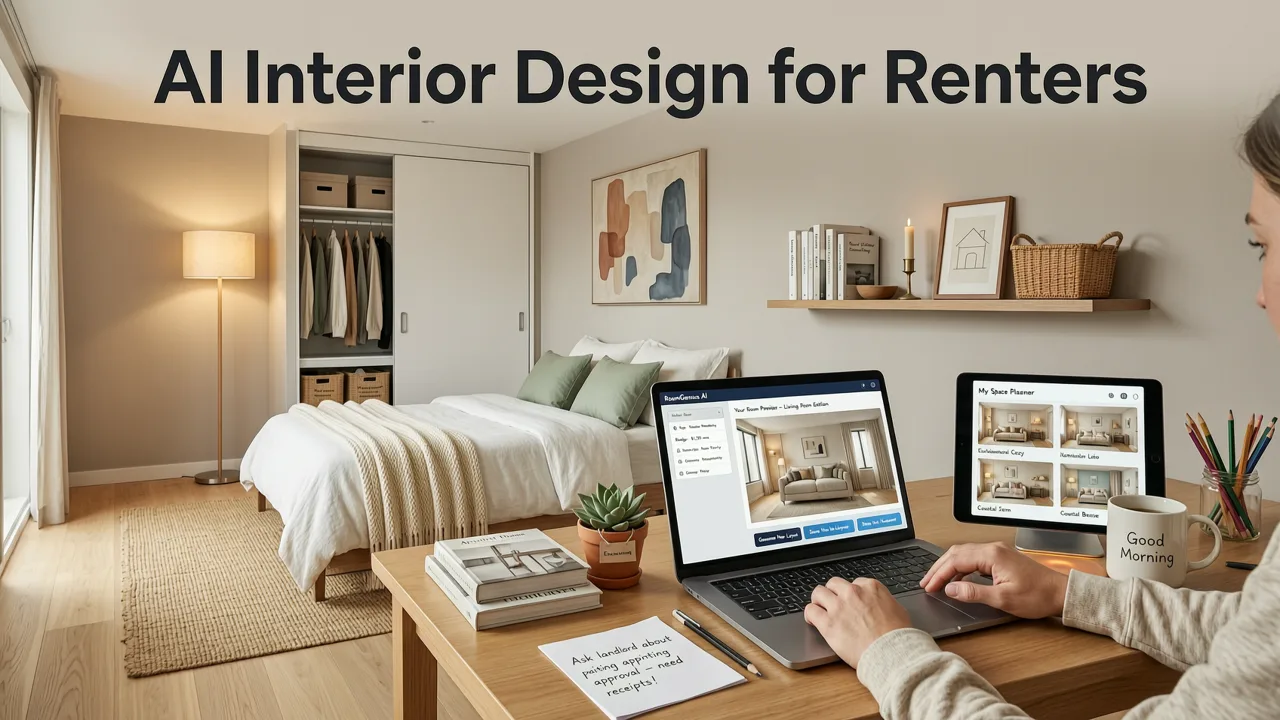
The technology powering these applications relies on advanced computer vision and generative diffusion models. When a user uploads a photograph of their rental bedroom or living area, the AI analyzes the spatial geometry, existing lighting conditions, and architectural features.
Step-by-Step Room Transformation
- Capture the Space: The user takes a well-lit, wide-angle photo of the room. The AI maps the dimensions, identifying windows, doors, and existing fixed elements like radiators or built-in closets.
- Define Constraints and Style: The user selects a design style (e.g., Mid-Century Modern, Japandi, or Eclectic) and specifies that only non-destructive, renter-friendly elements should be generated.
- Generate and Refine: The AI processes the image, masking out existing temporary furniture and replacing it with the selected style. Modern platforms utilize spatial reasoning protocols, similar to those detailed in foundational machine learning documentation from providers like OpenAI, to ensure that generated objects respect the physical dimensions of the room.
- Review and Source: The user reviews the photorealistic render. Because responsible AI guidelines from Google emphasize the importance of generating accurate, non-misleading visual representations, the resulting image serves as a reliable blueprint for sourcing real-world, removable decor.
Top Renter-Friendly Design Styles to Test First
Certain design aesthetics translate exceptionally well to rental environments because they rely heavily on textiles, lighting, and movable furniture rather than structural changes. Testing these styles through AI allows renters to see how the vibe of a room can shift dramatically without touching the paint.
Modern Farmhouse and Boho Chic Adaptations
The Modern Farmhouse style is highly achievable in rentals through the use of warm wood tones, wrought-iron accents, and layered neutral textiles. For those drawn to this cozy aesthetic, exploring Modern Farmhouse Living Room Ideas & AI Preview Tools for 2026 reveals how to achieve the look using freestanding shelving, large vintage-style mirrors, and temporary architectural accents that lean against walls rather than being mounted.
Alternatively, the Bohemian aesthetic thrives on layered patterns and organic textures, making it perfect for renters. A Boho Chic Kitchen Remodel Ideas with AI Preview for 2026 demonstrates how tenants can use removable peel-and-stick backsplashes, hanging macrame planters, and layered rugs to transform a sterile rental kitchen without altering the existing cabinetry or tiles.
Outdoor and Balcony Styling
Renters lucky enough to have a private balcony or patio also benefit from spatial visualization. Temporary outdoor styling is a growing trend, and tools like the Free Front of House Makeover Tool – AI-Powered & Instant in 2026 can be adapted to visualize outdoor seating areas. Users can see how weather-resistant rugs, modular seating, and potted vertical gardens will look in their specific outdoor footprint before ordering the items.
Comparing Design Approaches for Rental Spaces
Understanding the value of AI visualization requires comparing it to traditional methods of planning a rental makeover. The table below outlines the distinct advantages of leveraging AI for non-destructive design.
| Aspect | Traditional Renter Decor Planning | AI-Powered Visualization |
|---|---|---|
| Cost of Experimentation | High. Requires purchasing items to test if they fit the space and style. | Near zero. Infinite digital experimentation before any physical purchase. |
| Time to Visualize | Weeks or months of browsing catalogs, measuring, and imagining layouts. | Seconds. Instant photorealistic renders based on a single photo upload. |
| Accuracy of Fit | Low. Mental visualization often fails to account for scale and lighting. | High. AI respects room dimensions, window placements, and natural light. |
| Lease Compliance | Risky. Tenants may accidentally plan changes that violate lease terms. | Secure. Prompts can be restricted to non-destructive, removable elements only. |
| Style Cohesion | Fragmented. Hard to see how disparate items will look together in situ. | Unified. The AI generates a complete, harmonious room concept instantly. |
Practical Tips for Executing AI-Generated Renter Makeovers
Translating a digital AI render into a physical reality requires strategic sourcing. Once the AI has provided the perfect lease-friendly vision, renters must execute the plan using products that will not damage the property.
- Prioritize Removable Adhesives: Use heavy-duty, damage-free hanging strips for artwork and mirrors. For temporary backsplashes or contact paper on countertops, ensure the adhesive is designed for clean removal.
- Focus on Lighting Layers: Since changing fixed overhead lighting is often prohibited, use the AI render to plan a layered lighting scheme. Incorporate floor lamps, table lamps, and plug-in wall sconces that mount using adhesive brackets rather than hardwiring.
- Utilize Tension and Pressure: Tension rods can hold curtains without drilling holes. Pressure-mounted shelving units can provide essential storage in rental kitchens or bathrooms without leaving marks on the tiles.
- Anchor with Textiles: Rugs are the most effective way to change the acoustic and visual feel of a room. If the rental has unattractive flooring, a large, high-quality area rug can completely mask it, exactly as visualized in the AI preview.
Conclusion
The evolution of AI interior design for renters has fundamentally changed how tenants interact with their living spaces. By providing instant, photorealistic, and lease-compliant visualizations, this technology removes the financial risk and anxiety associated with decorating a temporary home. Renters can now confidently experiment with bold styles, optimize their spatial layouts, and create a personalized sanctuary without compromising their security deposit. To begin transforming your rental space with confidence, explore the AI visualization tools available at AI Design Interiors and start planning your non-destructive makeover today.