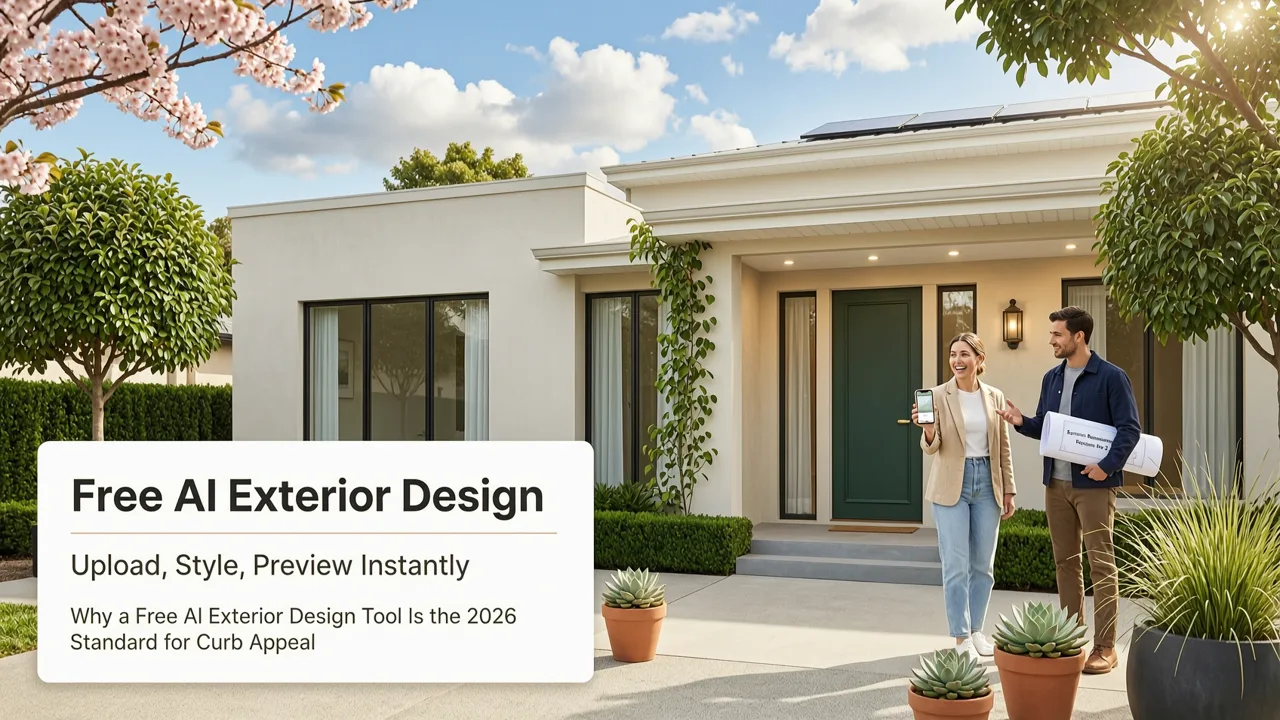
If you have ever looked at an outdated facade and struggled to visualize its potential, a free AI exterior design tool offers an instant, photorealistic solution. By simply uploading a photo and selecting a preferred architectural style, you can generate true-to-scale exterior previews in seconds, eliminating the need for expensive 3D modeling or hiring a draftsman just to explore ideas.
In 2026, curb appeal visualization has shifted from a luxury reserved for high-end architectural firms to an accessible, everyday resource. Whether you are planning a complete siding replacement, updating your front porch, or simply testing new color palettes, AI house rendering provides a risk-free sandbox to experiment before committing to a real renovation.
Why a Free AI Exterior Design Tool Is the 2026 Standard for Curb Appeal
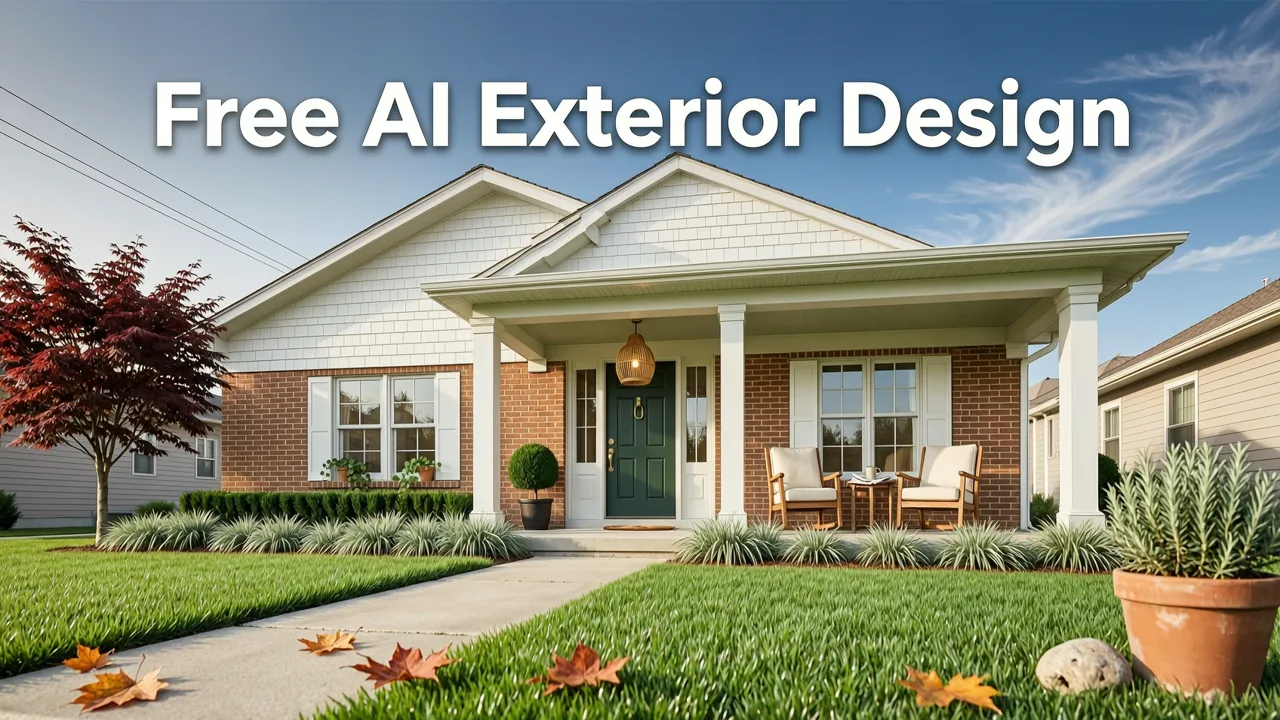
Traditional exterior remodeling relies heavily on imagination or costly preliminary renderings. Homeowners often struggle to bridge the gap between a flat mood board and the actual physical structure of their house. A modern exterior home makeover powered by artificial intelligence solves this by mapping new textures, materials, and architectural elements directly onto your existing structure.
Best AI Interior Design Tool? Virtual Staging Software + Exterior Home Remodel Visualizer
by Digital Product Wizard
This technology leverages advanced spatial recognition to understand the depth, shadows, and structural lines of your original photograph. The result is a photorealistic facade design that respects the existing geometry of your home while applying the new aesthetic. For realtors, this means faster property staging. For homeowners, it means absolute confidence in material choices. The ability to iterate through dozens of styles in minutes has made virtual home staging an indispensable part of the 2026 renovation planning process.
How a Free AI Exterior Design Tool Actually Works
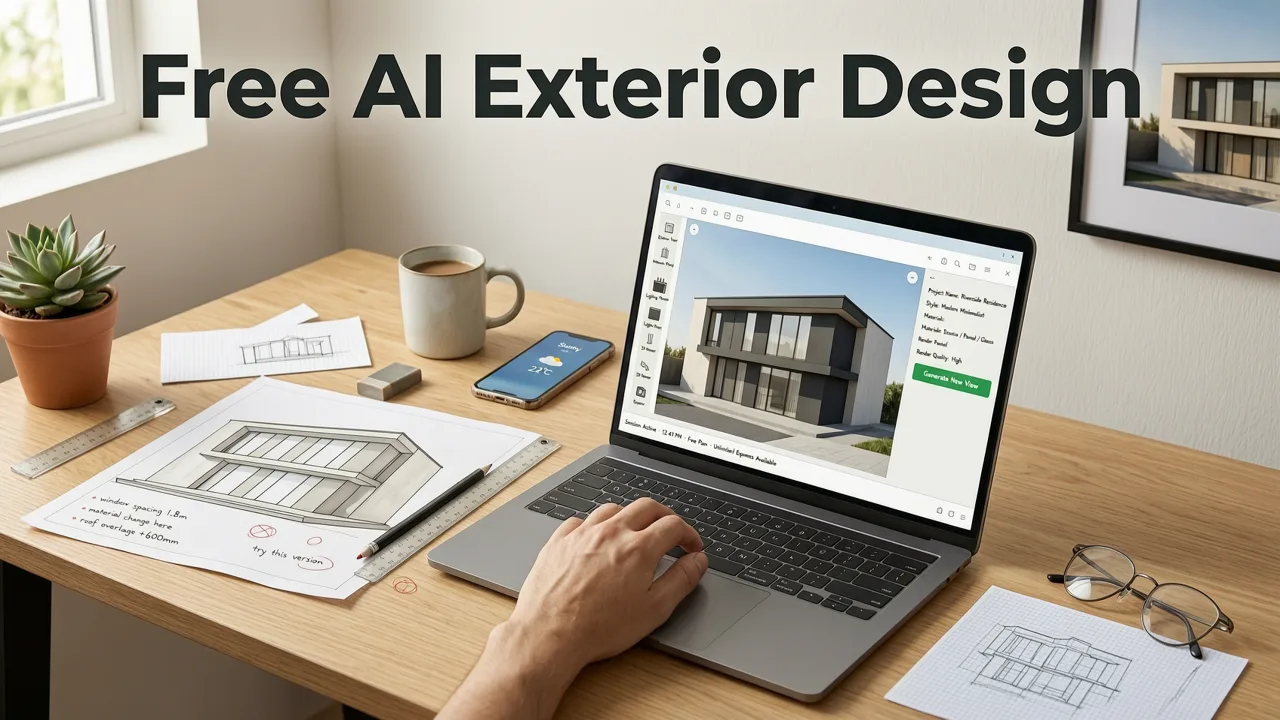
Using an architectural style generator is highly intuitive, but the quality of your final output depends heavily on the inputs you provide. The process generally follows a streamlined three-step workflow designed to deliver accurate results without requiring technical design skills.
Step 1: Capture the Right Base Photo
The foundation of any successful AI render is a high-quality base image. To achieve the best results, photograph your home’s exterior during the day when natural lighting is even and shadows are minimal. Avoid extreme angles; a straight-on, eye-level shot provides the AI with the most accurate spatial data. Ensure that large obstructions, like parked cars or overgrown shrubs blocking the main facade, are cleared from the frame if possible. The clearer the structural lines of the roof, windows, and doors, the more precise the generated preview will be.
Step 2: Select Your Architectural Style
Once the image is uploaded, the platform presents a library of architectural styles and material palettes. You can choose from distinct aesthetics such as Modern Minimalist, Mid-Century Contemporary, Classic Craftsman, or Mediterranean. Many tools also allow for granular control, letting you apply specific materials to specific zones—for example, applying stone veneer to the lower half of the facade while selecting horizontal wood siding for the upper levels. This targeted approach ensures the redesign aligns perfectly with your structural reality.
Step 3: Generate and Refine Your Preview
After selecting your parameters, the AI processes the image and generates a new rendering in seconds. Review the output for accuracy. If the lighting looks slightly off or a specific texture needs adjustment, most platforms allow you to tweak the prompt or regenerate specific zones. This iterative process is where the true value of the technology shines, allowing you to compare a dark brick exterior against a crisp white stucco finish side-by-side.
Traditional Drafting vs. AI House Rendering: A 2026 Comparison
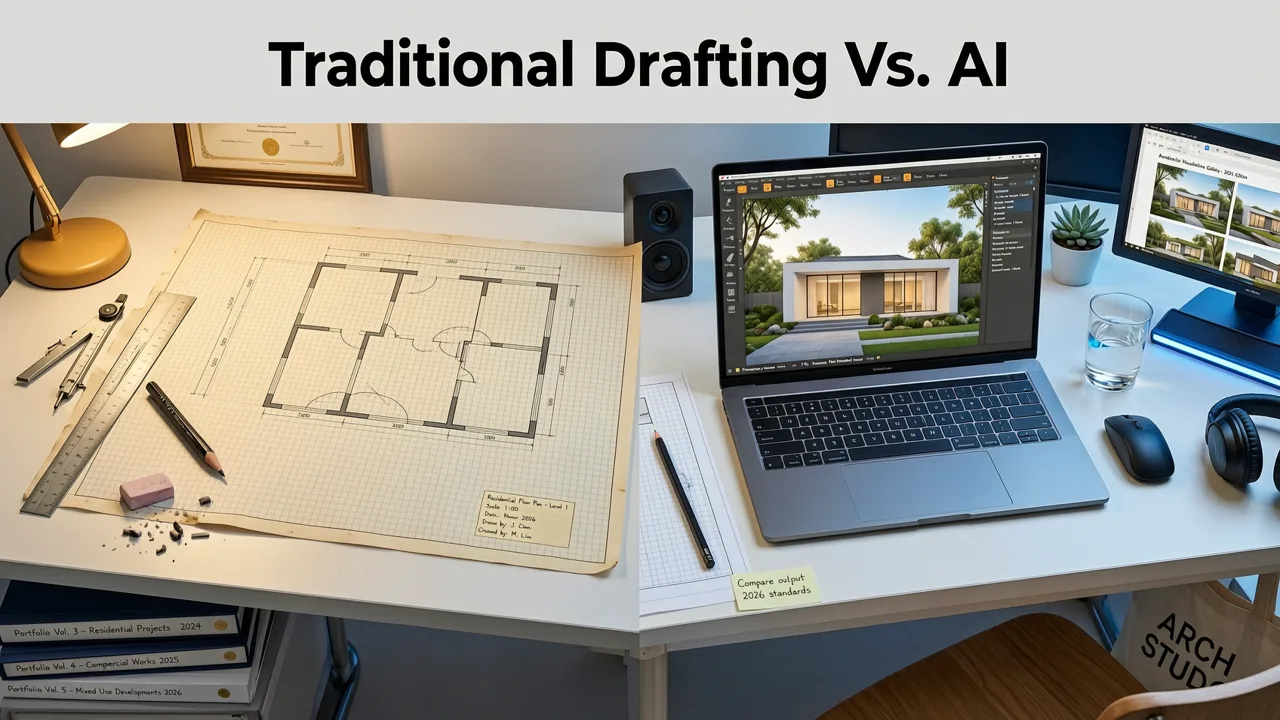
Understanding the advantages of AI-driven design becomes clearer when comparing it to conventional methods. The table below outlines the primary differences between hiring a traditional rendering service and utilizing an automated platform.
| Feature | Traditional 3D Rendering | AI Exterior Design Tool |
|---|---|---|
| Turnaround Time | Days to weeks | Seconds to minutes |
| Cost | Hundreds to thousands of dollars | Free or low-cost subscription |
| Iteration Speed | Slow, requires manual redrawing | Instant, unlimited variations |
| Technical Skill Required | High (CAD or 3D software proficiency) | None (photo upload only) |
| Photorealism | Highly dependent on the artist's skill | Consistently high via trained models |
Top Use Cases for Virtual Exterior Home Makeovers
The versatility of AI rendering makes it valuable across multiple real estate and design sectors. Homeowners use it to validate expensive siding or roofing decisions, ensuring the chosen colors complement the surrounding neighborhood. Realtors leverage it for virtual home staging, transforming dated properties into modern listings that attract higher offers without spending a dime on physical renovations.
Interior designers and architects also utilize these tools to provide clients with a comprehensive vision of the entire property. While the exterior sets the first impression, the interior defines the daily living experience. Professionals often pair exterior visualization with a best AI interior design app for real-time room makeovers to present a unified, full-property transformation concept to their clients.
Best Practices for Photorealistic Facade Design
While the software handles the heavy lifting, applying basic design principles ensures your final render is both beautiful and structurally plausible. Pay attention to the balance of materials. If you introduce a heavy, textured element like natural stone, balance it with smoother, lighter materials elsewhere on the facade to prevent the design from feeling visually overwhelming.
Furthermore, it is important to understand the technology behind the images you are generating. When relying on generative models for home design, understanding the underlying architecture, such as the frameworks detailed in the OpenAI documentation, highlights how these tools interpret spatial geometry and light diffusion. Additionally, adhering to ethical and safe AI practices, as outlined in the Google AI guidance, ensures that generated designs remain structurally plausible and visually accurate without misrepresenting architectural realities or violating local zoning aesthetics.
Transitioning from Virtual Preview to Real Renovation
A successful exterior makeover extends beyond the walls of the house; it encompasses the entire property envelope. Once you have finalized the facade, the logical next step is to harmonize the surrounding landscape with your new architectural style. A modern facade paired with an unkempt lawn will diminish the overall impact of the renovation.
To maintain design continuity, you can seamlessly design your backyard with a photo upload using the 2026 AI landscape guide. This allows you to match the hardscaping, fencing, and garden aesthetics to the exterior materials you just selected, creating a cohesive outdoor renovation planner experience from the front porch to the back patio.
Final Thoughts on AI-Driven Curb Appeal
The democratization of design technology means that achieving a stunning exterior no longer requires a massive budget or specialized software skills. A free AI exterior design tool empowers you to take control of your property's aesthetic, providing the clarity and confidence needed to execute a real-world renovation. By uploading a simple photo and exploring diverse styles, you bridge the gap between imagination and reality, ensuring your final investment perfectly reflects your vision.