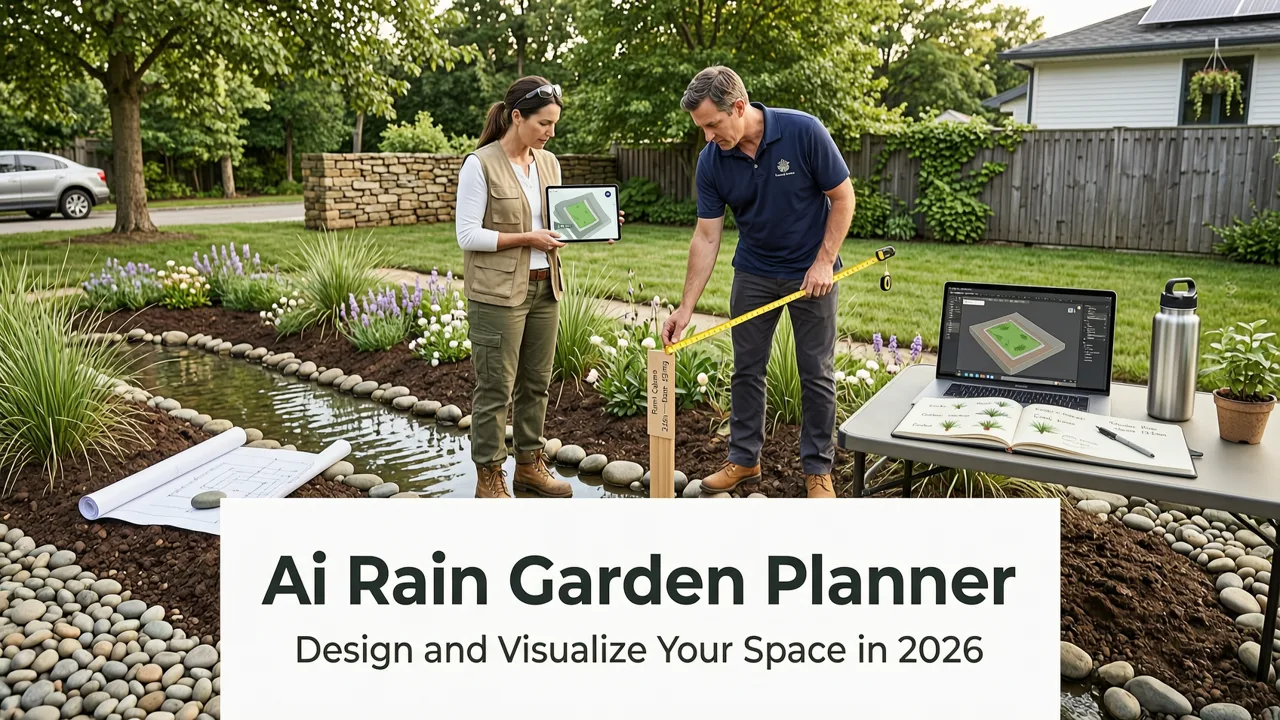
Why an AI Rain Garden Planner Is Essential for Modern Landscaping
An AI rain garden planner uses advanced image generation to transform a simple photograph of your yard into a photorealistic, sustainable landscaping design in seconds. Instead of relying on expensive landscape architects or steep-learning-curve 3D software, this technology allows homeowners to visualize native plant layouts, water drainage solutions, and aesthetic hardscaping instantly. As environmental awareness grows in 2026, integrating eco-friendly yard design into residential properties is no longer just a trend; it is a practical necessity for effective stormwater management design.
Rain gardens are specialized landscape features designed to capture and absorb runoff from roofs, driveways, and lawns. While their ecological benefits are well-documented, planning one requires balancing hydrology, soil science, and aesthetics. Traditionally, this meant hiring a professional to draft blueprints or spending hours manipulating complex digital terrain models. Today, generative AI landscaping tools bridge the gap between conceptual design and visual reality, giving you the power to see exactly how a rain garden will look and function in your specific outdoor space before moving a single shovel of dirt.
How an AI Rain Garden Planner Works
Modern outdoor space simulators leverage multimodal artificial intelligence to understand spatial geometry, lighting, and existing architectural elements. By analyzing a standard photograph, the system can identify the house foundation, existing grading, and sunlight exposure to generate a highly accurate design. The underlying technology relies on advanced spatial recognition, similar to the principles outlined in OpenAI documentation regarding multimodal model capabilities, ensuring that the generated designs respect the physical constraints of your yard.
Solve Your Drainage Problem by Planting A Rain Garden! - The BEST Plants to Absorb Excess Moisture!
by Bountiful Gardens
Step 1: Capture and Upload Your Yard
The process begins with a simple photograph. Take a clear, well-lit picture of the area where you intend to install the rain garden. The AI analyzes the perspective, depth, and existing structures to create a digital baseline. Unlike older software that required manual measurements and grid mapping, the AI infers spatial relationships directly from the image, creating an accurate canvas for your new design.
Step 2: Define the Rain Garden Parameters
Once the image is uploaded, you can specify your design goals. You might select a specific aesthetic, such as a naturalistic meadow, a structured modern bioswale, or a cottage-style pollinator habitat. You can also input functional requirements, prompting the AI to prioritize deep-rooted native plants that excel at water infiltration. The system processes these parameters to generate a layout that is both visually cohesive and ecologically sound.
Step 3: Generate and Compare Photorealistic Previews
Within seconds, the tool produces multiple photorealistic variations of your rain garden. You can compare different plant palettes, hardscape materials, and grading styles side by side. This rapid iteration allows you to refine the design until it perfectly matches your vision. Furthermore, responsible generation of environmental simulations aligns with Google AI guidance on creating helpful and accurate visual representations, ensuring the previews are realistic and actionable rather than purely fantastical.
Key Features to Look for in an AI Rain Garden Planner
Not all visualization tools are built for complex ecological landscaping. When evaluating an AI rain garden planner, it is important to ensure the platform offers features tailored to outdoor environmental design. The following table compares traditional planning methods with the capabilities of a modern AI-driven platform.
| Feature | Traditional Landscape Design | AI Rain Garden Planner |
|---|---|---|
| Initial Visualization | 2D sketches or basic 3D wireframes | Photorealistic, true-to-room outdoor previews |
| Time to First Draft | Several days to weeks | Seconds to minutes |
| Plant Selection | Manual research and catalog browsing | AI-suggested native plant palettes based on region |
| Cost | High (professional consultation fees) | Accessible (SaaS subscription or freemium model) |
| Iteration Speed | Slow (requires redrawing) | Instant (regenerate with new prompts or styles) |
Designing a Functional and Beautiful Rain Garden
While the AI handles the visual heavy lifting, understanding the core principles of rain garden design ensures you prompt the tool effectively. A successful installation must manage water volume, filter pollutants, and support local biodiversity. Using an AI tool helps you visualize how these functional elements integrate with the overall aesthetic of your property.
Choosing the Right Native Plants
The most effective rain gardens utilize native plants with deep root systems that can tolerate both saturated soils and periods of drought. Species like Echinacea, Rudbeckia, and various native grasses are ideal. An AI rain garden planner can simulate how these plants will look at maturity, allowing you to balance tall structural plants with shorter groundcovers. This native plant visualization prevents the common mistake of overcrowding, ensuring each species has the space it needs to thrive and perform its ecological function.
Integrating Hardscaping and Water Flow
A rain garden is not just a planting bed; it is a hydrological system. The design must include proper inlet and outlet mechanisms to handle heavy storm events. AI visualization allows you to experiment with decorative river rocks, permeable pavers, and subtle grading changes. By seeing how these hardscape elements interact with the plantings in a photorealistic environment, you can design a system that looks like an intentional landscape feature rather than a muddy depression.
AI Rain Garden Planner vs. Traditional Landscape Design
The shift toward AI-assisted design does not eliminate the value of professional horticulturists, but it fundamentally changes how homeowners interact with the design process. Traditional landscape architecture is highly collaborative but often bottlenecked by scheduling, drafting time, and visualization limitations. Clients frequently struggle to translate a 2D plan into a 3D reality, leading to misunderstandings and costly change orders during construction.
An AI rain garden planner democratizes the initial design phase. It empowers homeowners to explore concepts, understand spatial relationships, and develop a clear vision before ever contacting a contractor. When you do bring in a professional for the physical installation, you can provide them with highly specific, visually accurate references, streamlining the entire project and ensuring the final result matches your expectations.
Expanding Your Property Vision
A comprehensive property upgrade often extends beyond the yard. While your exterior takes shape through sustainable landscaping, you might also consider refreshing your home's interior to match your renewed outdoor living spaces. Exploring options like the best white paint for small rooms can brighten interiors that overlook your new garden. If you are looking to add character to your indoor spaces, evaluating accent wall paint vs wallpaper helps you make informed decisions that complement your home's overall aesthetic. You can even use white wall paint AI visualization to test these interior changes instantly, ensuring a cohesive flow between your indoor and outdoor environments.
Conclusion
Designing a sustainable, beautiful outdoor space no longer requires a massive budget or specialized technical skills. An AI rain garden planner provides the visual clarity and design flexibility needed to create functional stormwater solutions that enhance your property's value and ecological health. By transforming a simple photo into a photorealistic masterpiece, this technology puts the power of professional landscape design directly into your hands.
Ready to reimagine your outdoor space? Upload a photo of your yard to the AI design platform today, select your preferred sustainable style, and watch your ideal rain garden come to life in seconds.