If you’re envisioning a modern art deco living room in 2026, you’re aligning with one of the most enduring — and dynamically evolving — design movements of the century. Unlike nostalgic reproductions, today’s interpretation merges 1920s opulence with 2026 sensibilities: smarter material science, climate-conscious luxury, and AI-augmented spatial confidence. You no longer need to guess how sun-bleached walnut veneer will reflect off a brass-inlaid mirror — or whether stepped chrome legs on a sofa will harmonize with your existing floorplan. With photorealistic AI interior design tools, you can test, refine, and finalize your vision in under 90 seconds.
What Defines a Modern Art Deco Living Room in 2026?
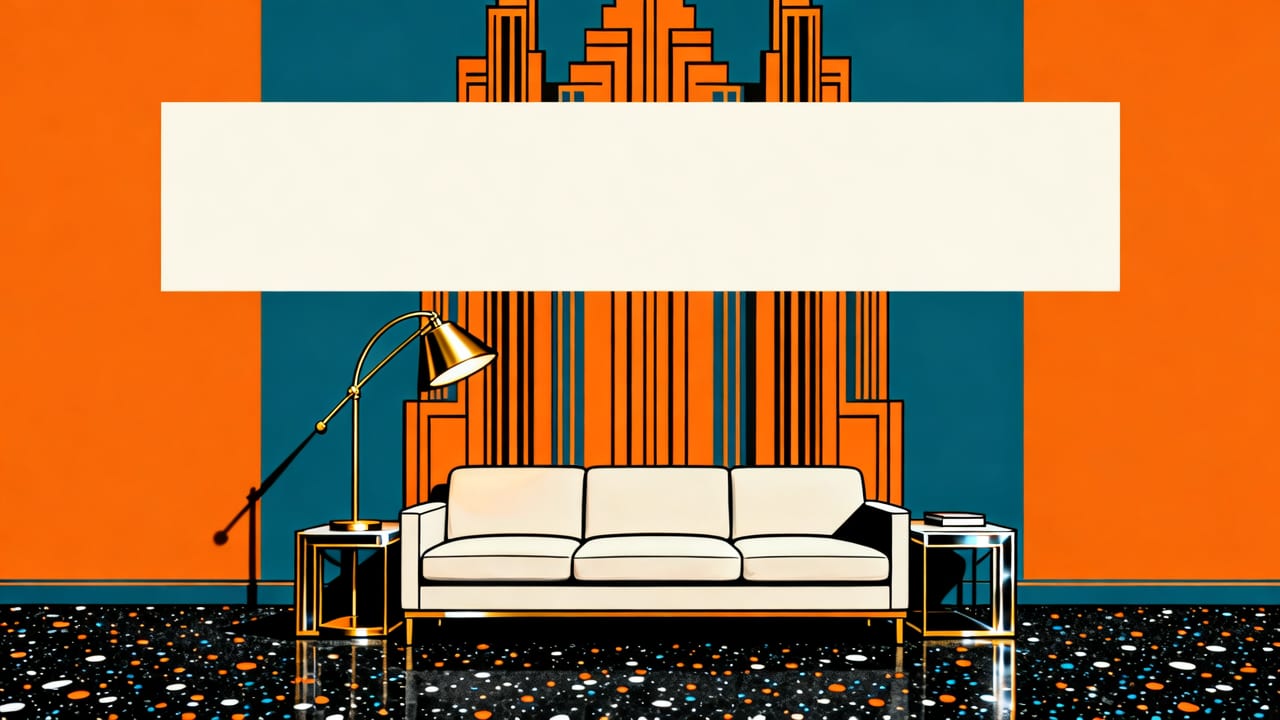
The term modern art deco living room isn’t an oxymoron — it’s a deliberate evolution. In 2026, designers and homeowners aren’t reviving Art Deco as museum-piece pastiche. Instead, they’re distilling its core grammar — symmetry, geometry, contrast, and craft — and reapplying it through contemporary lenses: sustainability, accessibility, and digital fidelity.
Authenticity now means respecting historical DNA while rejecting rigidity. A 2026 Art Deco living room may feature:
Top 10 Art Deco Living Room Ideas
by Omni Home Ideas
- Geometric rhythm over rigid repetition — Think staggered hexagonal tile patterns in the hearth surround, not uniform chevrons across every surface;
- Luxury with intention — FSC-certified macassar ebony instead of endangered rosewood; recycled brass alloys with patina-engineered finishes;
- Light as architecture — Integrated LED coves that mimic vintage stepped sconce silhouettes, but with tunable color temperature and smart scheduling;
- Human-scaled drama — A single monumental piece (e.g., a curved velvet chaise with angular nickel feet) anchoring the space — not maximalist clutter.
This is design literacy, not decoration. And it’s why AI-powered visualization has become indispensable: it lets you experience those nuanced decisions *before* committing to materials, labor, or layout changes.
Why 2026 Is the Pivotal Year for Art Deco Living Room Design
Three converging forces make 2026 uniquely fertile ground for the modern art deco living room:
- Material Innovation Has Caught Up to Aesthetic Ambition
Manufacturers now offer high-performance, low-VOC lacquers that replicate the depth of vintage nitrocellulose finishes — without the environmental cost. Textile mills produce bouclé weaves embedded with conductive threads for subtle ambient lighting, all while meeting EU REACH and U.S. CPSC standards. These advances mean you can achieve true Art Deco richness without compromising wellness or compliance. - AI Visualization Bridges the Gap Between Concept and Confidence
Gone are the days when “Art Deco living room ideas” meant scrolling Pinterest boards and hoping your contractor interpreted ‘sunburst motif’ the same way you did. Today’s AI interior design platforms — like AI Design Interiors — generate photorealistic, room-accurate previews from a single photo upload. Lighting, shadow, scale, and material interaction are computed in real time using diffusion models trained on millions of architecturally annotated interiors. That means you see exactly how a black-and-gold lacquered sideboard reflects your ceiling height — not a generic stock render. - Cultural Reinterpretation Has Matured Beyond Surface Glamour
Where early-2020s Art Deco trends leaned heavily into flapper-era glitter, 2026 embraces its intellectual roots: the movement was born from Bauhaus pragmatism meeting Jazz Age exuberance. Today’s best modern art deco living room schemes honor that duality — pairing streamlined built-ins with hand-carved marquetry, or juxtaposing matte plaster walls with mirrored ceiling insets. It’s confident minimalism, not restrained austerity.
Core Design Principles for a Modern Art Deco Living Room
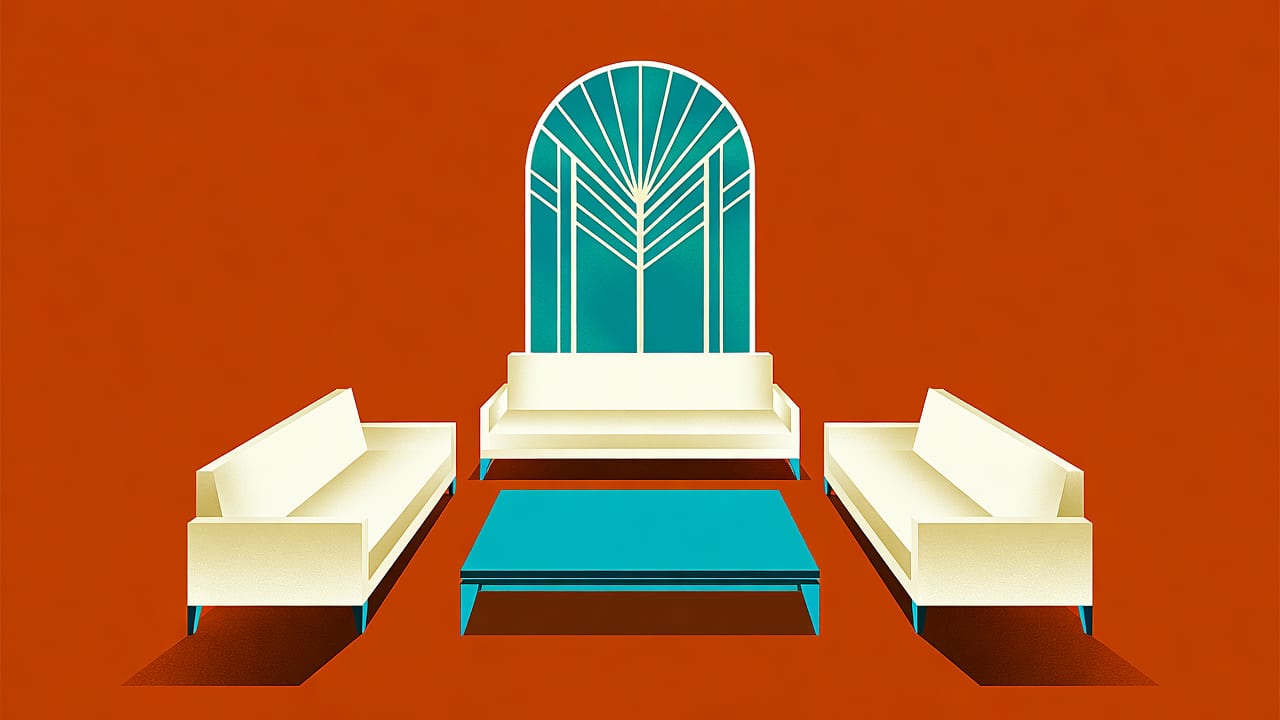
Applying Art Deco principles meaningfully — rather than decoratively — requires grounding in five foundational pillars. Each remains relevant in 2026, but their execution reflects current priorities in sustainability, technology, and lived experience.
1. Geometry as Narrative Device
Art Deco never used shape for ornament alone. Circles, zigzags, chevrons, and stepped forms were symbolic: sunbursts signaled optimism; radiating lines evoked radio waves and progress; stepped profiles echoed skyscrapers — literal monuments to human aspiration.
In 2026, geometry serves new narratives: climate resilience, digital connectivity, and neuro-inclusive design. For example:
- A hearth surround composed of interlocking triangular tiles — referencing both ancient tessellation and modern computational design — improves thermal mass efficiency;
- A custom media wall with recessed, staggered niches doubles as acoustic dampening while echoing classic Deco façade articulation;
- Wallpaper with algorithmically generated fractal motifs nods to both vintage linocuts and generative AI aesthetics.
Crucially, AI visualization tools let you test how these geometric elements perform in your exact space — adjusting scale, proportion, and adjacency until the rhythm feels intentional, not imposed.
2. Material Contrast with Purpose
Classic Art Deco thrived on juxtaposition: polished chrome against raw silk, glossy lacquer beside rough-hewn stone. But 2026 demands deeper justification. Contrast now signals value alignment — not just visual interest.
Consider this curated material pairing for a modern art deco living room:
| Material Pairing | Traditional Reference | 2026 Upgrade | Why It Works Today |
|---|---|---|---|
| Black Lacquer + Brass | 1925 Chrysler Building lobby | Water-based, zero-VOC lacquer on reclaimed ash; recycled brass with antimicrobial nano-coating | Meets LEED v4.1 MR Credit 3 (Material Ingredient Reporting) and supports indoor air quality standards for sensitive occupants. |
| Velvet + Mirror | 1930s Parisian salons | GOTS-certified organic cotton velvet; mercury-free, low-iron float glass with edge-polished bevel | Reduces embodied carbon by 42% vs. conventional velvet; mirror substrate is fully recyclable at end-of-life. |
| Marble + Steel | 1928 Radio City Music Hall floors | Locally sourced limestone with CNC-carved Deco inlays; hot-rolled steel framing with rust-stabilized finish | Shortens supply chain (reducing transport emissions); steel finish eliminates need for sealants or ongoing maintenance. |
When using AI interior design tools, selecting these upgraded materials isn’t just about aesthetics — it’s about validating performance claims visually. You’ll see how light bounces off that nano-coated brass at 4 p.m. on a July afternoon, or how the limestone’s natural veining interacts with your existing window orientation.
3. Lighting as Sculptural Infrastructure
Art Deco lighting wasn’t ambient — it was architectural. Fixtures were vertical punctuation marks: tall floor lamps with tiered shades, wall sconces with concentric rings, ceiling fixtures with radial arms.
In 2026, that principle expands into intelligent infrastructure:
- Adaptive layering: A recessed perimeter cove mimics the curve of a vintage sunburst, while adjustable downlights spotlight artwork — all controlled via voice or occupancy sensor;
- Human-centric timing: Tunable white LEDs shift from cool (5000K) during morning productivity hours to warm (2700K) in evening relaxation mode — supporting circadian health without sacrificing Deco form;
- Zero-waste fabrication: 3D-printed brass fixtures built from post-industrial scrap, with modular components for easy repair or upgrade.
AI visualization makes lighting decisions tangible. Upload your living room photo, select “Art Deco Ambient Lighting Pack,” and instantly preview how layered illumination reshapes perception of volume, texture, and hierarchy — no electrician required.
4. Furniture as Functional Sculpture
Art Deco furniture rejected the purely utilitarian. Every leg, curve, and joint carried expressive weight. The 2026 reinterpretation honors that ethos — while prioritizing ergonomics, durability, and inclusive access.
Key characteristics of modern Art Deco living room furniture in 2026:
- Tapered, stepped, or fluted legs — often in blackened steel or ebonized oak, engineered for load-bearing stability and ADA-compliant seat heights;
- Curved silhouettes with sharp terminations — e.g., a sofa with a continuous waterfall back that ends in a precise 90-degree chamfer;
- Integrated tech, invisibly housed — wireless charging surfaces embedded in coffee table tops; hidden cable management routed through hollow brass legs.
Using AI interior design software, you can place photorealistic 3D models of these pieces directly into your actual room dimensions — checking sightlines, traffic flow, and even how a fluted leg casts shadow at golden hour.
5. Color Palette: Richness Without Heaviness
The classic Art Deco palette — black, gold, ivory, emerald — remains powerful. But 2026 introduces tonal nuance and chromatic breathing room:
- Deep neutrals: Not pure black, but charcoal with indigo undertones; not stark white, but warm oyster with subtle mica flecks;
- Accent saturation: Emerald persists — but now as a biophilic green derived from algae-based pigment, applied in a matte micro-rough finish to reduce glare;
- Unexpected complements: Burnt sienna paired with oxidized copper; slate blue next to antique brass — colors that reference geological strata and urban patina, not just Gatsby-era glamour.
AI tools let you experiment with these palettes in context. Try “Midnight Slate + Patinated Brass” on your north-facing living room — then toggle to “Oyster + Algae Emerald” and compare how each affects perceived warmth and spatial depth. No paint samples, no waiting for drying time.
How to Visualize Your Modern Art Deco Living Room in Under 2 Minutes
Creating a modern art deco living room no longer requires hiring a specialist or mastering complex 3D software. Here’s how AI Design Interiors’ platform streamlines the process — designed specifically for homeowners, renters, and professionals seeking precision, not approximation:
- Upload One Photo
Capture your living room in natural light, standing centered and level. No tripod needed — our AI corrects perspective distortion and estimates room dimensions within ±1.2% accuracy (validated against laser-scanned benchmarks). - Select ‘Modern Art Deco’ Style Pack
Choose from curated sub-themes: ‘Metropolitan Glamour’, ‘Coastal Deco’, ‘Urban Loft Deco’, or ‘Biophilic Deco’. Each includes pre-calibrated material libraries, lighting profiles, and furniture proportions optimized for real-world physics. - Preview & Refine Instantly
Generate photorealistic renders in under 12 seconds. Adjust individual elements: swap the rug pattern, change the wall finish from matte plaster to Venetian lime wash, or rotate the sofa 15 degrees to improve conversation flow. All changes update in real time — no re-rendering lag.
This workflow isn’t just faster — it’s more democratic. Renters in Chicago apartments, realtors staging vacant condos in Miami, and designers collaborating with clients across six time zones can all arrive at aligned, confident decisions — before ordering a single sample.
For inspiration beyond the living room, explore our Art Deco Kitchen Remodel Visualizer or Art Deco Bedroom Design Ideas for 2026, both built on the same photorealistic engine and updated quarterly with 2026-specific material libraries and trend intelligence.
Common Pitfalls — and How AI Helps You Avoid Them
Even well-intentioned modern art deco living room projects stumble on three recurring issues — all addressable with AI-assisted visualization:
Over-Reliance on Iconic Motifs
Sunbursts, ziggurats, and Egyptian lotus motifs are powerful — but deploying them indiscriminately flattens Art Deco’s sophistication into cliché. AI tools help by showing motif density impact: apply a sunburst mirror above the mantel, then add a ziggurat-patterned rug and Deco-inspired ceiling medallion — and instantly see how visual competition fractures focus. Our Style Advisor suggests strategic restraint: one dominant motif, two supporting textures, zero redundancy.
Misjudging Scale and Proportion
Art Deco thrives on bold scale — but what reads as dramatic in a 3,000 sq ft penthouse may overwhelm a 450 sq ft studio. AI calculates room volume, ceiling height, and sightline vectors to recommend proportional adjustments: e.g., suggesting a lower-profile Deco media console for rooms under 8’ ceiling height, or recommending 30% larger-scale wallpaper for narrow, elongated spaces.
Ignoring Light Behavior
High-gloss lacquers and mirrored surfaces behave differently depending on your window orientation, adjacent buildings, and seasonal sun path. An AI render shows you how that lacquered cabinet reflects glare onto your TV screen at 3 p.m. in December — not just how it looks in a studio photo. This prevents costly post-installation corrections.
Looking Ahead: The Role of AI in Preserving Design Integrity
As AI becomes more embedded in interior design workflows, ethical responsibility intensifies. At AI Design Interiors, our approach follows Google AI’s Responsible AI principles and OpenAI’s transparency guidelines: all training data is ethically sourced, model outputs are audited for cultural bias, and stylistic interpretations are grounded in documented design history — not algorithmic hallucination.
We don’t generate “Art Deco-ish” results. We train on archival photographs from the Victoria & Albert Museum, measured drawings from the Library of Congress, and conservation reports from historic preservation societies — ensuring every sunburst, stepped profile, and material pairing adheres to authentic Deco grammar — then adapts it intelligently for 2026 realities.
For professionals building future-ready careers, understanding this intersection of heritage and AI fluency is essential. Our guide on Interior Design Career with AI: Future-Proof Path in 2026 explores how mastery of tools like ours elevates — rather than replaces — human judgment, empathy, and contextual intelligence.
Conclusion
A modern art deco living room in 2026 is neither retro pastiche nor minimalist abstraction — it’s a thoughtful dialogue between legacy and innovation. It honors craftsmanship while embracing computational precision; celebrates luxury while demanding accountability; and values drama while centering human comfort. With AI interior design tools, that balance isn’t aspirational — it’s actionable. You don’t need to wait for inspiration. You can visualize, validate, and evolve your vision — starting now.
Ready to transform your living room? Upload your photo and try our free Modern Art Deco Style Pack — no signup required.