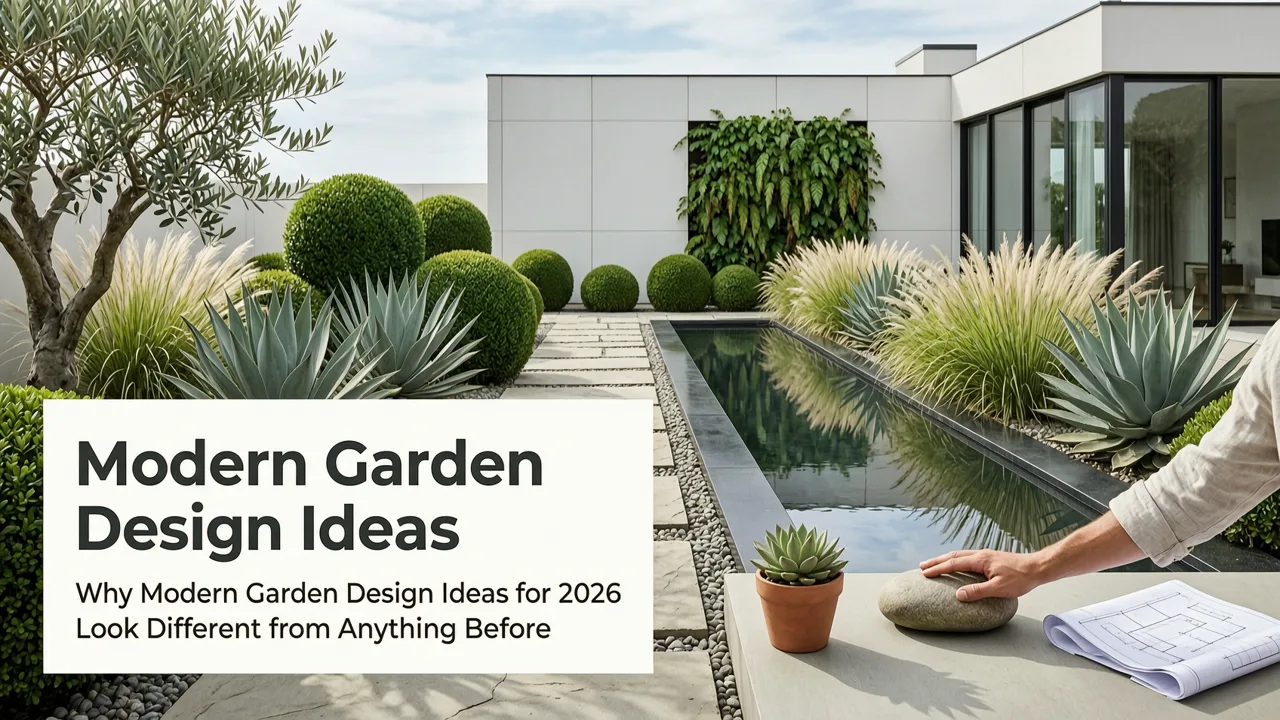
Why Modern Garden Design Ideas for 2026 Look Different from Anything Before
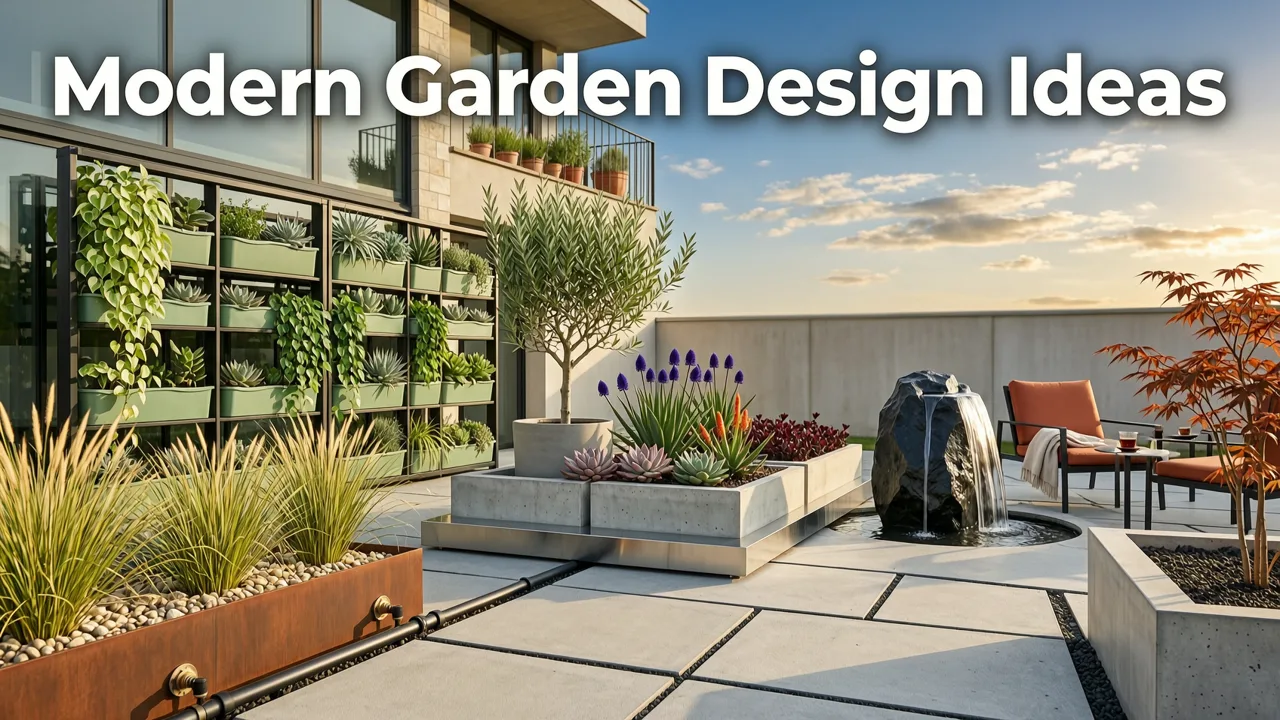
If you've been searching for modern garden design ideas for 2026, you've probably noticed a shift. The crisp concrete planters and rigid geometric lawns of the early 2020s have given way to something softer, smarter, and far more personal. Today's best gardens feel like outdoor living rooms that happen to grow—spaces that blend native planting, climate-responsive materials, and subtle technology into something that looks effortless but is anything but.
The short answer to what defines a modern garden in 2026 is this: restraint, ecology, and visualization. Homeowners are no longer guessing what a redesign will look like. With AI-powered tools, you can now upload a photo of your actual yard and see fifteen different styles rendered in seconds—photorealistic, true to scale, and ready to hand to a landscaper. Below, we walk through the 15 ideas shaping backyards this year, then show you exactly how to test each one on your own space before spending a single dollar.
The 15 Modern Garden Design Ideas Defining 2026
1. Rewilded Minimalism
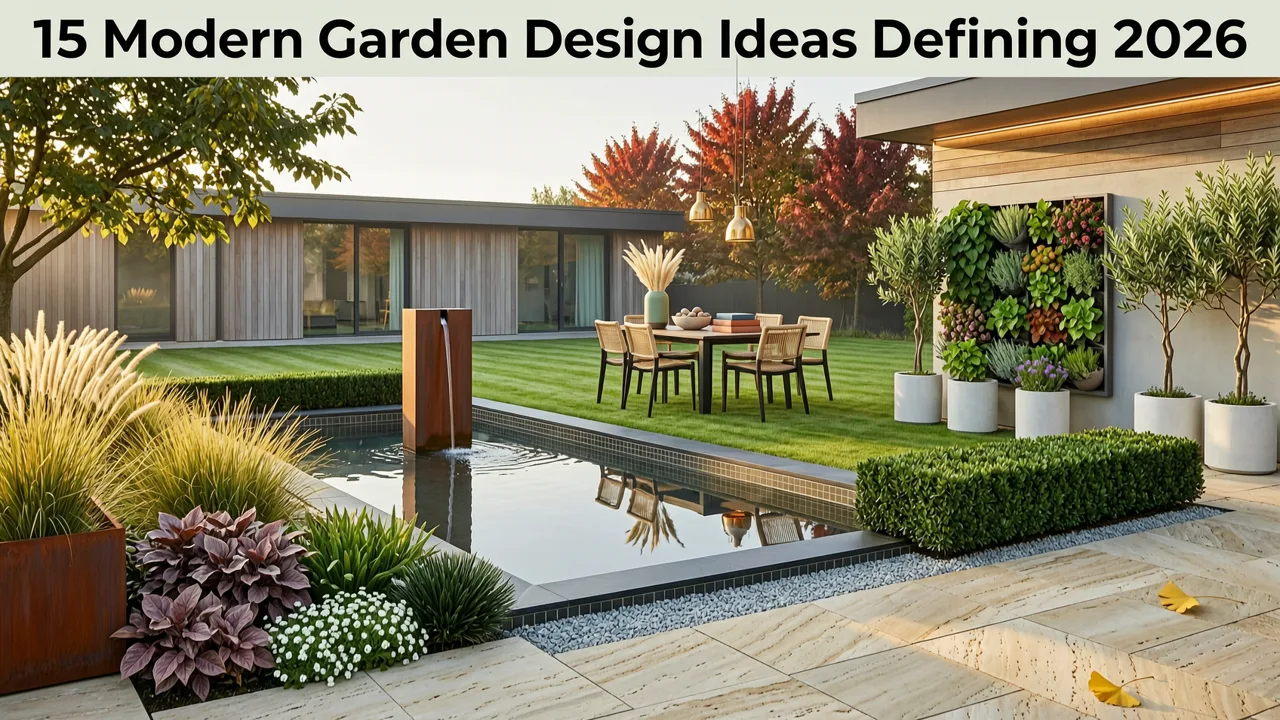
The biggest trend of the year is paradoxical: gardens that look minimal but are ecologically maximal. Think clean-lined paths in decomposed granite, a single specimen tree, and wide drifts of native wildflowers instead of turf. The effect is calm, architectural, and genuinely low-maintenance once established. This style works especially well in drought-prone regions where water restrictions have reshaped what homeowners are allowed to plant.
Modern Garden Design Ideas 2026 | Luxury Landscape & Outdoor Living Inspiration
by Interiorize
2. Biophilic Outdoor Rooms
Modern gardens in 2026 are treated as extensions of the home's interior. Pergolas with retractable louvered roofs, outdoor kitchens with integrated herb walls, and weatherproof lounge zones blur the boundary between inside and out. The key is continuity: matching floor materials, repeating color palettes, and using the same lighting temperature you'd use indoors.
3. Japanese-Inspired Zen Gardens, Reinterpreted
Zen gardens have moved past the postcard version. The 2026 take uses raked gravel in asymmetric patterns, moss as a primary groundcover rather than an accent, and single, carefully chosen boulders as focal points. Water features are quiet—think a barely audible bamboo kakei rather than a cascading waterfall. If you want to explore this direction on your own property, an AI Japanese garden visualizer lets you preview the balance of stone, gravel, and planting in minutes.
4. Climate-Adaptive Planting Palettes
With hardiness zones shifting, modern gardens are designed around what will thrive in 2036, not just what survived 2016. Mediterranean herbs in formerly humid regions, heat-tolerant ornamental grasses in the Southwest, and rain-garden species in flood-prone suburbs are all part of the conversation. The modern look comes from massing these plants in bold sweeps rather than scattering them.
5. Smart Irrigation and Sensor-Driven Landscapes
Soil moisture sensors tied to weather forecasts now adjust watering in real time, cutting usage by up to half compared to timer-based systems. Visually, the hardware has disappeared—emitters are subsurface, controllers are hidden, and the garden simply looks healthier. This is one area where the technology genuinely serves the design rather than competing with it.
6. Monochrome Material Palettes
Charcoal basalt, bleached teak, white oyster-shell paths, and black steel edging create gardens that photograph like editorial spreads. The trick is layering texture so the space never feels flat: rough stone against smooth concrete, fine gravel against broad-leaved hostas. Monochrome works because it lets the planting do all the visual heavy lifting.
7. Edible Front Yards
The lawn is officially optional. In its place: raised beds of espaliered fruit trees, trailing nasturtiums as groundcover, and neat rows of kale interleaved with ornamental alliums. The modern version keeps everything clipped, contained, and deliberately composed so it reads as design, not disarray.
8. Vertical Living Walls and Green Facades
For small urban gardens, the only direction to grow is up. Modular living wall systems now come with integrated irrigation and can support everything from ferns to strawberries. Paired with a simple timber screen, they turn a narrow side yard into something that feels like a courtyard in Barcelona.
9. Fire and Water Pairings
A long, linear gas fire pit set beside a reflecting pool is the signature move of upscale modern gardens this year. The combination of movement and stillness, warmth and cool, creates a focal point that works day and night. Materials are kept deliberately simple—honed concrete or Corten steel—so the elements themselves provide the drama.
10. Pollinator Corridors
Rather than a single bee-friendly patch, the 2026 approach strings together a continuous corridor of nectar-rich planting from front to back yard. The visual effect is a garden that looks naturally abundant, and the ecological payoff is measurable. This pairs beautifully with rewilded minimalism—let the flowers roam.
11. Outdoor Lighting as Sculpture
Low-voltage LED fixtures are now designed as objects in their own right: slim brass spikes, recessed step lights that graze stone walls, and pendant-style fixtures hung from pergolas. The modern approach uses light to carve the garden into layers—path, mid-ground, canopy—rather than flooding everything evenly.
12. Permeable Hardscaping
Permeable pavers, resin-bound gravel, and open-joint setts let rainwater soak into the ground instead of overwhelming storm drains. Aesthetically, they have a softer, more natural appearance than poured concrete, which fits the mood of 2026 gardens perfectly. Many municipalities now require permeable surfaces for any hardscape over a certain square footage.
13. Compact Courtyard Gardens
Not every modern garden is sprawling. The courtyard approach—four walls, a single tree, a bench, and one strong material—delivers outsized impact on tiny lots. The design discipline is absolute: nothing decorative without a purpose. If this resonates, our guide on how to design a backyard with photo using AI shows how to test courtyard layouts on your actual dimensions.
14. Indoor-Outdoor Transition Zones
Flush-threshold sliding doors, matching interior and exterior flooring, and covered loggias create a buffer zone that extends usable months on either side of summer. Planting in this zone tends to be architectural—agaves, olives, topiary—so it reads well from inside the house year-round.
15. AI-First Design Iteration
The fifteenth idea isn't a style—it's a method. Instead of committing to one mood board, homeowners are generating dozens of variations through AI tools, comparing them side by side, and refining the details before any soil is turned. This is genuinely changing what "modern" means: gardens that are more considered, more personal, and far less likely to end up ripped out in three years.
How to Visualize Any of These Ideas on Your Own Garden
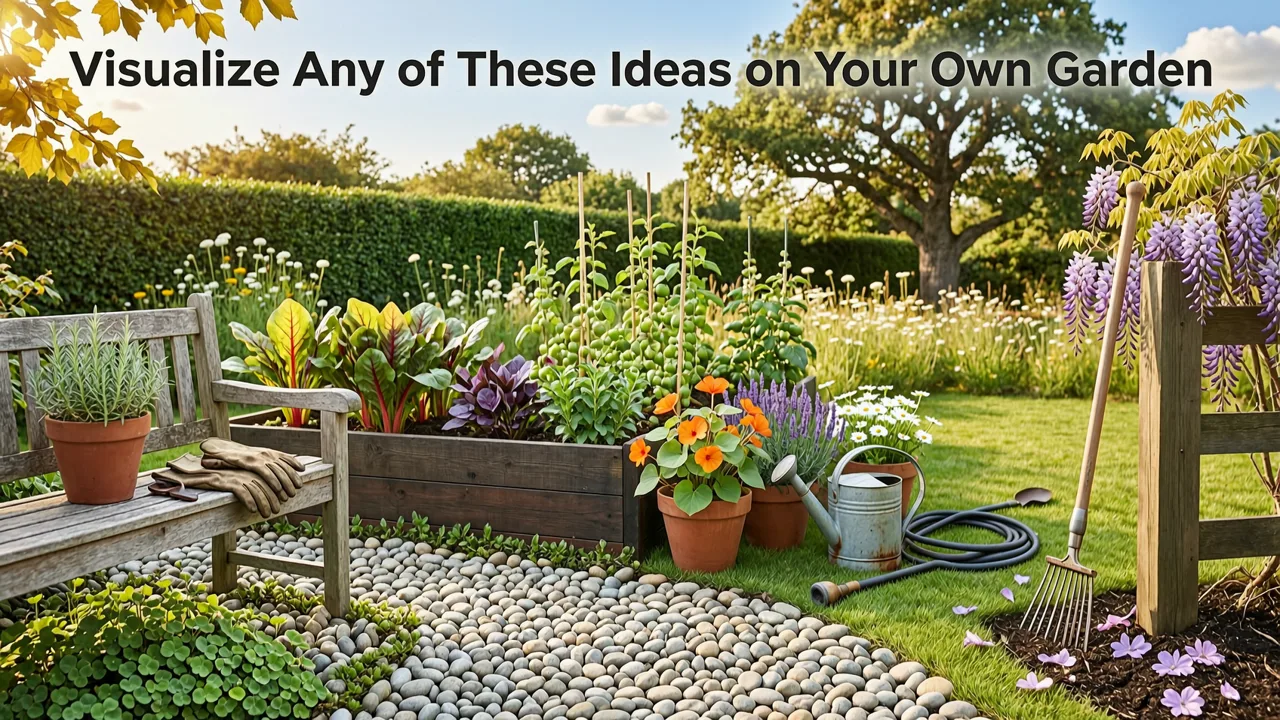
Inspiration is only useful if you can see it in your own space. Here is the workflow that professional designers and serious homeowners are using in 2026 to move from idea to actionable plan.
Step 1: Photograph Your Existing Garden
Take a straight-on photo in even daylight—overcast mornings are ideal. Include the full width of the area and any fixed elements you cannot move: fences, mature trees, utility boxes. This image is the foundation for every AI render you will produce.
Step 2: Choose Your Style Direction
Pick two or three of the fifteen ideas above that resonate. Write down the non-negotiables: "must include a dining area," "no lawn," "needs shade for afternoon sun." Constraints are what turn a pretty picture into a usable plan.
Step 3: Generate AI Renders
Upload your photo to an AI garden visualizer and select your chosen style. Generate at least three variations so you can compare material choices, planting density, and layout. Good tools will preserve the exact dimensions and sightlines of your real yard.
Step 4: Refine and Share
Adjust the renders until the proportions feel right, then share them with a landscaper or contractor. A visual reference eliminates the single biggest source of renovation disputes: mismatched expectations.
For a deeper walkthrough of this process tailored to Japanese-inspired styles, see our guide on uploading a photo for Japanese garden redesign, and for foundational principles behind the style, read Japanese garden design for beginners.
Modern Garden Design Ideas at a Glance: 2026 Comparison
| Idea | Best For | Maintenance Level | Typical Budget Range |
|---|---|---|---|
| Rewilded Minimalism | Large lots, drought zones | Low once established | $$ |
| Biophilic Outdoor Rooms | Entertaining households | Moderate | $$$ |
| Japanese-Inspired Zen | Small to medium yards | Low to moderate | $$–$$$ |
| Climate-Adaptive Planting | Any lot, shifting zones | Low | $–$$ |
| Smart Irrigation | Any garden with planting | Very low | $$ |
| Monochrome Materials | Urban and contemporary homes | Low | $$$ |
| Edible Front Yards | Sunny frontages | High | $–$$ |
| Vertical Living Walls | Narrow urban lots | Moderate | $$–$$$ |
| Fire and Water Pairings | Entertainment-focused yards | Low | $$$ |
| Pollinator Corridors | Eco-minded homeowners | Low | $ |
| Sculptural Lighting | Any garden, night use | Very low | $$ |
| Permeable Hardscaping | Wet climates, regulations | Low | $$–$$$ |
| Compact Courtyards | Tiny lots, townhouses | Low | $–$$ |
| Indoor-Outdoor Transitions | Mild-climate homes | Moderate | $$$ |
| AI-First Iteration | Any project, any style | N/A (planning tool) | $ |
Common Mistakes to Avoid When Planning a Modern Garden in 2026
Even with the best ideas, a few recurring errors can derail a project. Keeping these in mind will save time, money, and frustration.
- Skipping the photo-to-render step. Committing to a style without seeing it in your own light and proportions is the single biggest cause of buyer's remorse.
- Overplanting too quickly. Modern gardens rely on negative space. Fill the beds slowly as plants mature rather than cramming them in on day one.
- Ignoring underground infrastructure. Irrigation, lighting cable, and drainage must be planned before hardscaping goes in. Retrofitting is always more expensive.
- Choosing plants for looks alone. A modern garden still needs to thrive. Verify hardiness, sun exposure, and water needs before specifying anything.
- Treating technology as decoration. Smart sensors and automated irrigation should be invisible. If you can see the hardware, the design has failed.
Why AI Visualization Is Changing the Garden Design Process
Traditional garden design required multiple consultations, hand-drawn plans, and a leap of faith. In 2026, the process is faster, cheaper, and more accurate. AI models trained on millions of landscape images can interpret a single photograph and produce renders that respect perspective, scale, and lighting. According to responsible AI guidance from leading research organizations, these tools are designed to augment human judgment—not replace it—giving homeowners a realistic starting point for conversations with professionals.
The result is a design process that feels more like editing a photograph than commissioning architecture. You can try five styles in an evening, narrow to two, refine one, and walk into a landscaper's office with a clear visual brief. That clarity alone is worth the time invested.
Final Thoughts: Start With a Photo, End With a Garden You Love
Modern garden design in 2026 is defined by restraint, ecological awareness, and a willingness to let technology do the heavy lifting during the planning stage. Whether you are drawn to rewilded minimalism, a Japanese-inspired courtyard, or a fully equipped outdoor living room, the first step is the same: see it in your own space before you build it.
Upload a photo of your garden today, explore the fifteen ideas above through AI visualization, and refine until the design feels unmistakably yours. The gap between a beautiful inspiration and a beautiful backyard has never been shorter.