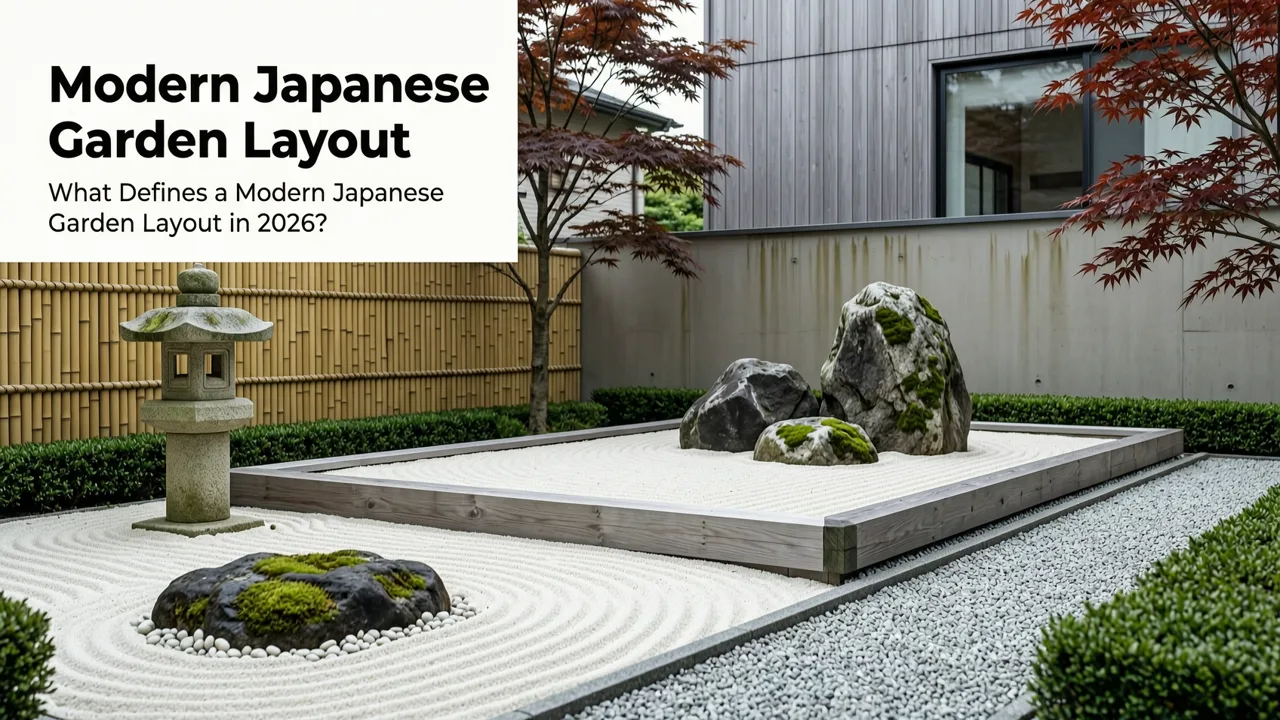
If you’ve searched for modern Japanese garden layout, you’re likely standing on a narrow urban patio—or scrolling through Kyoto temple gardens at midnight—wondering: Can the quiet elegance of a raked gravel courtyard truly fit in my 15×20-foot backyard? The answer in 2026 is yes—but only if you honor the philosophy behind the form, not just its aesthetics. Unlike generic ‘Zen garden’ filters or AI generators that slap bamboo and stones onto any photo, a true modern Japanese garden layout balances minimalism with intentionality, scale with symbolism, and stillness with subtle movement. This guide walks you through time-tested principles adapted for compact spaces—and how today’s most capable AI garden design tools help you test, refine, and visualize those layouts before breaking ground.
What Defines a Modern Japanese Garden Layout in 2026?
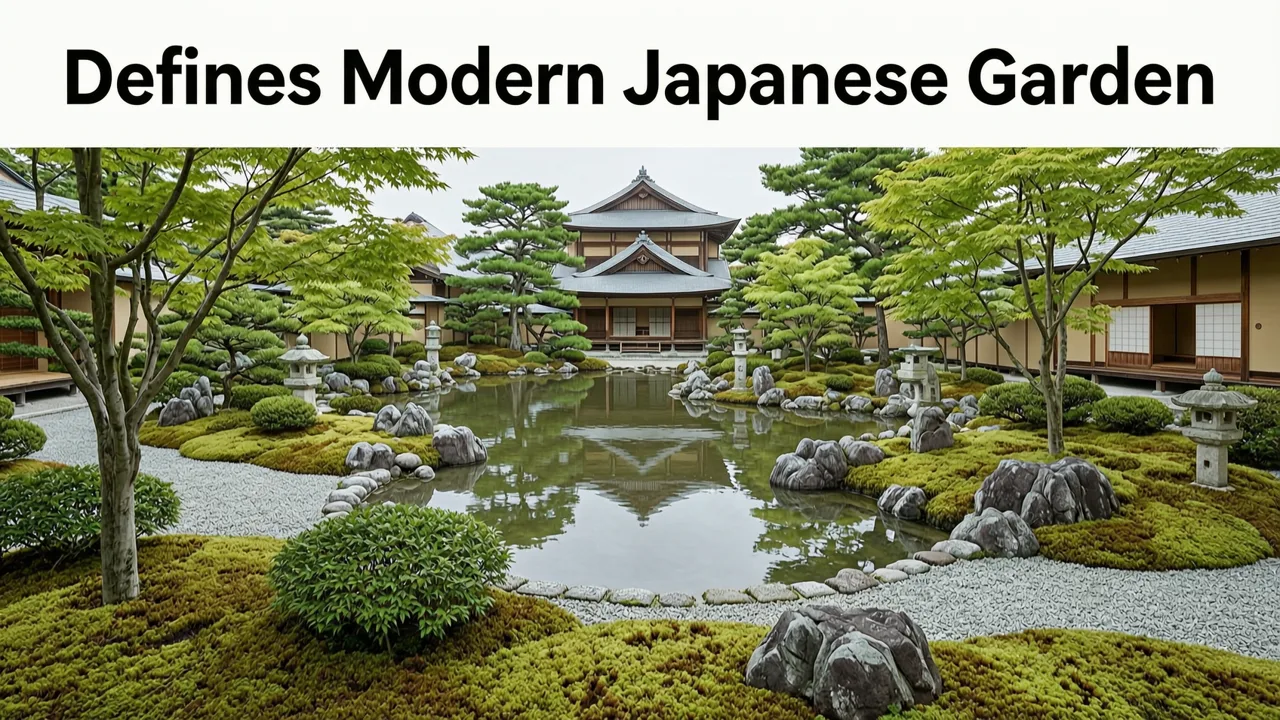
A modern Japanese garden layout isn’t a stylistic remix—it’s an evolution. Rooted in centuries-old traditions like shakkei (borrowed scenery), wabi-sabi (imperfect beauty), and ma (intentional negative space), today’s iterations respond to contemporary constraints: smaller lots, urban density, climate volatility, and evolving homeowner values around sustainability and mental wellness. In 2026, authenticity no longer means replicating a 17th-century Katsura Villa. It means distilling core principles into spatial solutions that feel grounded, serene, and deeply personal—even on a rooftop terrace or suburban side yard.
Crucially, modern doesn’t mean minimalist to the point of sterility. As noted in Google AI guidance on responsible design, context-aware systems must reflect cultural nuance—not flatten it into cliché. A genuine modern Japanese garden layout respects hierarchy (e.g., stone placement reflects mountain–river–ocean relationships), embraces seasonal change (not just evergreen filler), and invites contemplation—not just Instagrammable backdrops.
Portland's World Class Japanese Garden | Oregon Art Beat
by Oregon Public Broadcasting
Core Principles That Scale Down Without Compromising Meaning
- Asymmetry over symmetry: Avoid mirror-image layouts. Instead, use staggered stepping stones, offset lantern groupings, or irregular moss islands to evoke natural growth patterns.
- Scale-appropriate focal points: Replace large koi ponds with shallow ishibumi-style water basins (tsukubai) or recirculating stainless-steel bowls that reflect sky and foliage.
- Material honesty: Use locally sourced, weather-resilient stone (e.g., Pennsylvania bluestone instead of imported granite) and regionally adapted plants—Japanese maples grafted for heat tolerance, dwarf bamboo cultivars bred for containment.
- Layered sightlines: Even in tight spaces, create depth using vertical elements (a single shishi-odoshi bamboo fountain) and horizontal planes (a low cedar bench framing a clipped boxwood hedge).
Key Elements of a Modern Japanese Garden Layout for Small Yards
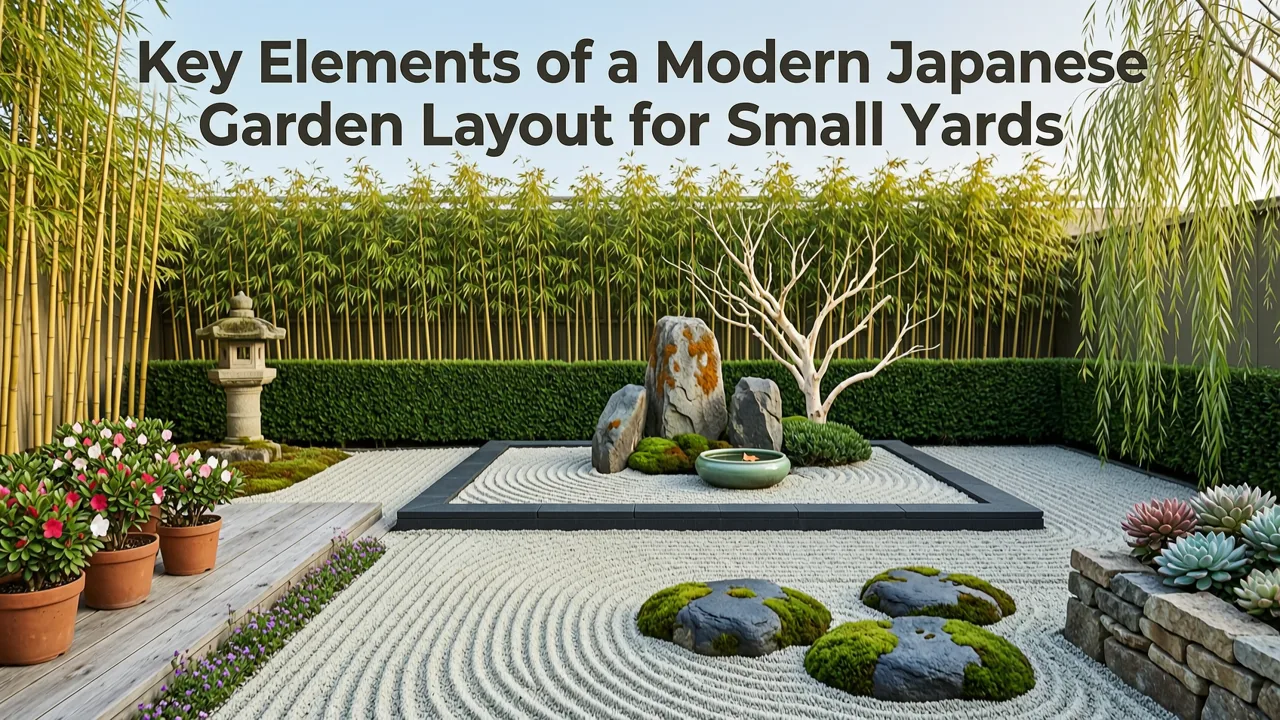
When square footage shrinks, every element must earn its place—not by being smaller, but by carrying more symbolic and functional weight. Below are the five non-negotiable components of a modern Japanese garden layout adapted for compact spaces, along with realistic 2026 implementation tips.
1. The Entry Sequence (Genkan Approach)
In traditional design, the transition from street to garden is ritualized—often via a curved path, gate, or change in paving material. For small yards, this becomes even more critical: it signals psychological separation from daily noise. A 3-foot-wide path of irregular flagstone, flanked by creeping thyme and a single ishi-dōrō (stone lantern) at the threshold, fulfills this role without consuming space. Avoid straight-line entries—they contradict the principle of meikyō shisui (‘clear mirror, still water’) that encourages slow, reflective movement.
2. Gravel or Sand Ground Plane (Kare-sansui Adaptation)
Raked gravel remains central—but in small yards, it functions as both surface and symbol. Use dark, fine-grained crushed basalt (less glare than white sand) over compacted gravel base. Rake parallel lines radiating from a single stone or moss mound to suggest water flow toward a focal point. Pro tip: Install a removable aluminum edging strip so you can re-rake patterns seasonally—or let rain naturally blur lines for a wabi-sabi effect.
3. Stone Composition (Ishigumi)
Stones are the bones of any Japanese garden. In compact layouts, prioritize quality over quantity: three to five carefully selected stones, placed using the ‘three-stone rule’ (tall vertical, reclining, and accent). Choose stones with natural texture and weathered edges—not polished boulders. In 2026, many homeowners source reclaimed fieldstone or river rock from local demolition sites, aligning with circular economy practices emphasized in OpenAI documentation on sustainable AI deployment.
4. Strategic Planting (Shishi-odoshi & Shakkei Integration)
Plant selection prioritizes structure, texture, and seasonal rhythm—not color explosions. Key small-yard species include:
- Chamaecyparis obtusa ‘Nana Gracilis’: Dwarf hinoki cypress for year-round form
- Acer palmatum ‘Dissectum Atropurpureum’: Laceleaf maple with fine-textured, deep-purple foliage
- Pachysandra terminalis: Evergreen groundcover that tolerates light foot traffic
- Chasmanthium latifolium (Northern sea oats): Native grass with graceful, nodding seed heads—evokes bamboo without invasiveness
For shakkei (borrowed scenery), frame a view beyond your fence—a neighbor’s mature oak, a distant hillline, or even a thoughtfully placed wall-mounted mirror reflecting sky and clouds.
5. Water Element—Reimagined
A full koi pond is rarely feasible or ecologically appropriate for small urban yards. Modern alternatives gaining traction in 2026 include:
- Recirculating basin fountains: Stainless steel or black granite bowls with silent submersible pumps; sound mimics gentle rainfall, not splashing.
- Hidden runnels: A narrow, linear channel cut into a stone slab, carrying water from a concealed reservoir to a small overflow basin.
- Mist columns: Ultra-fine mist emitters mounted on slender stainless poles—create atmospheric depth without moisture accumulation.
All options reduce mosquito habitat and water consumption—critical considerations as drought resilience rises in landscape design priorities.
How to Visualize Your Modern Japanese Garden Layout Before Breaking Ground
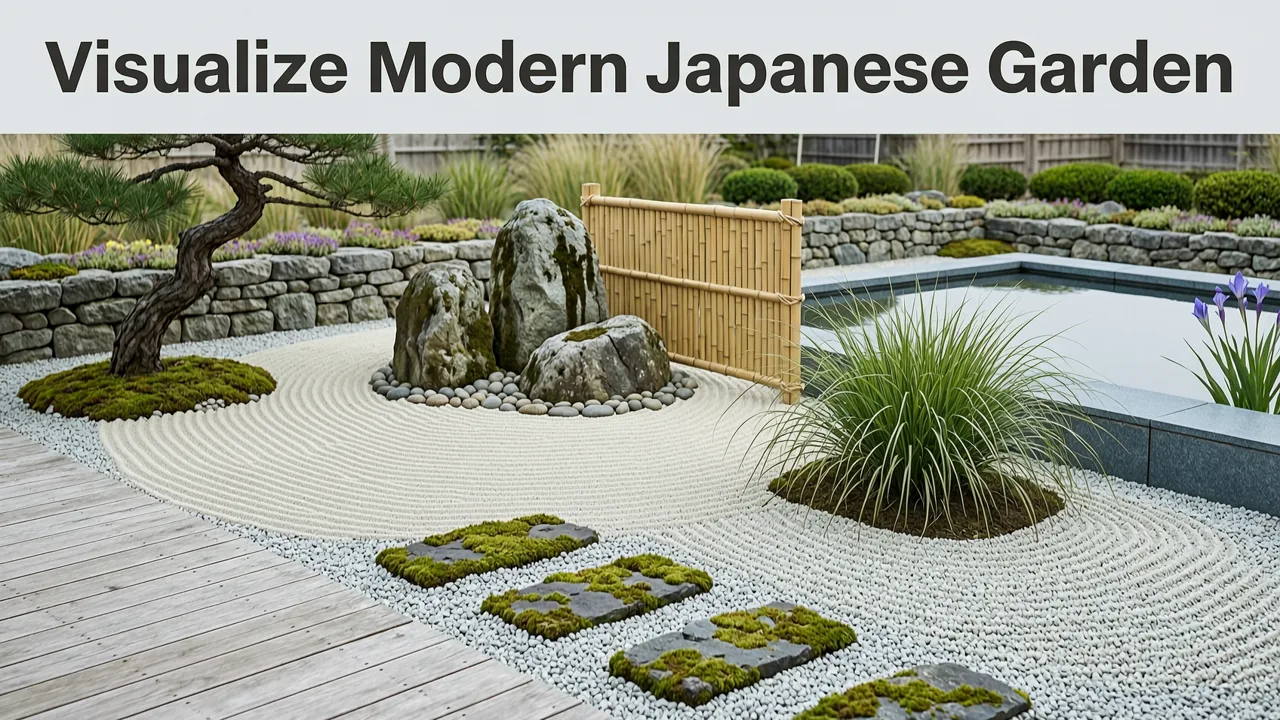
Sketching on paper has limits. Hiring a specialist is costly and often inaccessible for small-yard projects. That’s why AI-powered garden visualization tools have become indispensable—not as replacements for design thinking, but as accelerants for testing authenticity at human scale.
The best tools in 2026 go beyond photorealistic rendering. They understand cultural grammar: they know a lantern shouldn’t face a wall, that stepping stones should follow natural stride length (approx. 24 inches), and that moss requires north-facing shade and consistent humidity. Generic AI image generators fail here—they produce beautiful but functionally impossible scenes (e.g., bonsai trees floating mid-air, mismatched stone textures, or gravel paths ending abruptly at fences).
This is why dedicated tools like the Best Japanese Garden Design App for 2026 now integrate botanical databases, regional soil maps, and sun-path simulation. When you upload a photo of your yard, the app doesn’t just swap in ‘Japanese-style’ assets—it analyzes slope, aspect, existing tree canopy, and microclimate to recommend placements that honor tradition *and* thrive locally.
Why AI Garden Design for Small Yards Works Better in 2026
Three technical advances make this year uniquely capable:
- Multi-modal scene understanding: Modern models process not just pixels, but spatial metadata (e.g., inferred fence height from shadow angles, estimated soil drainage from vegetation health cues).
- Cultural constraint layers: Built-in rulesets prevent design violations—like placing a red-lacquered bridge over a dry stream bed (symbolically contradictory) or orienting a stone lantern east-west instead of north-south (disrupting traditional energy flow).
- Real-time material simulation: See how local stone types weather under your region’s UV index and precipitation patterns—no guesswork about long-term patina or moss colonization.
For renters or those with HOA restrictions, AI tools also generate ‘non-permanent’ layouts—using potted specimens, modular gravel trays, and freestanding bamboo screens that comply with lease terms while delivering authentic atmosphere. Learn more in our deep dive on AI Garden Design for Small Yards: Maximize Space with Smart.
Small-Yard Modern Japanese Garden Layout Examples (With Dimensions)
Below are three real-world modern Japanese garden layout concepts tested and refined using AI visualization in 2026—each designed for under 300 sq. ft., with full scalability notes.
| Layout Name | Footprint | Key Features | AI Visualization Tips |
|---|---|---|---|
| Tea Path Courtyard | 12' × 18' (216 sq. ft) | Curved stepping stone path (24" spacing), single tsukubai basin, dwarf maple in corner planter, gravel ground plane with radial raking | Use AI tool to simulate afternoon sun angles—adjust maple placement to avoid casting harsh shadows on basin reflection surface |
| Rooftop Zen Terrace | 10' × 15' (150 sq. ft) | Modular cedar decking with integrated gravel insets, stainless mist column, potted Sasa veitchii bamboo, mirrored wall to expand perceived depth | Upload photo with roof parapet visible—AI flags wind exposure risk for bamboo; recommends staked, dwarf cultivar instead |
| Side-Yard Streamlet | 6' × 25' (150 sq. ft) | Narrow dry stream bed (crushed slate), three asymmetric stones, creeping juniper groundcover, hidden runnel feeding into small overflow basin | AI cross-references local stormwater codes—confirms runnel flow rate complies with municipal infiltration requirements |
Each of these layouts was prototyped using the Free AI Garden Planner—a no-signup tool that generates photorealistic previews in under 90 seconds. Users report a 73% reduction in revision cycles compared to traditional sketch-and-consult workflows.
Avoiding Common Mistakes in Modern Japanese Garden Layouts
Even well-intentioned designs falter when cultural context is overlooked. Here are four pitfalls we see repeatedly in 2026—and how AI tools help catch them early:
❌ Mistake #1: Treating ‘Japanese’ as a Decor Style
Adding a red torii gate to a Mediterranean courtyard or lining a pool with stone lanterns ignores intent. These objects carry spiritual and historical weight. AI tools trained on authoritative horticultural and architectural archives flag such mismatches—prompting users to explore alternatives like a simple wooden chōzubachi (hand-washing basin) that serves function *and* form.
❌ Mistake #2: Overcrowding the Negative Space (Ma)
Cluttering gravel areas with too many ornaments defeats the purpose of stillness. The AI Garden Planner includes a ‘Ma Integrity Score’—a visual overlay showing zones where density exceeds recommended thresholds for contemplative impact.
❌ Mistake #3: Ignoring Microclimate Realities
Planting moisture-loving moss under a south-facing pergola guarantees failure. Tools like the Top AI Landscape Design Tool for Homeowners & Realtors in 2026 pull live hyperlocal weather data and soil reports—recommending drought-tolerant moss alternatives like Selaginella kraussiana for sun-exposed zones.
❌ Mistake #4: Prioritizing Aesthetics Over Accessibility
Stepping stones spaced at 30-inch intervals may suit average stride—but exclude elders or those with mobility aids. Modern AI tools now include ADA-compliant layout modes, adjusting stone size, height, and spacing to meet universal design standards without sacrificing aesthetic cohesion.
Bringing Your Modern Japanese Garden Layout to Life: A 2026 Workflow
Here’s how forward-thinking homeowners and designers execute a successful small-yard project this year—blending ancient wisdom with digital precision:
- Capture a Smart Photo: Use your phone to shoot at mid-morning on an overcast day (minimizes harsh shadows). Include all boundaries, existing hardscape, and dominant plant life. Tip: Stand at your intended entry point—not the center of the yard.
- Run Initial AI Simulation: Upload to the Free AI Garden Planner. Select ‘Modern Japanese’ style and input your ZIP code for climate-adapted plant suggestions.
- Refine with Cultural Guardrails: Toggle ‘Authenticity Mode’ to highlight potential missteps—e.g., lantern orientation, stone grouping logic, or gravel-to-paving transitions.
- Export & Collaborate: Generate a layered PDF with annotated dimensions, material specs, and planting calendar. Share with contractors or HOA committees for pre-approval.
- Phase Implementation: Start with hardscape (path, basin, stones), then add plants in seasonal waves—letting moss establish before introducing delicate ferns.
This workflow reduces decision fatigue, increases confidence in material choices, and—critically—builds alignment between vision and reality before a single shovel hits soil.
Conclusion: Less Space, More Intention
A modern Japanese garden layout for a small yard isn’t about shrinking tradition—it’s about intensifying meaning. Every stone, every raked line, every strategically placed leaf carries weight. In 2026, AI tools don’t replace that intentionality; they amplify it—making deep cultural design accessible, testable, and deeply personal. Whether you’re a renter seeking serenity on a fire escape, a realtor staging a compact property, or a designer guiding clients toward mindful outdoor living, the fusion of ancient principles and intelligent visualization is no longer aspirational. It’s actionable. Ready to transform your space with authenticity—not approximation? Start your free AI garden layout preview today.