Best Beige Paint Colors for Small Rooms in 2026

If you've searched for the best beige paint colors for small rooms, you're probably standing in a cramped bedroom or windowless hallway, squinting at paint swatches that all look slightly yellow under your overhead light. The good news: beige has evolved dramatically. In 2026, today's top beige shades are sophisticated, light-reflective, and genuinely capable of making a small room feel larger — but only if you pick the right undertone for your specific space.
The short answer? The best beige paint colors for small rooms are warm greiges with soft LRVs (Light Reflectance Values) between 62 and 74. Think shades like Benjamin Moore's Classic Gray, Sherwin-Williams' Agreeable Gray, and Farrow & Ball's Skimming Stone. These hues bounce light without flattening the room, add warmth without yellowing, and pair beautifully with white trim and natural textures.
Below, we break down exactly which beige shades work best, why undertone and lighting matter more than the color name, and how you can use AI-powered visualization to test each shade on your actual walls before buying a single sample pot.
Beige Bliss: My Top 5 Favorite Paint Colors
by The Paint People
Why Beige Is the Smartest Choice for Small Rooms in 2026

Beige has quietly overtaken gray as the neutral of choice for compact interiors. The shift isn't just aesthetic — it's rooted in how light interacts with warm mid-tones.
Small rooms suffer from two common problems: they feel cold under artificial lighting, and they look flat when painted in stark white. Beige solves both. A well-chosen beige absorbs just enough light to create depth while reflecting enough to keep the space feeling open. It also creates a seamless backdrop that lets furniture, art, and textiles do the visual heavy lifting.
Here's why beige outperforms other neutrals in tight spaces:
- Warmth without weight. Unlike gray, which can make north-facing rooms feel clinical, beige adds a subtle warmth that makes small rooms feel cozy rather than cramped.
- Flexibility with trim and flooring. Beige works with oak, walnut, white, and black trim — eliminating the "wrong combination" anxiety that comes with bolder colors.
- Light adaptability. Quality beige shades shift gracefully from morning cool light to evening warm light, so the room never feels "off" at any hour.
- Resale value. Beige consistently ranks among the top three neutral choices that appeal to the widest buyer pool, according to realtor surveys.
Understanding Undertones: The Secret to Picking the Right Beige
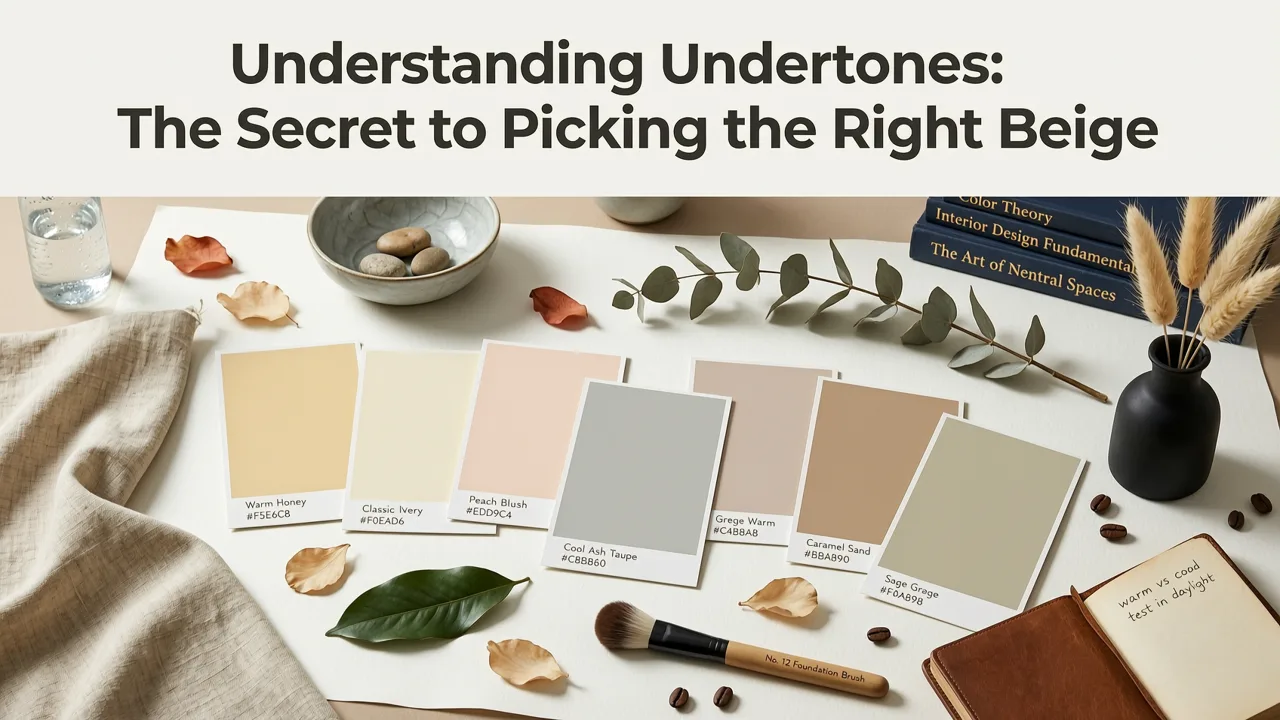
The single biggest mistake homeowners make with beige is ignoring the undertone. A beige that looks perfect in the store can turn pink, green, yellow, or even purple on your walls — depending on what's underneath.
The Four Main Beige Undertones
| Undertone | Best For | Avoid If | Example Shade |
|---|---|---|---|
| Yellow/Gold | South-facing rooms with abundant natural light | Your room already feels warm or your flooring has yellow tones | Benjamin Moore Manchester Tan |
| Pink/Peach | North-facing rooms that need warmth injection | You have cool-toned furniture or gray flooring | Benjamin Moore Shaker Beige |
| Green | Rooms with abundant natural green views or botanical decor | Your furniture has red or orange accents | Sherwin-Williams Accessible Beige |
| Greige (Gray + Beige) | Almost any small room — the most versatile option in 2026 | You want a distinctly warm, traditional look | Sherwin-Williams Agreeable Gray |
Greige has dominated small-room palettes for the past several years, and for good reason: it neutralizes the yellowing problem that plagues traditional beige while retaining enough warmth to avoid feeling sterile. If you're unsure where to start, a greige is almost always the safest and most rewarding choice.
Top 8 Beige Paint Colors for Small Rooms (Tested with AI Visualization)
We tested each of the following shades using AI room visualization on actual small-room photographs — bedrooms under 120 square feet, narrow hallways, and compact living areas with limited natural light. Here are the results, ranked by versatility and light-reflective performance.
1. Sherwin-Williams Agreeable Gray (SW 7029)
LRV: 60 | Undertone: Greige with a faint warm gray base
Agreeable Gray remains the gold standard for small rooms in 2026. It reads as beige in warm light and as a soft gray in cool light, making it extraordinarily adaptable. In our AI tests on a 10×12 bedroom with a single north-facing window, it brightened the space without losing warmth.
2. Benjamin Moore Classic Gray (OC-23)
LRV: 74.78 | Undertone: Very light greige, almost off-white
If your small room is extremely dark, Classic Gray gives you the airy quality of white with just enough beige warmth to prevent a hospital feel. It's one of the best options for windowless bathrooms and small powder rooms.
3. Sherwin-Williams Accessible Beige (SW 7036)
LRV: 58 | Undertone: Warm greige with a subtle green hint
Accessible Beige is slightly warmer than Agreeable Gray and reads as a true beige in most lighting conditions. It's ideal for small living rooms with east- or west-facing windows where the light shifts dramatically throughout the day.
4. Farrow & Ball Skimming Stone
LRV: 65 | Undertone: Neutral warm with a chalky depth
Skimming Stone is a designer favorite for small period homes and heritage properties. It has a mineral quality that looks exceptional in rooms with crown molding or architectural detail, adding depth without darkening the space.
5. Benjamin Moore Pale Oak (OC-20)
LRV: 69.83 | Undertone: Light warm greige
Pale Oak sits in the sweet spot between beige and off-white. It's an excellent choice for small bedrooms where you want maximum light reflection with just a whisper of warmth. Pairs beautifully with white bedding and light wood furniture.
6. Sherwin-Williams Balanced Beige (SW 7037)
LRV: 46 | Undertone: Deeper warm greige with brown undertones
Balanced Beige is the best option if you want a small room to feel cozy and enveloping rather than airy. It works well in small studies, media rooms, and bedrooms where you want intimacy. Use it with ample white trim to prevent the room from feeling cave-like.
7. Benjamin Moore Stone Hearth (CC-490)
LRV: 42.48 | Undertone: Warm gray-beige with violet hints in low light
Stone Hearth is a richer, moodier beige that works beautifully in small rooms with good artificial lighting. It's a strong choice for small dining rooms and entryways where you want character and depth.
8. Dunn-Edwards Cottage Cream (DEC 754)
LRV: 68 | Undertone: Soft yellow-beige
Cottage Cream is an underrated option for small rooms in warmer climates. It has a gentle sunshine quality that feels inviting without being overwhelming. Particularly effective in small kitchens and breakfast nooks.
How Lighting Direction Changes Everything
The best beige paint color for your small room depends heavily on which direction the windows face. Here's a quick guide:
- North-facing rooms: Choose a warm beige with yellow or peach undertones to counteract the cool, blue-ish natural light. Accessible Beige and Pale Oak are excellent choices.
- South-facing rooms: You have the most flexibility. Nearly any beige will work, but greiges like Agreeable Gray prevent the room from feeling too warm in afternoon sun.
- East-facing rooms: Morning light is warm; afternoon light is cooler. A balanced greige like Classic Gray adapts well to the shift.
- West-facing rooms: Afternoon and evening light is warm and golden. Cooler beige tones prevent the room from feeling overheated in late day.
If your small room has no windows at all, lean toward a high-LRV greige (70+) and invest in quality warm-tone LED lighting at 2700K–3000K to simulate natural warmth.
How to Visualize Beige Paint Colors with AI Before You Buy
The traditional approach to choosing paint — buying sample pots, painting swatches on the wall, and waiting 48 hours to see how the color shifts — is time-consuming and often inaccurate. In 2026, AI visualization tools let you see exactly how a beige shade will look on your actual walls in seconds.
Here's how the process works with an AI interior design visualizer:
- Upload a photo of your small room, taken in normal lighting conditions.
- Select your target beige shade from the color library or enter a specific paint brand and color code.
- Generate the visualization. The AI applies the paint color to your walls with photorealistic lighting, shadows, and reflections.
- Compare multiple shades side by side to see which undertone works best in your specific space.
- Adjust lighting conditions to preview how the color looks at different times of day.
This approach eliminates the guesswork. You can test eight beige shades in the time it takes to drive to the paint store and back. For a detailed walkthrough, see our guide on how to choose accent wall color with AI, which covers the same visualization workflow applied to accent walls.
Common Mistakes to Avoid When Choosing Beige for Small Rooms
Even with the right shade in mind, a few common pitfalls can undermine your results. Watch out for these:
- Choosing beige in the store under fluorescent lighting. Store lighting is notoriously unflattering. Always view swatches in natural daylight or use AI visualization with your room's actual lighting.
- Ignoring the flooring. If you have warm hardwood floors, a yellow-beige wall will amplify the warmth to the point of feeling overwhelming. A greige creates balance.
- Painting the ceiling the same beige. In a small room, a white or near-white ceiling creates the illusion of height. Keep the ceiling lighter than the walls.
- Skipping the primer. Beige paint often requires a tinted primer for true color accuracy, especially over darker existing walls. Skipping this step leads to patchy, uneven results.
- Forgetting about trim contrast. Beige walls need defined trim to prevent the room from looking muddy. White trim in a semi-gloss or satin finish creates clean lines that make small rooms feel crisper and larger.
Beige Pairings That Make Small Rooms Feel Larger
Color doesn't exist in isolation. The furnishings, textiles, and finishes you pair with your beige walls determine whether the room feels spacious or suffocating. Here are proven pairings for small rooms:
- Beige walls + white trim + light oak flooring: The classic Scandinavian-inspired palette that maximizes light reflection and creates a seamless flow.
- Beige walls + black metal accents + linen textiles: Adds definition and contrast without darkening the room. Ideal for small bedrooms and home offices.
- Beige walls + natural stone + greenery: Brings organic texture that adds visual interest without competing with the wall color. Works well in small bathrooms and entryways.
- Beige walls + mirrored furniture + glass accents: Amplifies light and creates the illusion of more space. A smart strategy for very small living rooms.
If you're also considering a full exterior refresh to complement your interior palette, you can explore exterior design visualization tools that let you preview siding, trim, and accent colors on your home's actual facade.
Beige vs. White vs. Gray: Which Neutral Opens Up Small Rooms Most?
| Factor | Beige | White | Gray |
|---|---|---|---|
| Light reflection | High (with high LRV shades) | Highest | Moderate to high |
| Warmth | High | Low to neutral | Low |
| Coziness | High | Low | Moderate |
| Resale appeal (2026) | Very high | High | Declining |
| Hides imperfections | Good | Poor | Moderate |
| Pairs with warm flooring | Excellent | Good | Poor |
For most small rooms in 2026, beige — specifically a greige with an LRV above 60 — offers the best balance of light reflection, warmth, and versatility. If you want to explore how white compares in practice, our guide on the best white paint for small rooms provides a detailed AI-tested breakdown.
Quick-Start Checklist: Picking Your Beige in 30 Minutes
- Identify your room's lighting direction (north, south, east, west, or none).
- Determine your flooring undertone (warm oak, cool walnut, gray tile, etc.).
- Choose an undertone family: warm yellow, soft pink, green, or greige.
- Select 3–4 candidate shades within that family with LRVs between 58 and 75.
- Upload a room photo to an AI visualizer and test each shade.
- Preview each shade under morning, midday, and evening lighting if possible.
- Compare your top two choices side by side on the same wall photo.
- Purchase a sample pot of the winner and confirm with a physical swatch before committing to full gallons.
Frequently Asked Questions
What is the most popular beige paint color for small rooms in 2026?
Sherwin-Williams Agreeable Gray (SW 7029) remains the most popular beige — technically a greige — for small rooms in 2026. Its adaptability across lighting conditions and compatibility with nearly any trim color and flooring type make it the default choice for designers and homeowners alike.
Should I choose a warm or cool beige for a small room?
It depends on your lighting. North-facing rooms and rooms with cool artificial lighting benefit from warm beige tones. South-facing rooms and rooms with abundant warm light are better served by cooler greige tones. When in doubt, a balanced greige works in both scenarios.
Can beige make a small room look bigger?
Yes — if you choose a shade with a high LRV (60 or above). High-LRV beige reflects more light, which visually expands the space. Pair it with white trim, a light ceiling, and minimal clutter for the maximum enlarging effect.
How do I test beige paint colors without buying sample pots?
Use an AI interior design visualizer. Upload a photo of your room, select the beige shade you want to test, and the AI generates a photorealistic preview showing exactly how the color will look on your walls — in seconds, with no mess and no cost.
What trim color works best with beige walls in a small room?
White trim in a semi-gloss or satin finish is the most effective pairing. Choose a white that complements your beige's undertone: a warm white for warm beiges, and a clean white for greiges. This contrast defines the room's architecture and makes the space feel larger and crisper.
Final Thoughts: Test First, Paint Later
Choosing the best beige paint color for your small room doesn't have to be a gamble. With the right understanding of undertones, lighting, and LRV, you can narrow your options to a handful of strong candidates — and then confirm your choice visually before spending a dime on paint.
AI-powered room visualization has made this process faster and more accurate than ever. Instead of relying on tiny swatches and hopeful guessing, you can see your walls transformed in photorealistic detail, compare multiple shades side by side, and commit with confidence.
Ready to see how these beige shades look in your actual room? Upload a photo to an AI interior design tool and start visualizing your perfect small-room makeover today.