How to Choose Accent Wall Color with AI in 2026
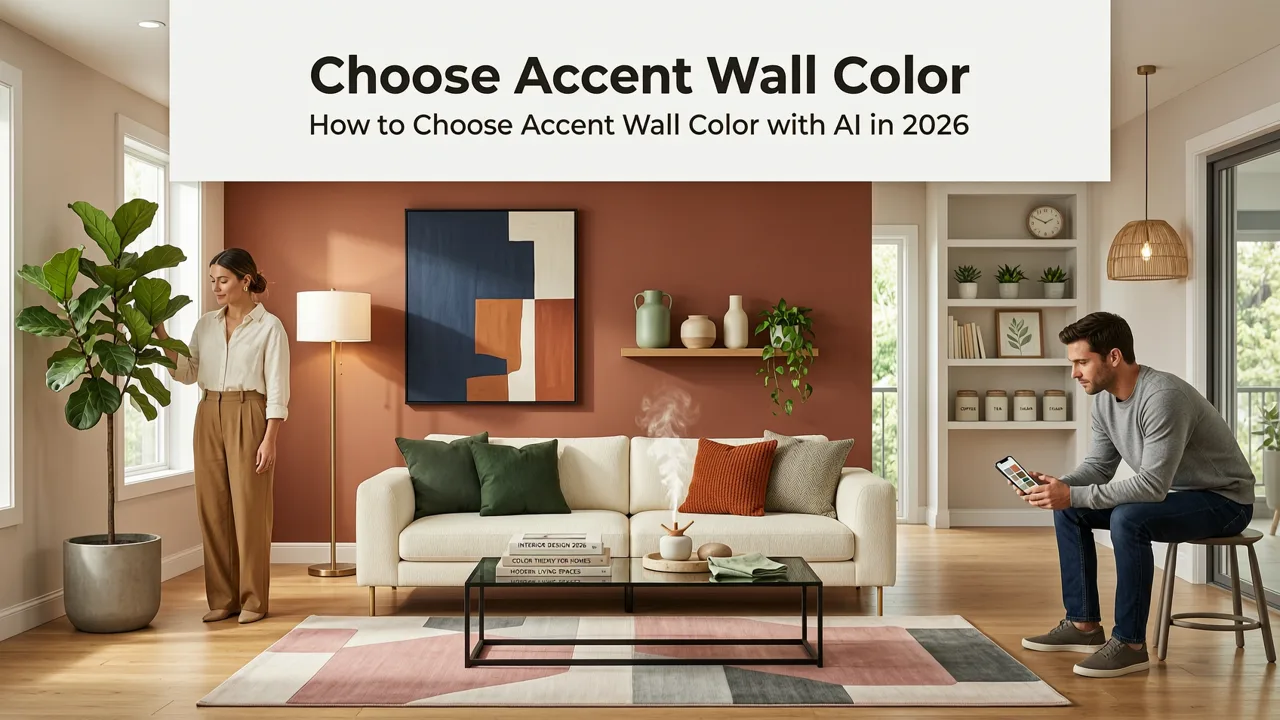
If you've searched for how to choose accent wall color with AI, you're probably staring at a blank living room wall—or scrolling through 47 swatches of "warm greige" at midnight—wondering which shade will actually look right once the sun moves across the room. You're not alone. Accent walls remain one of the most requested updates in home renovation searches in 2026, yet most homeowners still guess, buy three sample pots, paint two patches, and then hate both of them.
The short answer: you choose an accent wall color with AI by uploading a photo of your actual room, selecting from curated style palettes, and letting the AI render a photorealistic preview that respects your existing lighting, furniture, and architecture. No 3D modeling software. No waiting weeks for a designer mockup. You see the wall in your room, with your couch, in under a minute.
This guide walks you through the exact process—why accent walls still work, how AI visualizers changed the game in 2026, and a repeatable framework for picking a color you won't regret six months from now.
Paint Colors For Beginners: How To Choose Fast (With No Experience)
by Ashley Childers
Why Accent Walls Still Matter (and Why Most People Pick the Wrong Color)
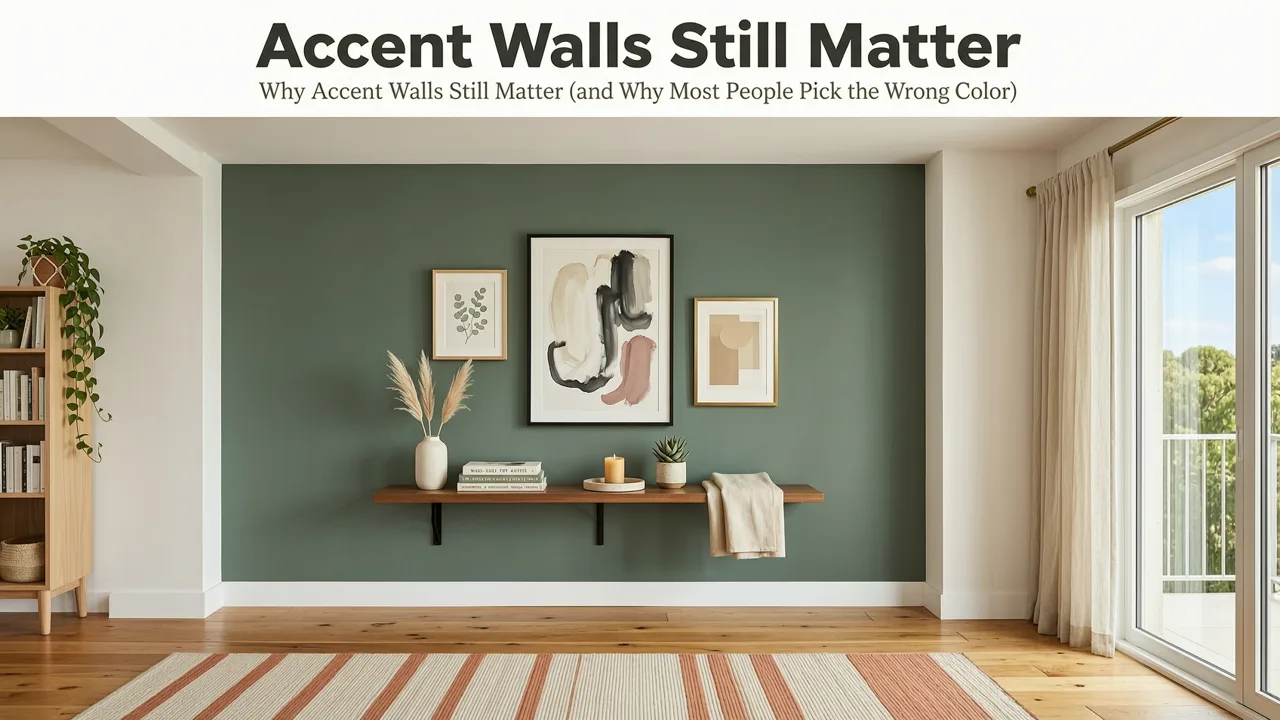
An accent wall is a single wall painted a contrasting color, texture, or material to create a focal point. Done well, it anchors a room, adds depth, and guides the eye. Done poorly, it looks like you ran out of paint halfway through the project.
The most common mistakes homeowners make when choosing an accent wall color:
- Picking the color in the store. Fluorescent lighting at paint shops distorts undertones. A "deep navy" can look dusty purple under warm home bulbs.
- Ignoring the room's dominant palette. An accent wall should complement the 60-30-10 ratio of your room—60% dominant color, 30% secondary, 10% accent. If your furniture is already loud, a loud accent wall competes instead of harmonizing.
- Choosing based on a Pinterest photo. That moody forest-green wall was photographed in a loft with 14-foot ceilings and north-facing windows. Your 10x12 bedroom has a completely different light signature.
- Forgetting architectural context. Walls with built-in shelving, crown molding, or an offset angle react differently to color than flat drywall.
These mistakes cost time, money, and motivation. AI visualizers eliminate them by showing you the color in your room before you lift a brush.
How AI Accent Wall Visualizers Work in 2026
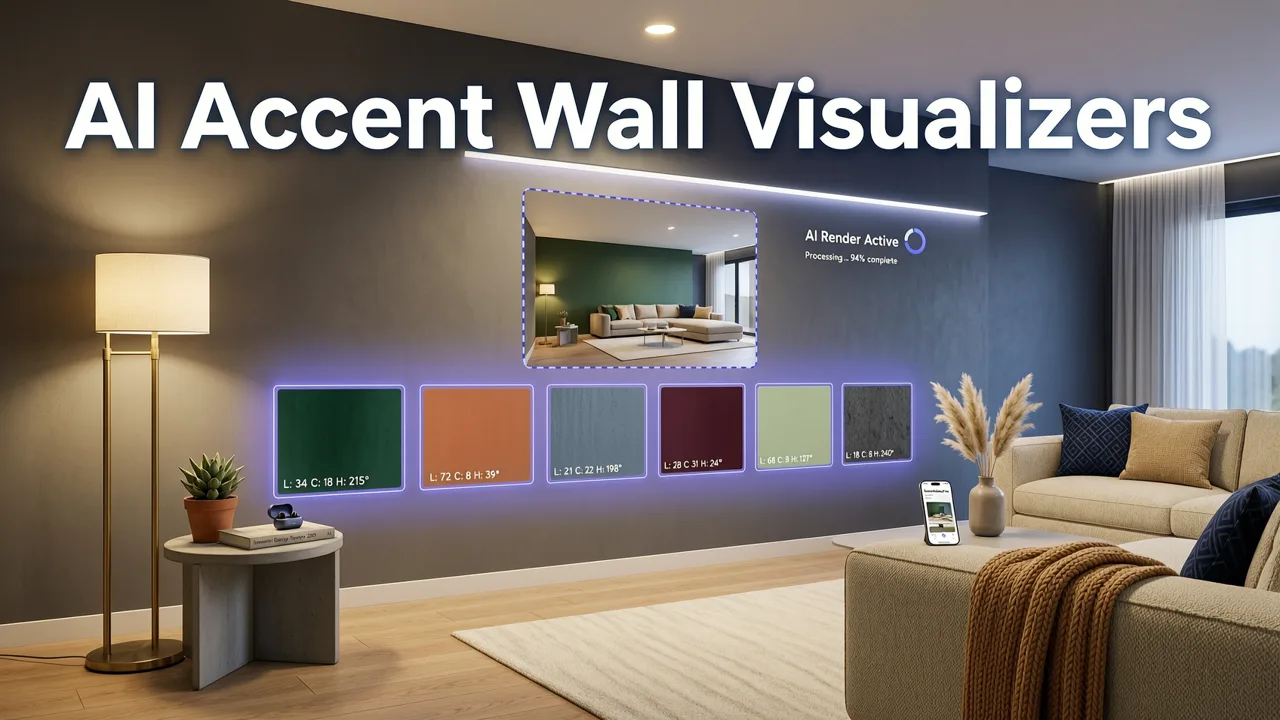
AI interior design tools in 2026 use a combination of computer vision, depth estimation, and generative rendering to map your uploaded photo and repaint specific surfaces while preserving shadows, reflections, and textures. Here's what happens behind the scenes:
- Scene segmentation. The AI identifies walls, floors, ceilings, furniture, and fixtures in your photo. It isolates the wall you want to accent.
- Lighting analysis. It reads the natural and artificial light sources in the image—window position, lamp warmth, time-of-day cues—and adjusts the rendered color accordingly.
- Material-aware rendering. If your wall has a subtle texture (orange peel, knockdown, or exposed brick), the AI preserves that texture under the new color rather than flattening it.
- Photorealistic output. The result is a preview that looks like a photograph of your room after the paint has dried—not a cartoonish overlay.
This is a meaningful step up from the "paint swatch apps" of 2022 and 2023, which simply pasted a flat color block onto your photo. Modern AI tools understand spatial context, which is why previews in 2026 feel trustworthy enough to make real purchasing decisions from.
Step-by-Step: How to Choose Accent Wall Color with AI
Step 1 — Photograph Your Room Honestly
Stand in the corner diagonally opposite the wall you want to accent. Use natural daylight if possible. Avoid wide-angle distortion by holding your phone at chest height rather than arm's length. Include enough of the room to show how the accent wall relates to your furniture, flooring, and adjacent walls.
Step 2 — Upload to an AI Visualizer
Tools like AI Design Interiors let you upload a single photo and instantly preview dozens of color and style options. You don't need to create a 3D model or input room dimensions. The AI handles spatial understanding from the image alone.
Step 3 — Start with the Room's Existing Palette
Before browsing colors, identify the dominant and secondary colors already in the room. Look at your sofa, rug, curtains, and flooring. Your accent wall should either:
- Complement — Pick a hue adjacent to your dominant color on the color wheel (e.g., blue walls with a teal accent).
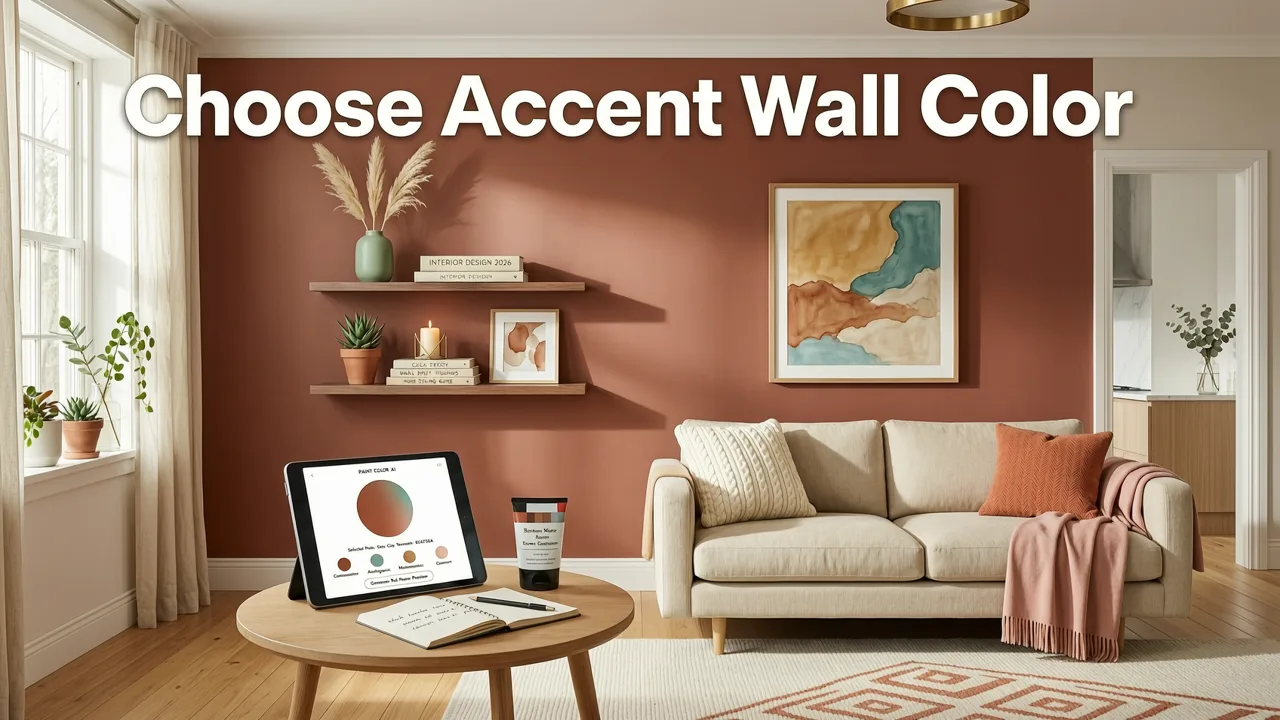
- Contrast deliberately — Pick a hue opposite on the color wheel (e.g., warm beige room with a deep terracotta accent).
- Deepen — Pick a darker or more saturated version of your existing secondary color.
Step 4 — Test Three to Five Candidates
Don't fall in love with the first preview. Cycle through at least three to five options. AI visualizers make this cost nothing and take seconds. Pay attention to how each color changes the perceived size and warmth of the room.
Step 5 — Check the Color at Different "Times of Day"
If your tool supports it, preview the accent wall under warm evening lighting and cool morning lighting. Colors shift dramatically. A sage green that feels serene at noon can feel muddy under a 2700K warm bulb at 9 p.m.
Step 6 — Validate with a Physical Sample
AI previews in 2026 are remarkably accurate, but they're not a perfect substitute for seeing dried paint on your wall. Once you've narrowed to one or two finalists, buy a sample pot and paint a 2-foot square. Live with it for 48 hours. This is the only step you can't skip.
Accent Wall Color Rules That Still Apply (Even with AI)
AI is a visualization tool, not a design brain. You still need a few principles to guide your choices:
- The accent wall should be the wall your eye naturally lands on. Typically this is the wall behind the bed, the fireplace wall, or the wall opposite the entry. If you have to ask "which wall should be the accent?" you may not need one.
- Darker colors recede; lighter colors advance. A dark accent wall can make a room feel larger if it's the wall farthest from the entry. A light accent wall draws attention forward.
- Match the room's purpose. Bedrooms and reading nooks benefit from calming, low-saturation tones. Dining rooms and entertainment spaces can handle bolder, warmer hues.
- Consider what hangs on the wall. If you plan to mount a large TV, a mid-tone accent wall reduces contrast glare better than stark white or pitch black.
Accent Wall Color Trends Shaping 2026
Based on what homeowners and designers are visualizing this year, here are the accent wall directions gaining the most traction:
| Trend | Typical Palette | Best Suited For |
|---|---|---|
| Earthy Terracotta | Burnt orange, clay, sienna | Living rooms with warm wood furniture |
| Moody Deep Green | Forest, olive, eucalyptus | Bedrooms and home offices |
| Soft Limewash Whites | Warm off-whites with texture | Minimalist and Japandi interiors |
| Dusty Plum | Muted aubergine, mauve | Primary bathrooms and dressing rooms |
| Coastal Navy | Deep indigo, slate blue | Media rooms and coastal-style homes |
If you're visualizing exterior accent walls—such as a painted front door, shutter contrast, or a colored gable end—the same AI workflow applies. You can explore how exterior accent colors interact with your siding, roofing, and landscaping using tools like the DrHomey exterior design features.
How AI Accent Wall Previews Compare to Other Methods
Before AI visualizers became practical, homeowners had three options for previewing accent wall colors. Here's how they stack up in 2026:
| Method | Cost | Time | Accuracy | Effort |
|---|---|---|---|---|
| Physical sample pots | $10–$15 each | 1–2 hours + 48hr dry time | High (real paint, real wall) | High |
| Peel-and-stick swatches | $6–$12 each | 30 minutes | Medium (no texture, flat adhesion) | Medium |
| Paint brand mobile apps | Free | 5 minutes | Low–Medium (flat overlay, poor lighting) | Low |
| AI visualizer (2026) | Free–$20/mo | Under 1 minute | High (context-aware rendering) | Very Low |
AI visualizers don't fully replace the physical sample step—but they dramatically reduce how many samples you need to buy. Most homeowners who use AI visualization go from testing 5–8 colors down to testing 1–2.
Common Questions Homeowners Ask Before Committing
Should the accent wall be lighter or darker than the other walls?
Both work, but they create different effects. A darker accent wall adds depth and coziness; it works well in rooms with ample natural light. A lighter accent wall adds brightness and can make a narrow room feel more open. The key is contrast—your accent should be at least two to three shades apart from the surrounding walls to read as intentional.
Can I use a bold color on an accent wall if my room is small?
Yes. A common myth is that dark or bold colors shrink a room. In reality, a dark accent wall on the far wall of a small room can create an illusion of depth, making the space feel longer. The risk isn't the color—it's poor lighting. If your small room has minimal natural light, pair a bold accent wall with layered artificial lighting.
What if my room has multiple accent-worthy walls?
Pick one. Two accent walls in the same room tend to compete and dilute the focal effect. If you genuinely want more color presence, consider a tonal approach: paint two adjacent walls in two shades from the same color family, with the deeper shade on the wall you want to emphasize.
Using AI Beyond the Accent Wall
Once you've mastered the accent wall, the same AI workflow extends to full-room redesigns. You can visualize new flooring, furniture layouts, lighting changes, and even exterior renovations—all from a single photo. If you're also rethinking your outdoor spaces, the top AI landscape design tools for 2026 apply the same logic to yards, patios, and garden layouts.
For homeowners exploring garden-focused accent features—such as a painted garden wall, a colored fence backdrop, or a statement pergola—AI previews help you test those ideas against your existing landscape before any contractor breaks ground.
The Bottom Line on Choosing an Accent Wall Color with AI
The process in 2026 is straightforward: photograph your room honestly, upload it to an AI visualizer, cycle through three to five color candidates informed by your existing palette, and validate your top choice with a single physical sample. You'll save money on sample pots, avoid the emotional tax of living with a color you hate, and make a decision you're confident about—usually in under an hour.
Accent walls are a high-reward, low-commitment upgrade. With AI visualization, the "low commitment" part has never been lower. Upload your first photo and see what your wall could look like tonight.