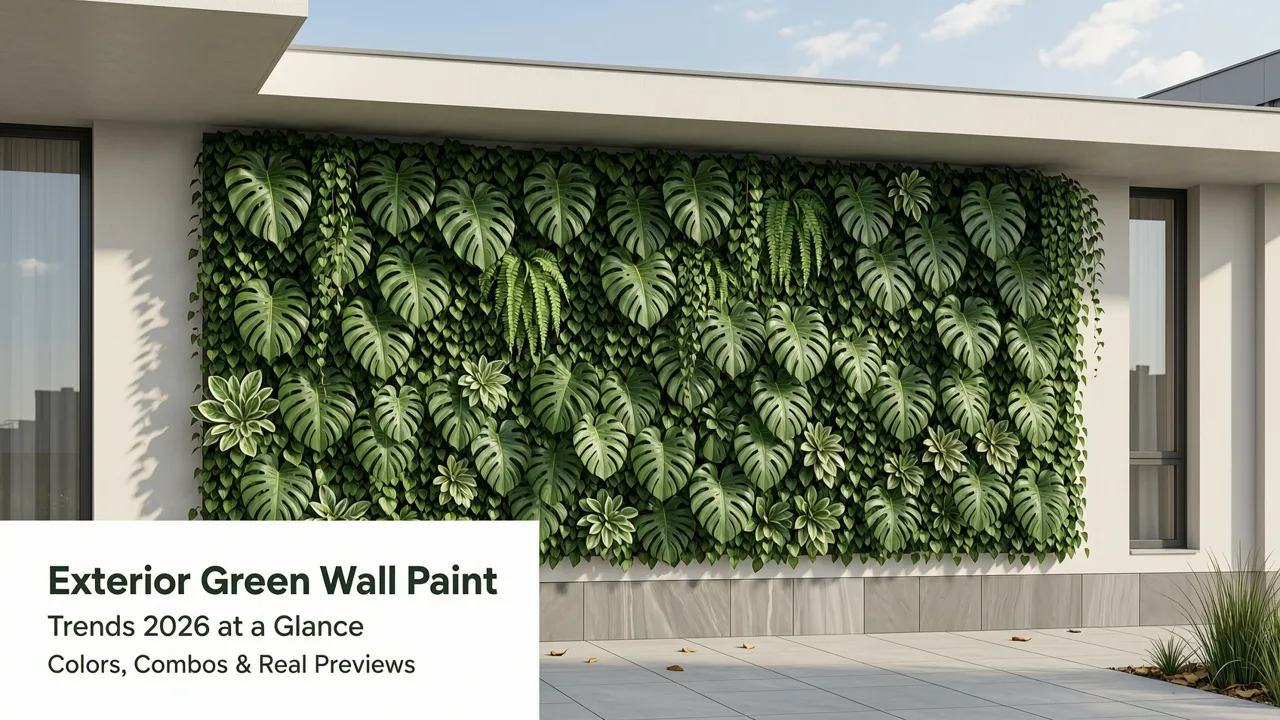
Exterior Green Wall Paint Trends 2026 at a Glance
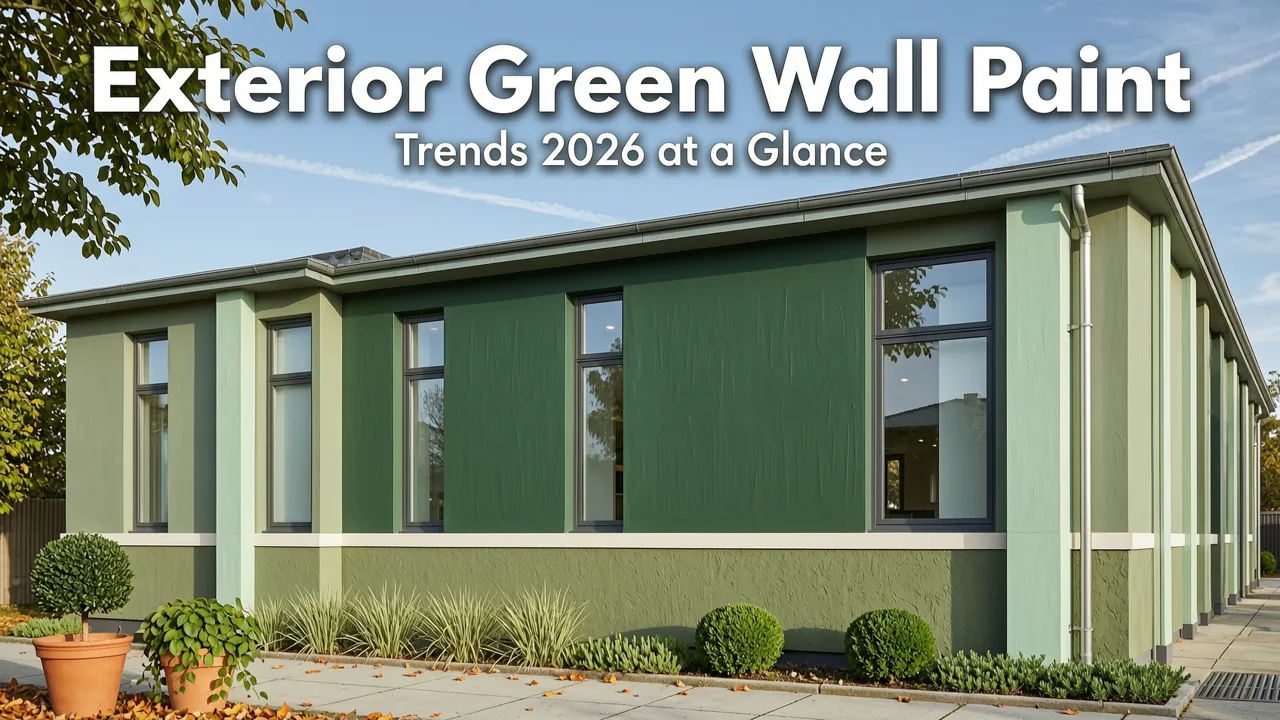
If you are planning a facade refresh this year, exterior green wall paint trends 2026 are defined by nature-forward hues that blur the line between architecture and landscape. The short answer: sage, olive, forest, and muted mint dominate the 2026 exterior palette, with homeowners and designers choosing greens that feel grounded, weather-resistant, and context-aware rather than decorative or trendy for trend's sake.
This guide breaks down the four green families shaping 2026 curb appeal, explains how each shade performs in different climates and architectural styles, and shows you how to preview every option on a photo of your actual home before buying a single can of paint. No mood boards. No guesswork. Just photorealistic results you can trust.
Why Green Is the Dominant Exterior Color Story in 2026
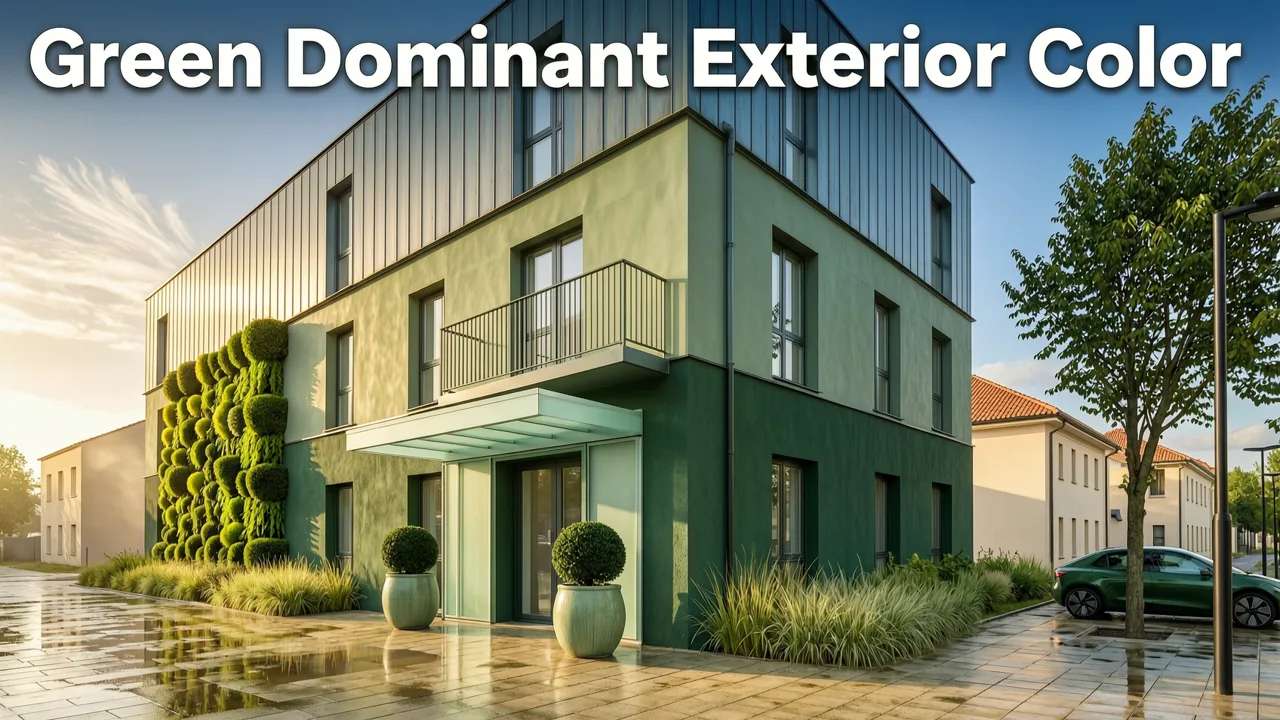
Green has been creeping onto exterior palettes for several years, but 2026 marks the moment it moves from accent to anchor. Three forces are driving this shift:
the best moody greens of 2026 (my top 5 picks)
by The Paint People
- Biophilic design maturity. Homeowners now expect their exteriors to feel like extensions of the surrounding landscape, not isolated objects sitting on a lot.
- Climate-responsive color thinking. In warmer regions, deeper greens absorb less heat perception than black or charcoal, while in overcast climates, yellow-based greens add warmth without the dated feel of traditional beige.
- AI visualization adoption. Tools that let you redesign your house exterior online make it effortless to test greens that once felt too risky to commit to.
The result is a year where green is no longer a bold statement. It is the default for homeowners who want curb appeal that ages gracefully, photographs beautifully, and harmonizes with mature landscaping.
The Four Green Families Defining Exterior Paint in 2026
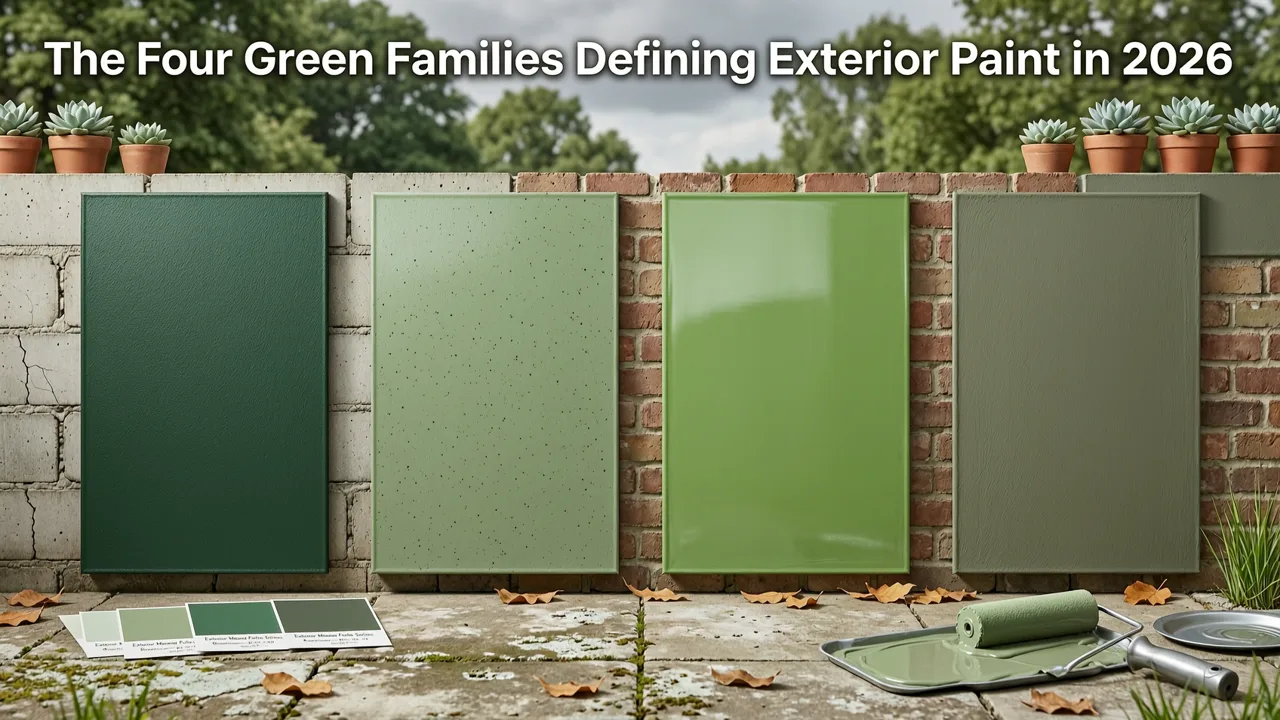
Not every green performs the same way on a facade. The four families below represent the spectrum of what is selling at paint counters and showing up in architect-approved renderings this year.
1. Sage Green: The Quiet Favorite
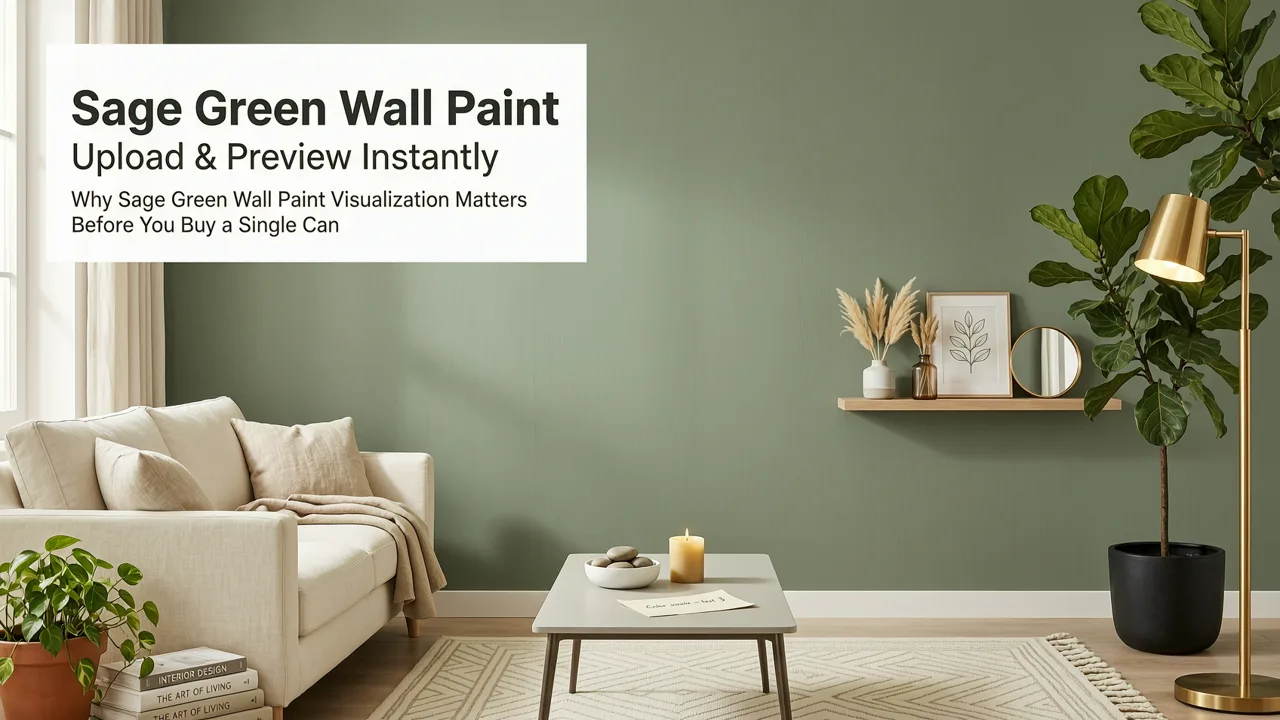
Sage remains the most popular exterior green in 2026 because it is forgiving. Its gray and blue undertones keep it from reading as loud or overly saturated, even in bright afternoon sun. Sage pairs naturally with white trim, warm wood tones, and black metal accents. It works especially well on Craftsman, farmhouse, and mid-century modern homes where the architecture already leans organic.
Best for: Homes surrounded by established trees, coastal properties, and regions with strong summer sunlight where lighter greens can wash out.
2. Olive Green: The Sophisticated Pivot
Olive is the color homeowners choose when they want more depth than sage but less drama than forest. With its yellow-brown undertones, olive reads as warm and grounded, making it ideal for Southwestern, Mediterranean, and transitional-style homes. In 2026, olive is frequently paired with cream or oatmeal trim rather than stark white, creating a softer, more layered facade.
Best for: Desert landscapes, terracotta or clay tile roofs, and homes with warm stone or brick accents.
3. Forest Green: The Architectural Statement
Deep forest green has emerged as the go-to choice for homeowners who want a facade with presence. It is dark enough to feel moody and substantial, yet still reads as a natural material rather than a painted surface. Forest green exteriors photograph exceptionally well and pair beautifully with brass or unlacquered copper hardware, limestone details, and white or black window frames.
Best for: Victorian, Colonial, and Tudor revival homes, as well as modern farmhouses in wooded or rural settings.
4. Muted Mint: The Unexpected Modernist
Mint is the surprise entry on the 2026 list. When desaturated and grayed down, mint becomes a fresh, contemporary exterior color that feels neither juvenile nor dated. It works particularly well on mid-century modern, Art Deco, and coastal contemporary homes. The key is choosing a mint with enough gray in its base to avoid reading as pastel under overcast skies.
Best for: Smaller footprint homes, bungalows, beach cottages, and urban row houses where a lighter facade keeps the streetscape feeling open.
How to Choose the Right Green for Your Home's Architecture and Context
Picking a green is only half the equation. The right shade depends on three variables that most paint-deck swatches cannot account for.
Architectural Style
Every architectural language has a natural green vocabulary. A Victorian painted lady reads correctly in deep forest, while the same color on a sleek modern box can feel heavy and out of character. Conversely, muted mint on a Victorian would feel whimsical rather than intentional. Matching the green family to the architectural era is the single fastest way to avoid a costly repaint.
Surrounding Landscape and Hardscape
Your facade does not exist in isolation. A sage green house surrounded by blue spruce and gray stone will feel cohesive, while the same sage next to a bright red brick neighbor can read as washed out. Before committing, evaluate the greens already present in your mature plantings, roof material, driveway stone, and neighboring structures.
Light Exposure and Climate
South-facing walls in high-UV climates will lighten any green by up to two shades over the course of a summer. North-facing walls in Pacific Northwest conditions will pull blue and gray tones forward. This is why visualizing your house exterior remodel in context matters more than comparing swatches under store lighting.
Exterior Green Paint Trends 2026: Trim, Door, and Accent Pairings
A green facade is only as strong as the colors supporting it. Here are the pairing formulas gaining the most traction in 2026.
| Green Base | Trim Color | Front Door | Accent / Shutters |
|---|---|---|---|
| Sage | Warm white or oatmeal | Matte black or natural wood | Charcoal or deep teal |
| Olive | Cream or soft tan | Burnt orange or terracotta | Warm bronze |
| Forest | Crisp white or limestone | Unlacquered brass or matte black | Deep navy or charcoal |
| Muted Mint | Off-white or pale gray | Natural oak or forest green | Soft black or slate blue |
Notice a pattern: 2026 pairings favor natural materials and muted neutrals over high-contrast combinations. The goal is cohesion, not drama.
How to Preview Exterior Green Wall Paint Trends 2026 on Your Real Home
The biggest risk with any exterior color is committing without seeing it in situ. Paint samples on a small section of siding tell you almost nothing about how a color will read across an entire facade, at distance, and under real daylight.
This is where AI-powered visualization changes the decision-making process. With an upload photo exterior redesign workflow, you can test every shade in the green families above on a photo of your actual home in seconds. The result is a photorealistic preview that accounts for your roofline, landscaping, trim details, and lighting conditions.
Step-by-Step: Testing Green Paint Colors with AI
- Photograph your home. Shoot in even daylight, ideally on an overcast morning, with the full facade visible. Avoid harsh shadows.
- Upload the photo to an AI exterior redesign tool. Choose a platform that preserves architectural detail rather than applying flat style filters.
- Select your target green. Test at least two families side by side. Sage versus olive, for example, or forest versus muted mint.
- Adjust trim and accent colors. A green that looks wrong with white trim may look perfect with cream. Test combinations, not just base colors.
- Compare results. Save each version and review them at different times of day. Your eye will shift in preference as lighting changes.
This process eliminates the single biggest source of exterior paint regret: choosing a color based on a two-inch swatch.
Common Mistakes Homeowners Make with Exterior Green Paint
Even with strong trends in place, certain errors keep showing up in 2026 repaint projects. Avoiding them is as important as choosing the right shade.
- Choosing a green that is too saturated. Bright, saturated greens read as artificial on a facade. Desaturated, grayed-down greens read as natural materials.
- Ignoring the roof color. A cool sage green paired with a warm brown roof creates visual tension that no amount of landscaping will resolve.
- Testing only one trim combination. The trim color can make or break a green facade. Always test at least two trim options.
- Forgetting about sheen. Exterior paint sheen affects how a green reads. Flat and matte finishes deepen color; satin and semi-gloss lighten it. Choose sheen intentionally.
- Skipping the full-facade preview. A green that looks right on a swatch can feel overwhelming at scale. Always preview the color across the entire exterior before ordering paint.
Regional Preferences for Exterior Green Paint in 2026
Green preferences vary meaningfully by region, driven by landscape, light quality, and local architectural traditions.
Pacific Northwest and Northern California
Forest green and deep sage dominate, reflecting the evergreen surroundings and overcast light. Homeowners in these regions gravitate toward greens that feel like a natural extension of the forest canopy.
Southeast and Gulf Coast
Sage and muted mint perform well in high-light environments where deeper greens can feel heavy. These shades also pair naturally with the region's prevalent white and cream trim traditions.
Southwest and Mountain West
Olive is the clear leader, harmonizing with desert landscapes, terracotta roofing, and warm stone. Forest green appears in mountain communities where it echoes surrounding ponderosa and lodgepole pine.
Northeast and Mid-Atlantic
Forest green and sage share the top spot, with forest favored on traditional architecture and sage preferred on updated colonials and farmhouse-style homes.
Sustainability and Durability Considerations for Green Exterior Paint
Color choice is only part of the equation. In 2026, homeowners are also evaluating paint formulations for environmental impact and long-term performance.
- Low-VOC and zero-VOC formulations are now standard across premium exterior lines, reducing off-gassing during and after application.
- Mineral-based and silicate paints are gaining share among homeowners who prioritize breathability and longevity, particularly on masonry and stucco surfaces.
- UV-resistant pigments matter more for greens than for neutrals, because green pigments are more prone to fading and shifting in tone over time. Invest in premium-grade paint for any green facade.
Choosing a durable formulation protects both your investment and the integrity of the color you spent time selecting.
When to Work with a Professional Versus an AI Tool
AI visualization tools are powerful for narrowing your options and building confidence in a color direction. They are not a replacement for professional judgment when the project involves complex surfaces, multi-material facades, or historic preservation requirements.
Use AI tools to explore the exterior green wall paint trends 2026 and identify two or three finalists. Then, if your home has architectural significance, unusual materials, or strict HOA guidelines, bring those finalists to a color consultant or architect for final validation. This two-stage approach saves time, reduces risk, and produces better outcomes than either method alone.
Final Thoughts on Exterior Green Paint in 2026
Green is no longer an alternative exterior color. In 2026, it is the leading choice for homeowners who want a facade that feels rooted in its landscape, ages with grace, and photographs beautifully in any season. The four families above, sage, olive, forest, and muted mint, cover the full spectrum of what is working this year across climates, architectural styles, and personal preferences.
The smartest move you can make before ordering paint is to see these greens on your actual home. AI-powered exterior redesign tools make that possible in minutes, giving you the confidence to choose a color you will love for years, not just weeks.
Ready to test these trends on your own facade? Upload a photo of your home and preview every green family side by side, with photorealistic results that reflect your architecture, landscaping, and lighting. Your perfect exterior green is waiting to be seen.