
Why Knowing How to Choose Wall Paint for Living Room Spaces Matters More Than Ever

Selecting the perfect paint color is the single most transformative step in any home renovation, yet it remains one of the most intimidating. If you have ever watched a promising paint sample dry on a cardboard swatch only to see it look entirely different once applied to four walls, you already know the frustration of the selection process. Understanding how to choose wall paint for living room environments requires moving beyond simple color preference and analyzing how light, spatial geometry, and existing furnishings interact with pigments.
In 2026, the process of selecting living room paint has evolved significantly. While traditional design principles regarding lighting and undertones remain foundational, the introduction of advanced AI visualization tools has eliminated the guesswork. By combining classic interior design theory with photorealistic digital previews, homeowners and designers can now achieve true-to-room accuracy before purchasing a single gallon of paint.
The Core Factors in Choosing Living Room Paint Colors

Before exploring digital tools, it is essential to understand the physical and environmental variables that dictate how a paint color performs in a specific space. A shade that looks inviting in a showroom can feel cavernous or overly saturated in your specific living room.
Paint Colors For Beginners: How To Choose Fast (With No Experience)
by Ashley Childers
Assessing Natural and Artificial Lighting
Lighting is the most critical variable in paint selection. The direction your living room windows face dictates the color temperature of the natural light entering the space.
- North-facing rooms receive cooler, bluer light. Warm colors can help balance this chill, while cool grays may feel stark.
- South-facing rooms are bathed in warm, yellowish light for most of the day. These spaces can handle cooler tones beautifully, but warm beiges can become overly yellow.
- East and West-facing rooms experience shifting light, with warm morning or evening casts and cooler light during the opposite half of the day.
Artificial lighting also plays a massive role. LED bulbs come in various color temperatures, measured in Kelvins. A 2700K bulb emits a warm, cozy glow that enhances earthy tones, while a 4000K bulb provides crisp, daylight-like illumination that highlights cool blues and greens.
Understanding Paint Undertones and Neutrals
Every paint color, even the most neutral whites and grays, has an underlying hue known as an undertone. Identifying these undertones is crucial for creating a cohesive living room color scheme.
- Beige undertones lean yellow, red, or orange, creating a warm and inviting atmosphere.
- Gray undertones lean blue, green, or purple, offering a modern and serene feel.
- Greige combines beige and gray, providing a versatile middle ground that adapts well to various lighting conditions.
When coordinating with existing fixed elements like hardwood flooring or stone fireplaces, compare the undertone of the paint to the undertone of the fixed elements. Clashing undertones—such as a pink-beige wall against a green-toned oak floor—will make the space feel disjointed.
Selecting the Right Paint Finish for High-Traffic Areas
The sheen of the paint affects both the aesthetic and the durability of the walls. Living rooms are multi-functional spaces that require a balance between aesthetic appeal and practical maintenance.
| Paint Finish | Reflectivity | Best Use in Living Room | Washability & Durability |
|---|---|---|---|
| Flat / Matte | None | Ceilings or low-traffic formal living rooms | Low; difficult to clean without damaging the finish |
| Eggshell | Very Low | Standard living room walls; hides imperfections well | Medium; suitable for light wiping |
| Satin | Low to Medium | Family rooms, playrooms, and high-traffic areas | High; excellent resistance to scuffs and stains |
| Semi-Gloss | Medium to High | Trim, baseboards, and built-in cabinetry | Very High; easy to wipe down completely |
For most modern living rooms, an eggshell or satin finish on the walls provides the ideal compromise, offering a subtle depth of color while remaining resilient enough to handle daily life.
How to Choose Wall Paint for Living Room Designs Using AI Visualization
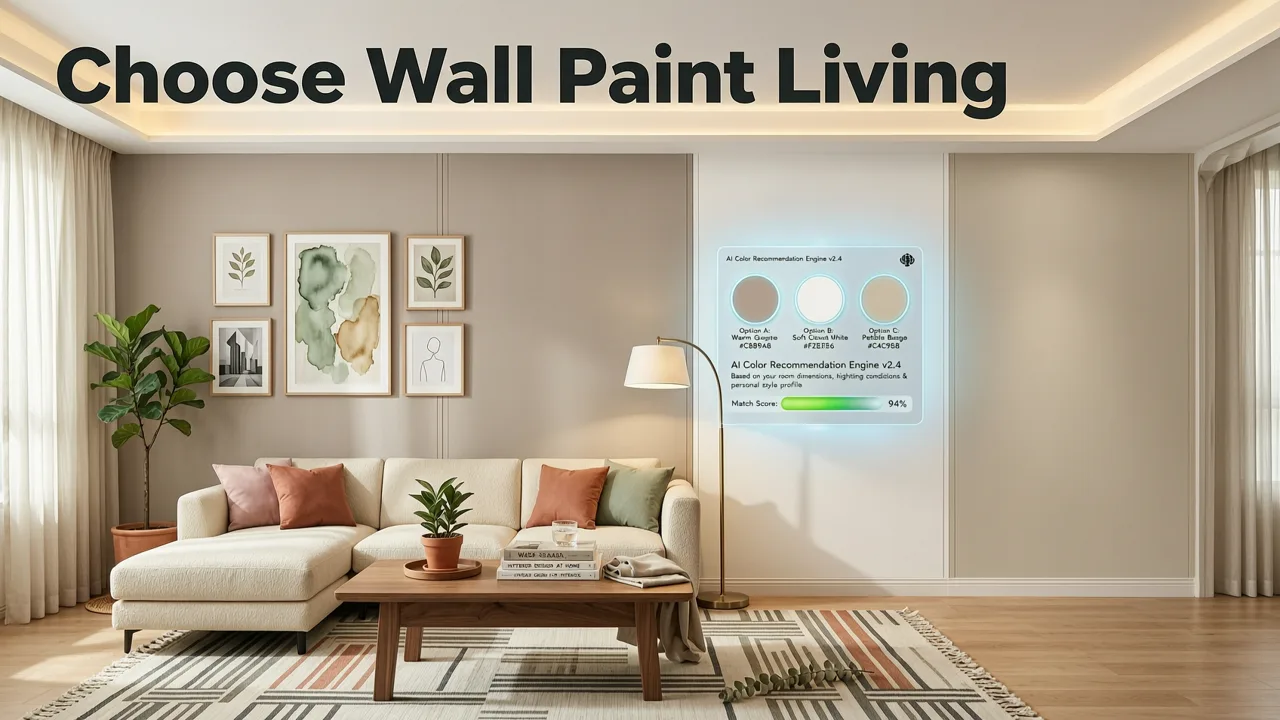
While understanding lighting and undertones is necessary, the traditional method of buying multiple sample pots, painting large swatches on the wall, and observing them over several days is inefficient and often inaccurate. Paper swatches fail to account for the scale of a room, the reflection of existing furniture, and the complex interplay of shadows.
The Limitations of Traditional Paper Swatches
A small paper swatch cannot demonstrate how a color will wrap around a room or how it will look when placed next to a dark leather sofa or a light wool rug. Furthermore, the paint on a paper swatch is printed with ink, which has a completely different reflective property than actual architectural paint with a physical sheen.
How AI Room Previews Solve the Guesswork
Modern AI visualization tools process spatial data and lighting parameters to generate photorealistic room previews. According to OpenAI documentation on spatial AI models, advanced algorithms can now interpret room geometry, map textures, and simulate how specific light sources interact with different material finishes. This means you can see exactly how a satin-finish navy blue will absorb light in a north-facing corner of your specific living room.
By uploading a simple photograph of your space, these tools allow you to test hundreds of shades in seconds. If you are exploring lighter options, the White Wall Paint AI Visualization guide demonstrates how digital previews can accurately capture the subtle differences between warm whites and cool off-whites under your exact room conditions.
Navigating Color Trends and Accent Strategies in 2026
The living room paint trends for 2026 emphasize biophilic design, moody maximalism, and grounding neutrals. Homeowners are moving away from sterile, builder-grade grays and embracing colors that evoke nature and psychological comfort.
Broad Color Trends for the Year
- Earthy Terracottas and Clays: These warm, grounding tones create intimate, cocooning environments perfect for conversation areas.
- Deep Botanical Greens: Shades like olive, sage, and forest green bring the outdoors inside, promoting relaxation and focus.
- Complex Greiges: Neutral palettes are evolving to include subtle green or blue undertones, preventing the space from feeling flat or overly warm.
Strategic Use of Accent Walls
If a full-room color feels too bold, an accent wall remains a highly effective strategy. However, the decision between materials has evolved. When evaluating accent wall paint vs wallpaper, paint offers a faster, more cost-effective way to introduce deep, moody colors, while wallpaper provides intricate patterns and textural depth. For a seamless, modern look in 2026, a deeply saturated paint color on a single architectural feature wall—such as behind a media console or a fireplace—is the preferred approach.
Optimizing Smaller Living Spaces
Not every living room is expansive. For compact layouts, the instinct is often to default to stark white to "open up" the space. However, soft, reflective neutrals often yield a better result by adding warmth without shrinking the room. If you are dealing with a smaller footprint, reviewing the principles in the Best White Paint for Small Rooms guide can help you select a shade that maximizes light reflection while maintaining a welcoming atmosphere.
Step-by-Step Process to Finalize Your Living Room Color
To ensure a successful outcome, follow this structured approach to selecting and verifying your living room paint color.
- Analyze the Fixed Elements: Identify the undertones of your flooring, large furniture pieces, and artwork. Choose a paint undertone that complements, rather than clashes with, these items.
- Map the Lighting: Determine the compass direction of your windows and the color temperature of your primary artificial light fixtures.
- Define the Mood: Decide whether the room should feel energizing and social (warmer, lighter tones) or relaxing and intimate (cooler, deeper tones).
- Utilize AI Visualization: Upload a clear, well-lit photo of your living room to an AI design tool. Apply your top three color choices to see how they interact with your specific furniture and lighting.
- Verify the Finish: Select a sheen appropriate for your household's traffic levels, opting for satin or eggshell for most main living areas.
- Purchase a Physical Sample: Once the AI preview has narrowed down your choices, buy a small physical sample of the final winner to confirm the color in the actual physical space under both day and night lighting conditions.
Conclusion and Next Steps
Choosing the right wall paint for your living room is a balance of understanding environmental factors like lighting and undertones, and leveraging modern technology to visualize the outcome. By combining foundational design principles with AI-powered room previews, you can confidently select a color that enhances your space, reflects your personal style, and stands the test of time.
Ready to see how your living room will look before you lift a paintbrush? Explore the AI interior design tools available on our platform to instantly visualize wall colors, test different styles, and bring your renovation vision to life with photorealistic accuracy.