Why Small Garden Redesign AI Is the Fastest Way to Reimagine Your Yard in 2026
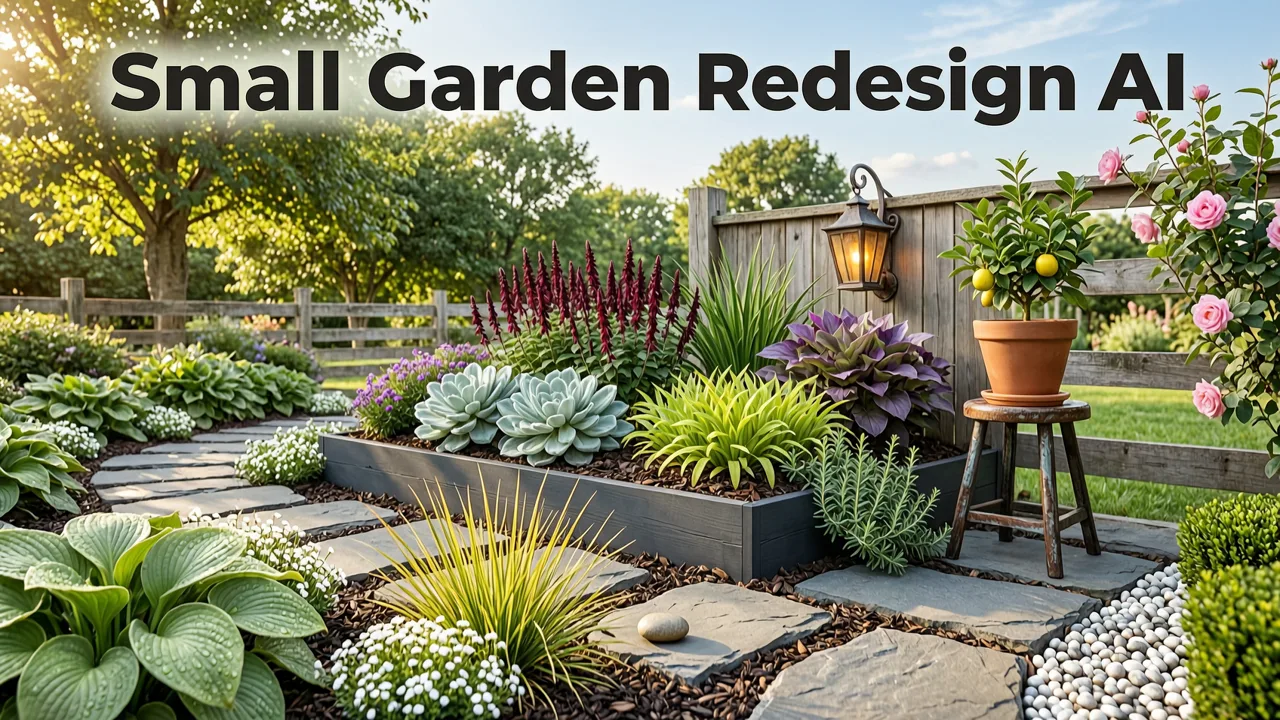
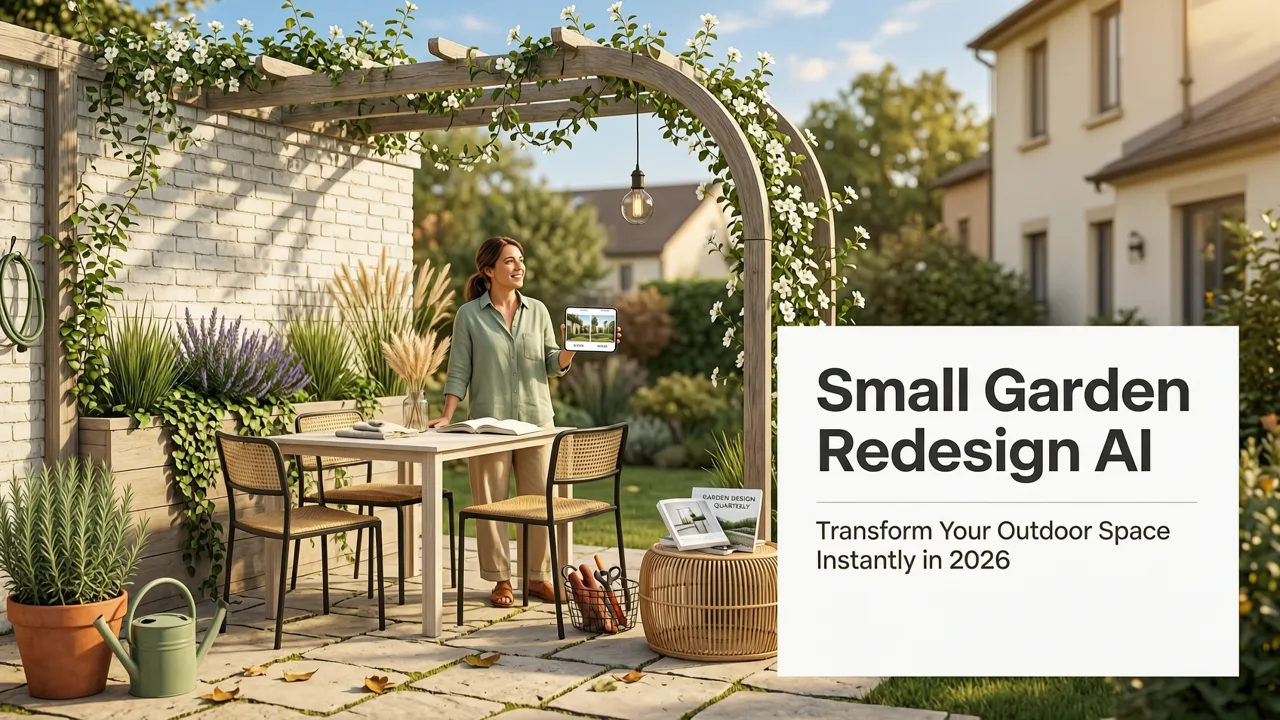
If you have a postage-stamp backyard, a narrow side passage, or a balcony that barely fits a chair, you already know the frustration: every plant, path, and planter matters. A small garden redesign AI tool lets you upload a single photo of your outdoor space and receive photorealistic, true-to-scale redesigns in seconds — no designer retainer, no 3D modeling software, and no guesswork. The short answer: yes, you can realistically plan a tiny-garden makeover before spending a single dollar on soil or stone.
In 2026, generative vision models have matured enough to respect structural boundaries — fences, walls, drainage lines, and existing trees — while still offering creative freedom across dozens of styles. Whether you are a homeowner testing a cottage look, a renter checking whether vertical planters are worth the install, or a realtor staging a listing, AI-driven garden visualization removes the costly trial-and-error that used to define small-space landscaping.
How Small Garden Redesign AI Works: The 2026 Workflow
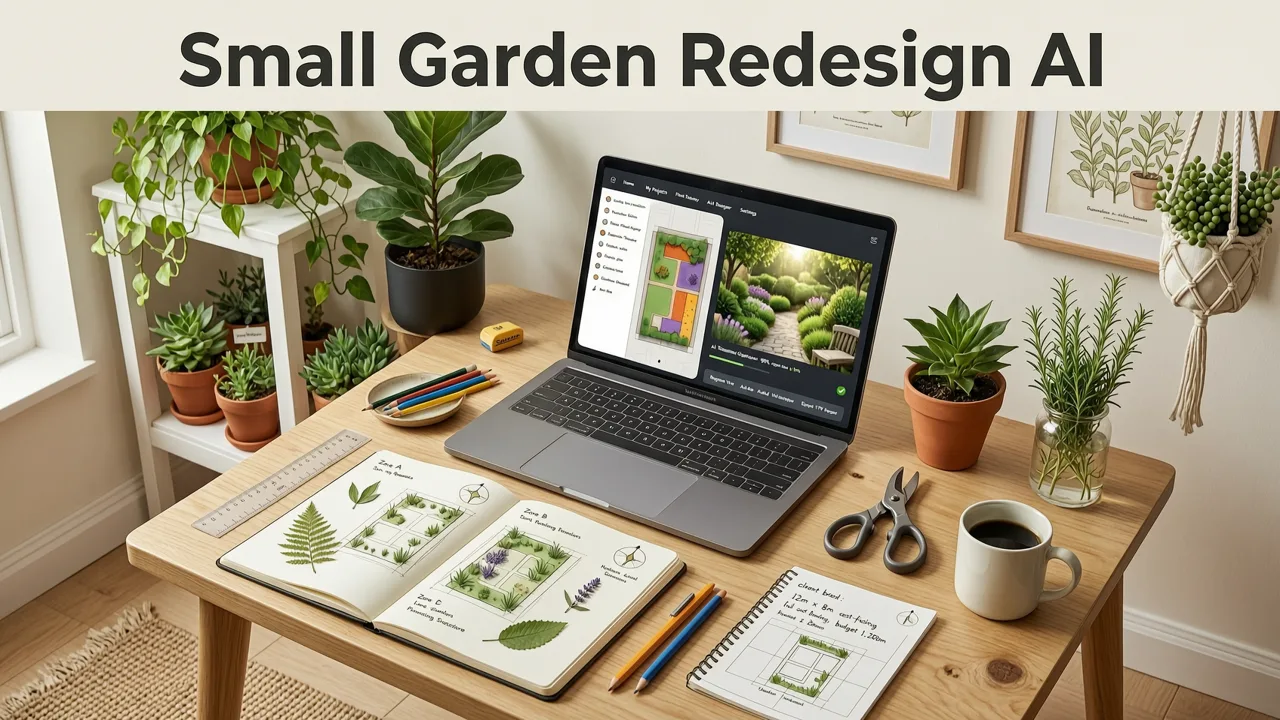
The process is intentionally simple, but the results depend on how thoughtfully you prepare your input. Think of the AI as a senior landscape architect who can sketch a hundred options before breakfast — but still needs a clear brief.
I Asked AI to Design my Garden
by John & Bob's Smart Soil Solutions
Step 1: Capture a Clean Photo of Your Garden
Stand at the widest vantage point available. Shoot on an overcast day or in open shade to avoid harsh shadows that confuse depth estimation. Include the full boundary — fences, walls, doors, downspouts — because the AI uses these as anchors. If your garden is extremely narrow, take two overlapping shots and generate a redesign from each; the tool will keep proportions consistent.
Step 2: Define Your Intent and Constraints
This is where most users rush — and regret. Tell the tool:
- Primary use: dining, herbs, kids' play, quiet reading, entertaining.
- Hard constraints: a shared fence you cannot alter, a gas meter, a mature tree whose roots must stay undisturbed.
- Style direction: Mediterranean, Japanese, rewilded minimalist, cottage, contemporary tropical.
- Budget tier: low-cost container refresh vs. full hardscape overhaul.
Providing this context prevents the AI from suggesting a water feature beside a rental boundary wall or a sprawling lawn in a four-by-six-meter yard.
Step 3: Generate, Compare, and Refine
Within seconds you will receive multiple variations. Compare side-by-side, zoom into planting zones, and toggle between seasonal lighting. Refine by adjusting prompts — swap "low maintenance" for "pollinator-friendly," or ask the tool to keep the existing pergola but change the paving. Most users reach a confident direction after two or three iterations.
Small Garden Styles That Work Brilliantly with AI Visualization
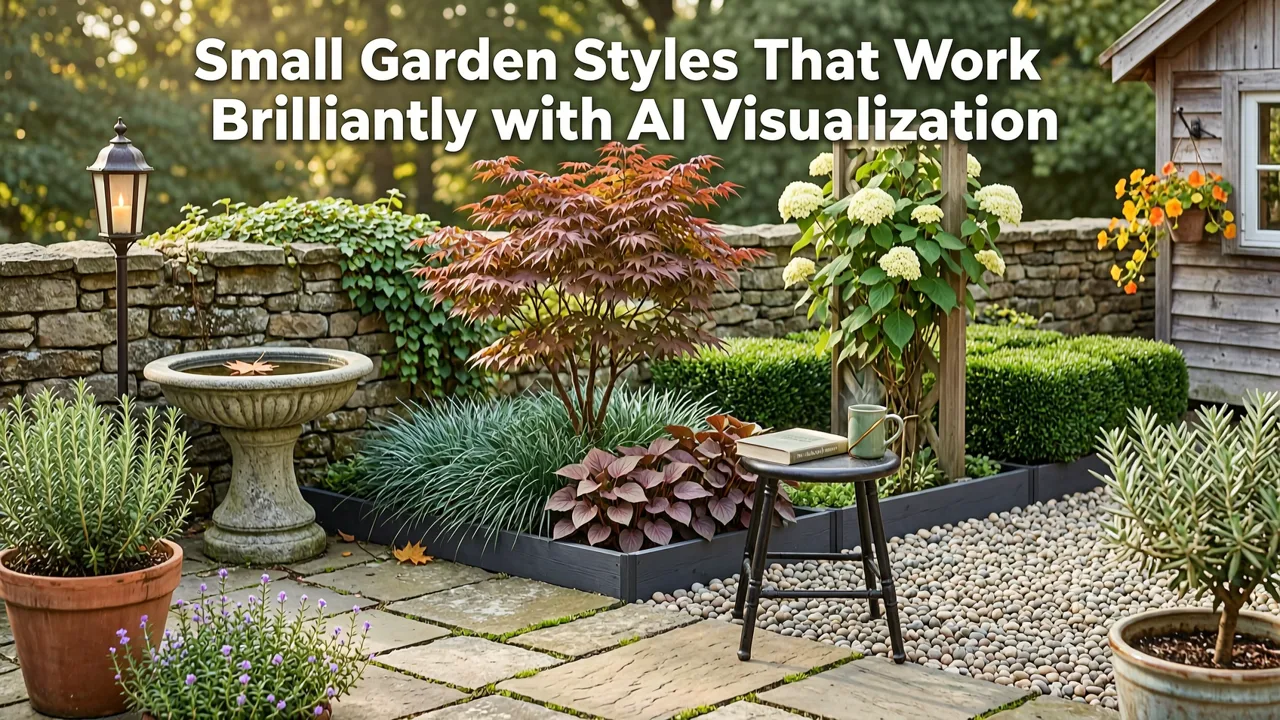
Not every garden trend translates well to compact spaces. Below are the styles delivering the strongest results in 2026 when run through AI redesign tools, along with why each suits limited square footage.
| Style | Why It Fits Small Gardens | Key AI Prompt Tips |
|---|---|---|
| Rewilded Minimalism | Fewer, bolder plant masses reduce visual clutter | "Native grasses, single specimen tree, gravel paths" |
| Japanese Zen | Emphasis on negative space and vertical layering | "Maple, moss, stepping stones, bamboo screen" |
| Mediterranean Courtyard | Container-friendly herbs and warm lighting | "Terracotta pots, lavender, olive tree, string lights" |
| Urban Cottage | Mixes edibles and ornamentals vertically | "Climbing roses, raised beds, reclaimed timber" |
| Biophilic Outdoor Room | Treats the garden as an extension of the interior | "Outdoor rug, lounge seating, layered foliage" |
For deeper inspiration, explore the 15 Modern Garden Design Ideas for 2026 — each visualized through AI so you can see how the style actually reads in real proportions before committing.
Common Small Garden Mistakes AI Helps You Avoid
Compact outdoor spaces amplify every design error. A too-large patio table, a single oversized tree, or a busy mix of paving materials can make a tiny garden feel claustrophobic. Here is how AI visualization catches problems early:
Mistake 1: Overcrowding with Too Many Plant Species
AI redesigns show you the mature canopy spread. If your prompt requests five shrub types in a six-meter bed, the tool will either warn you or produce a tangled result — a useful signal to simplify.
Mistake 2: Ignoring Vertical Space
Small gardens live or die by their vertical layer. AI tools let you test trellises, living walls, and espaliered fruit trees against your actual fence height, so you can maximize greenery without losing light.
Mistake 3: Mismatched Scale Furniture
Photorealistic output reveals whether a six-person dining set overwhelms a narrow patio. Swap in a bistro set or built-in bench and regenerate — the difference is immediately obvious.
Mistake 4: Forgetting Drainage and Access
Because the AI anchors to your uploaded photo, downspouts, gate swing arcs, and utility covers remain visible. You will not accidentally design a raised bed over a manhole.
Who Benefits Most from Small Garden Redesign AI
The tool serves distinct audiences, each with different priorities:
- Homeowners planning a renovation budget and wanting contractor-ready visuals.
- Renters testing reversible upgrades like container gardens and removable screening.
- Realtors staging listings with aspirational outdoor scenes that increase perceived value.
- Interior designers extending their scope to outdoor rooms and presenting cohesive indoor-outdoor proposals.
- Landscape students iterating rapidly on planting plans before presenting to mentors or clients.
Integrating AI Garden Visualization Into a Real Renovation Plan
AI output is a design compass, not a construction document. Once you settle on a direction, translate it into actionable steps:
- Export your favorite redesign and note the plant species, materials, and layout proportions.
- Verify plant hardiness for your climate zone and sunlight exposure.
- Source materials locally — paving, timber, and containers shown in the render are style references, not specific SKUs.
- Consult a landscaper with your AI visuals as a brief. Most professionals appreciate the clarity and can quote accurately.
- Phase the work if budget is tight. Hardscape first, planting second, lighting and furniture last.
For a complete walkthrough of the photo-to-plan workflow, read the How to Design Backyard with Photo Using AI guide, which covers lighting, angle, and prompt refinement in detail.
Special Case: Small Japanese-Style Gardens
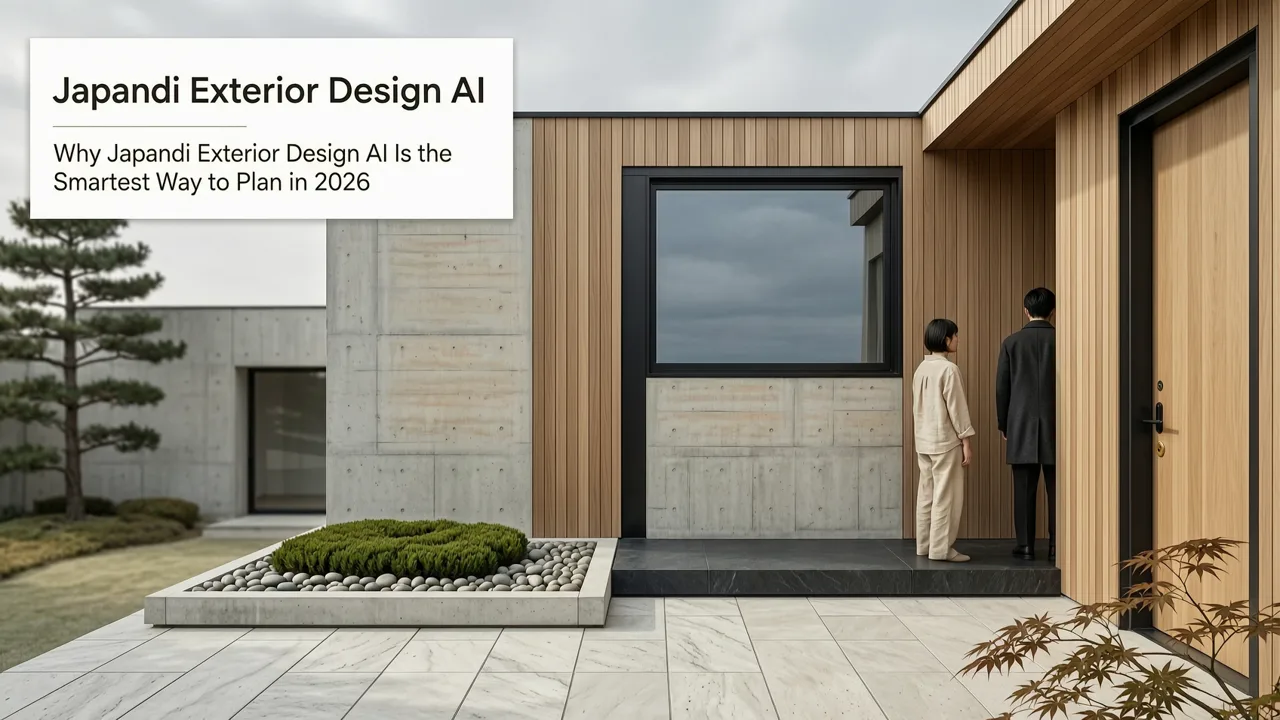
Japanese design is uniquely suited to compact spaces because it prizes restraint, asymmetry, and borrowed scenery. If you are drawn to this aesthetic, AI tools excel at showing how a single maple, a moss panel, and a narrow gravel path can transform a modest urban yard into a contemplative retreat. Start with the Japanese Garden Design for Beginners primer, then test your own photo using the Upload Photo Japanese Garden Redesign workflow to see the principles applied to your exact boundaries.
Accuracy, Privacy, and Responsible Use in 2026
Modern vision models follow structured safety and responsibility frameworks. Platforms align with guidance from organizations such as Google's AI responsibility principles and documentation from OpenAI, ensuring generated images are clearly labeled as AI-assisted visualizations rather than photographs. Your uploaded garden photos are processed securely, and reputable tools do not retain or republish them without consent. Always review a platform's privacy policy before uploading images of your property.
Small Garden Redesign AI vs. Traditional Design Services
| Factor | AI Redesign Tool | Traditional Landscape Designer |
|---|---|---|
| Turnaround | Seconds to minutes | Days to weeks |
| Cost | Free trial or low subscription | $500–$5,000+ per project |
| Iterations | Unlimited | Limited by hourly rate |
| Photorealism | High, anchored to your photo | High, but often 3D-rendered |
| On-site expertise | None — you verify soil, drainage, codes | Full site assessment included |
| Best for | Ideation, budgeting, staging | Permitted construction, complex grading |
For most homeowners with a small garden, starting with AI visualization dramatically reduces the risk of expensive missteps. Bring your shortlisted designs to a landscaper only when you are ready to break ground.
Getting Started in Under Five Minutes
- Open the AI Interior & Exterior Design app on your phone or desktop.
- Upload a clear photo of your small garden.
- Select a style or type a short description of your vision.
- Generate multiple variations and save your favorites.
- Share the results with a contractor, partner, or housemate to align on the next step.
The entire loop — from blank yard to confident design direction — now takes less time than brewing a pot of coffee.
Final Thoughts
A small garden does not limit your design options; it simply demands smarter decisions. Small garden redesign AI gives you the confidence to make those decisions visually, quickly, and affordably. Upload your photo, explore the styles that resonate, and walk into your next renovation knowing exactly what you are building — before a single bag of mulch hits the ground.
Ready to see your outdoor space reimagined? Try the AI redesign tool free today and turn your smallest yard into your favorite room of the house.