Warm Beige vs Cool Beige Paint: The 2026 Quick Answer
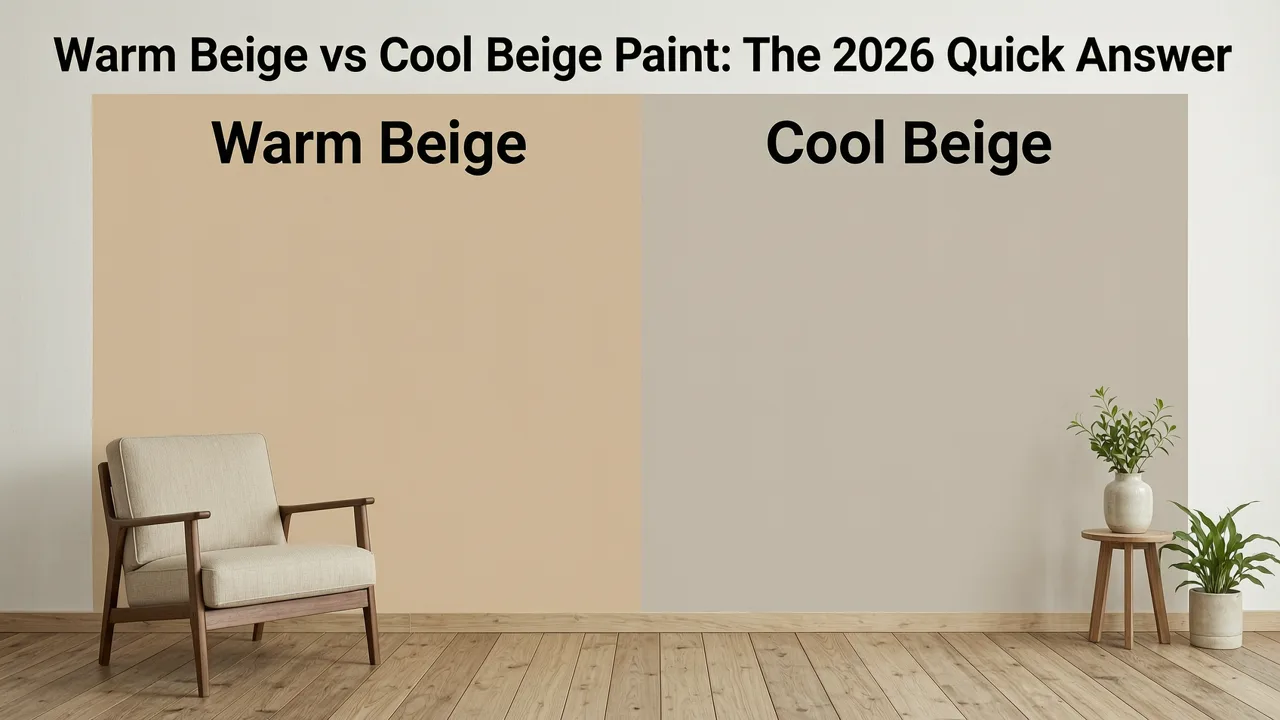
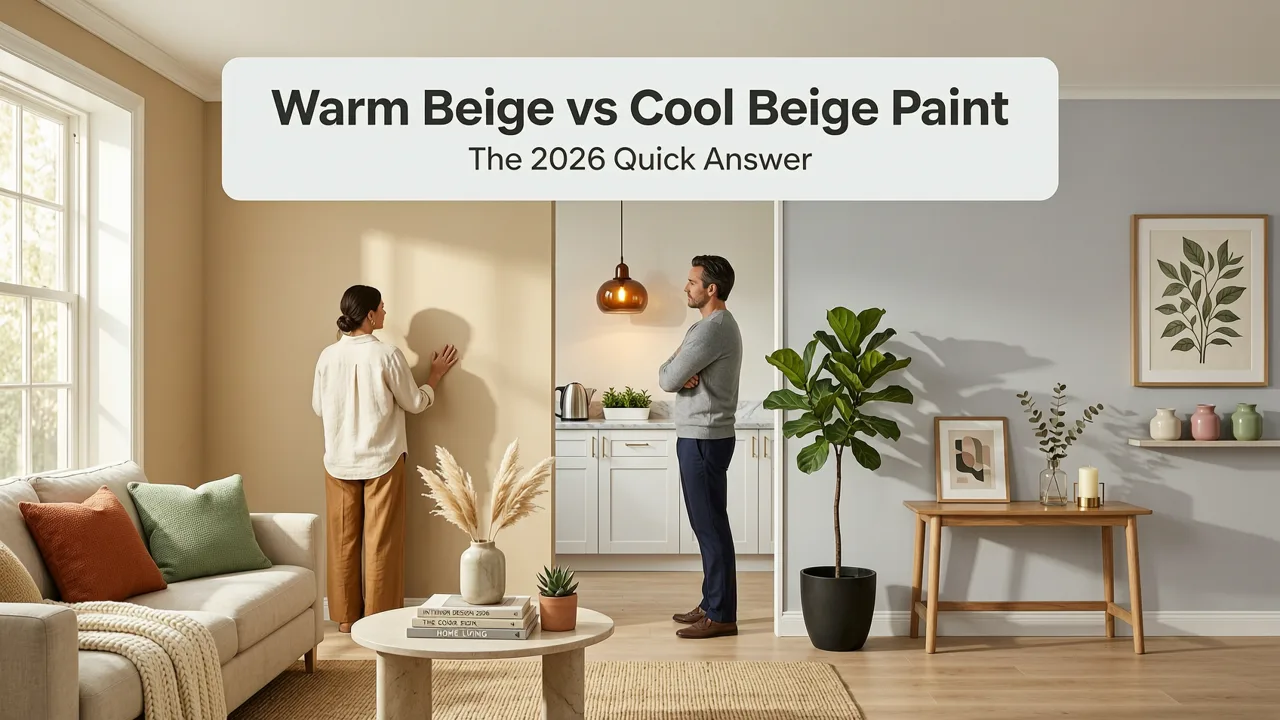
If you've been staring at paint swatches for hours trying to decide between warm beige vs cool beige paint, here's the short version: warm beige carries yellow, red, or orange undertones that make a room feel cozy and enveloping, while cool beige leans into gray, green, or blue undertones that read as modern, airy, and calm. The "right" choice depends on three factors — your room's natural light direction, your existing fixed elements (flooring, countertops, tile), and the mood you want the space to project. In 2026, the good news is you no longer have to guess. AI-powered visualizers let you upload a photo of your actual room and preview dozens of warm and cool beige shades in seconds, saving you from costly sample-pot regret.
This guide breaks down the science of beige undertones, shows you how lighting transforms each shade, and walks you through a room-by-room decision framework so you can choose with confidence — whether you're refreshing a single bedroom or planning a full-home renovation.
What Exactly Is the Difference Between Warm Beige and Cool Beige?
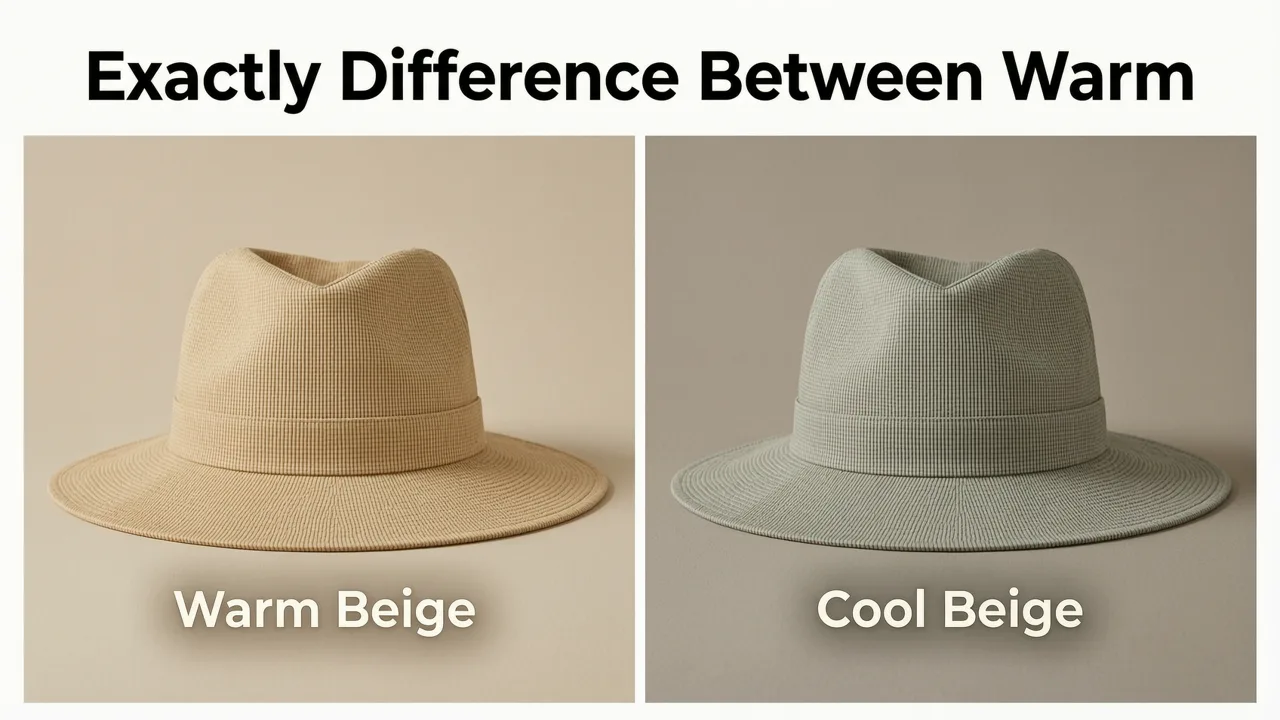
Beige is not a single color. It's a family of neutrals that sit somewhere between brown and gray on the color spectrum, and the specific undertone lurking beneath the surface is what makes one beige feel inviting and another feel crisp. Understanding this distinction is the foundation of every good paint decision.
Comparing Accessible Beige with Similar Colors
by Kylie M Interiors
Warm Beige: Undertones and Characteristics
Warm beige paint contains visible hints of yellow, red-orange, or golden-tan beneath its neutral surface. These undertones reflect light in a way that mimics the glow of late-afternoon sun, which is why warm beige walls tend to feel intimate, grounding, and traditionally cozy. Common warm beige descriptors you'll see on paint chips include sand, taupe with a red base, camel, biscuit, and latte.
Key traits of warm beige:
- Undertones lean yellow, orange, red, or golden-brown.
- Reads as "cozy" and "traditional" in most lighting conditions.
- Pairs naturally with wood tones, brass hardware, terracotta, and cream textiles.
- Can feel "muddy" or "dated" if paired with cool gray flooring or stark white trim.
Cool Beige: Undertones and Characteristics
Cool beige paint shifts toward gray, green, or subtle blue undertones. Designers sometimes call this category "greige" (gray-beige), though not every cool beige is a true greige. The coolness gives these shades a more contemporary, gallery-like feel — they recede visually, making walls appear to float rather than close in. You'll see names like stone, putty, moonlight, and pebble on cool beige swatches.
Key traits of cool beige:
- Undertones lean gray, green-gray, or blue-gray.
- Reads as "modern," "clean," and "serene" in most lighting conditions.
- Pairs naturally with matte black fixtures, white oak, concrete, and linen textiles.
- Can feel "sterile" or "hospital-like" in rooms with zero natural light or cool LED bulbs.
How Natural Light Changes Warm Beige vs Cool Beige Paint
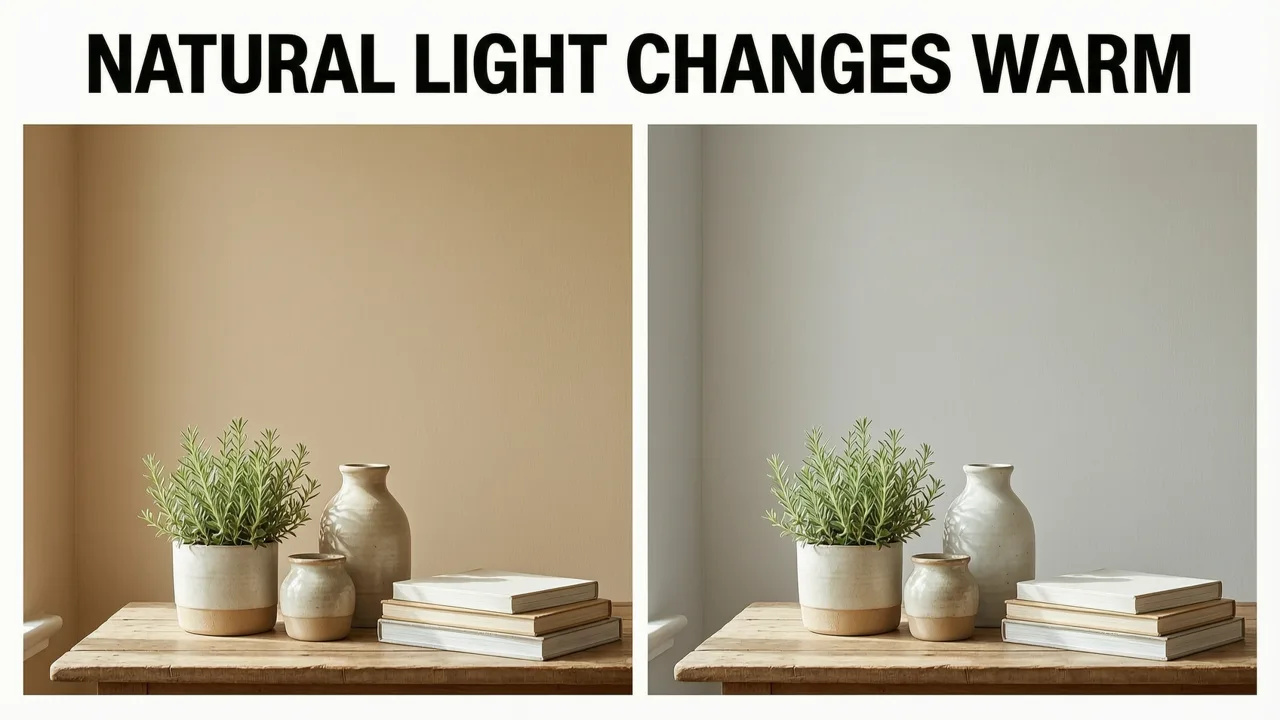
Lighting is the single most important variable in how any paint color behaves, and beige is especially sensitive to it. A warm beige that looks perfect in the showroom can turn orange under incandescent bulbs, while a cool beige that looks elegant in a north-facing bedroom can read as flat gray in bright southern sun.
North-Facing Rooms
North-facing light is cool, bluish, and diffuse. Warm beige can help counterbalance this coolness, adding the golden glow the room lacks. However, if you choose a warm beige with strong red undertones, the north light can clash and create an odd pinkish cast. A soft, yellow-based warm beige or a medium-depth cool beige with green undertones often works best here.
South-Facing Rooms
South-facing rooms get intense, warm light for most of the day. This is where cool beige truly shines — the warm sunlight keeps cool undertones from feeling sterile, and the gray-green base prevents the room from overheating visually. Warm beige in a south-facing room can amplify heat and feel overwhelming, especially in summer months.
East- and West-Facing Rooms
East-facing rooms get warm morning light and cooler afternoon light, while west-facing rooms are the reverse. In these spaces, your beige choice will shift throughout the day. If you want consistency, choose a mid-tone beige with a balanced undertone — neither aggressively warm nor aggressively cool — and preview it with an AI visualizer at different simulated lighting angles.
Warm Beige vs Cool Beige: Side-by-Side Comparison
The table below summarizes the practical differences so you can scan quickly and match your situation.
| Factor | Warm Beige | Cool Beige |
|---|---|---|
| Primary undertones | Yellow, red, orange, gold | Gray, green, blue |
| Best light direction | North-facing rooms | South-facing rooms |
| Mood | Cozy, traditional, enveloping | Modern, serene, airy |
| Best trim pairing | Creamy whites (SW Alabaster, BM White Dove) | Crisp whites (BM Chantilly Lace, SW Extra White) |
| Flooring match | Medium to dark wood, terracotta tile | White oak, polished concrete, gray tile |
| Hardware finish | Brass, oil-rubbed bronze, copper | Matte black, brushed nickel, chrome |
| Risk if mismatched | Looks dated or orange | Looks sterile or flat |
| 2026 trend direction | Resurgent in "quiet luxury" interiors | Dominant in minimalist and Japandi styles |
Room-by-Room Guide: Where Each Shade Works Best
Choosing between warm beige vs cool beige paint isn't just about personal preference — it's about how each room functions and what emotional tone supports that function.
Living Room
Living rooms are high-traffic social spaces where you want the color to feel welcoming without dominating. Warm beige works beautifully in living rooms with fireplaces, wood furniture, and layered textiles. Cool beige is the stronger choice in open-concept living areas that flow into a kitchen with gray countertops or in homes with large south-facing windows. If you're also considering an accent wall in the same space, our guide on how to choose accent wall color with AI walks through pairing strategies in detail.
Kitchen
Kitchens are where fixed elements — countertops, cabinetry, backsplash tile — lock in your color direction. If you have warm granite or butcher block counters, warm beige on the walls creates harmony. If you have quartz with gray veining or white marble, cool beige keeps the palette cohesive. In 2026, the trend is moving toward warm beige in kitchens again, particularly in "organic modern" designs that mix natural stone with unlacquered brass.
Bedroom
Bedrooms benefit from calming, low-stimulation color. Cool beige is the traditional recommendation here because it lowers visual energy and promotes rest. However, if your bedroom faces north or you prefer a "wrapped in warmth" feeling, a soft warm beige with minimal red undertone can be equally restful. The key is keeping saturation low — heavily saturated warm beige can feel stimulating rather than soothing.
Bathroom
Bathrooms are tricky because artificial lighting dominates. Cool beige pairs well with white subway tile, chrome fixtures, and marble-look porcelain. Warm beige works in bathrooms with natural stone, wood-look tile, and warm LED lighting (2700K–3000K). Avoid choosing a beige that fights your vanity countertone — bring a physical swatch home and view it under your actual bathroom bulbs before committing.
Exterior and Curb Appeal
Beige isn't just for interiors. Exterior warm beige reads as traditional, Mediterranean, or craftsman depending on the trim and roof color. Exterior cool beige reads as contemporary, coastal, or modern farmhouse. If you're visualizing an exterior makeover, the DrHomey exterior design tool lets you upload a photo of your home and test warm and cool beige siding colors against your actual roof, brick, and landscaping in photorealistic detail.
How to Test Warm vs Cool Beige Without Buying 20 Sample Pots
The old method — taping paper swatches to the wall and living with them for a week — still works, but it's slow and imprecise. In 2026, AI visualizers have dramatically improved the speed and accuracy of paint testing.
Step 1: Photograph Your Room in Natural Light
Take a clear, straight-on photo of the room you want to paint. Open the curtains, turn off artificial lights, and shoot during the time of day when the room gets its most typical illumination. This ensures the AI renders the beige shades under conditions that match your real-life experience.
Step 2: Upload to an AI Interior Design Visualizer
Upload your photo to an AI design platform and select wall-color replacement options. Look for a tool that offers both warm and cool beige palettes so you can compare them side by side on your actual walls. The platform should preserve your furniture, flooring, and trim so you can evaluate how the new wall color interacts with your existing elements.
Step 3: Compare Warm and Cool Beige Renders
Generate at least two versions — one with a representative warm beige and one with a representative cool beige. Toggle between them and note which one feels harmonious with your flooring, which one makes the room feel the size you want, and which one supports the mood you're after. This visual comparison eliminates most of the guesswork that leads to buyer's remorse.
Step 4: Order a Peel-and-Stick Sample of Your Top Choice
Once you've narrowed it down to one or two finalists through AI visualization, order large peel-and-stick samples (not the tiny paper chips) and place them on multiple walls. Live with them for 48 hours, viewing them at morning, noon, and evening light, before making your final purchase.
Common Mistakes People Make When Choosing Between Warm and Cool Beige
Even with all the tools available in 2026, homeowners still fall into predictable traps when selecting beige paint. Here are the most frequent — and how to avoid them.
Choosing a Swatch Under Store Lighting
Paint stores use bright, often cool fluorescent lighting that distorts undertones. A beige that looks perfectly neutral in the store can reveal strong yellow or green undertones once it's on your wall at home. Always evaluate swatches in your actual room.
Ignoring Fixed Elements
Your flooring, countertops, and tile are non-negotiable. If you have cool gray porcelain tile throughout, a warm beige wall will clash no matter how much you like the swatch in isolation. Start with your fixed elements and choose a beige that shares their undertone family.
Going Too Light
Beige darkens slightly once it's on all four walls — a phenomenon designers call "color wrap." A beige that looks perfect on a small chip can feel flat and washed out at full scale. If you're between two depths, go one step darker. If you're painting a small room and want it to feel larger, our guide on the best white paint for small rooms covers light-reflectance strategies that pair well with beige adjacent spaces.
Forgetting About Trim Contrast
Warm beige walls need creamy trim; cool beige walls need crisp trim. Mismatching the two creates a subtle discord that most people can feel but can't name. If your trim is already installed and you can't change it, let the trim color dictate whether you go warm or cool on the walls.
Warm Beige vs Cool Beige: 2026 Trend Context
Beige has completed one of the most dramatic comebacks in recent interior design history. After years of gray dominance in the 2010s, warm beige began resurging around 2022 and has only strengthened since. By 2026, warm beige is firmly associated with the "quiet luxury" and "organic modern" aesthetics that prioritize natural materials, tactile textures, and timeless warmth.
Cool beige, meanwhile, has carved out its own stronghold in minimalist, Japandi, and Scandinavian-adjacent interiors. It's the go-to for homeowners who want the softness of beige without the traditional associations, and it pairs exceptionally well with the matte black and white oak combinations that remain popular in 2026.
Neither shade is "out." The question is simply which one serves your specific space, light, and lifestyle.
Extending Your Beige Palette Outdoors
If your interior beige decision is part of a broader renovation that includes outdoor spaces, consistency between inside and out strengthens the overall design. Warm beige exteriors pair naturally with terracotta planters, olive trees, and warm-toned hardscaping. Cool beige exteriors complement ornamental grasses, gravel, and clean-lined modern landscaping. For outdoor projects, the best AI garden design app lets you visualize how exterior wall colors interact with planting schemes before you commit to a palette.
Final Thoughts: Picking the Right Beige for Your Home
The warm beige vs cool beige paint decision ultimately comes down to three questions: What undertone do my fixed elements demand? What direction does my natural light come from? What mood do I want this room to create? Answer those honestly, preview your top choices with AI visualization on your actual walls, and confirm with a physical sample before buying in bulk. Beige done well is one of the most forgiving and timeless color choices you can make — it just needs to be the right beige for your specific space.
Ready to stop guessing and start seeing? Upload a photo of your room to an AI design visualizer today and watch warm and cool beige transform your walls in real time — no designer appointment, no sample-pot run, no second-guessing required.